The minivan has always been the honest car. It never pretended to be a sports car or a status symbol. It simply carried the family, the dog, the luggage and the weekly shop, and asked for nothing in return. The luxury electric minivan takes that honest idea and dresses it up: quieter, roomier, and finished like a first-class lounge. Building one means joining two worlds that rarely meet, the practical family hauler and the hand-finished luxury car.
On the factory floor, that combination shows in every decision. The body must be tall and wide, because families need headroom and sliding doors. The floor must be flat, because the battery lives underneath it. And the cabin must survive children, pets and long journeys while still feeling like somewhere special. Here is how a luxury electric minivan is made, from bare steel to the family driveway.
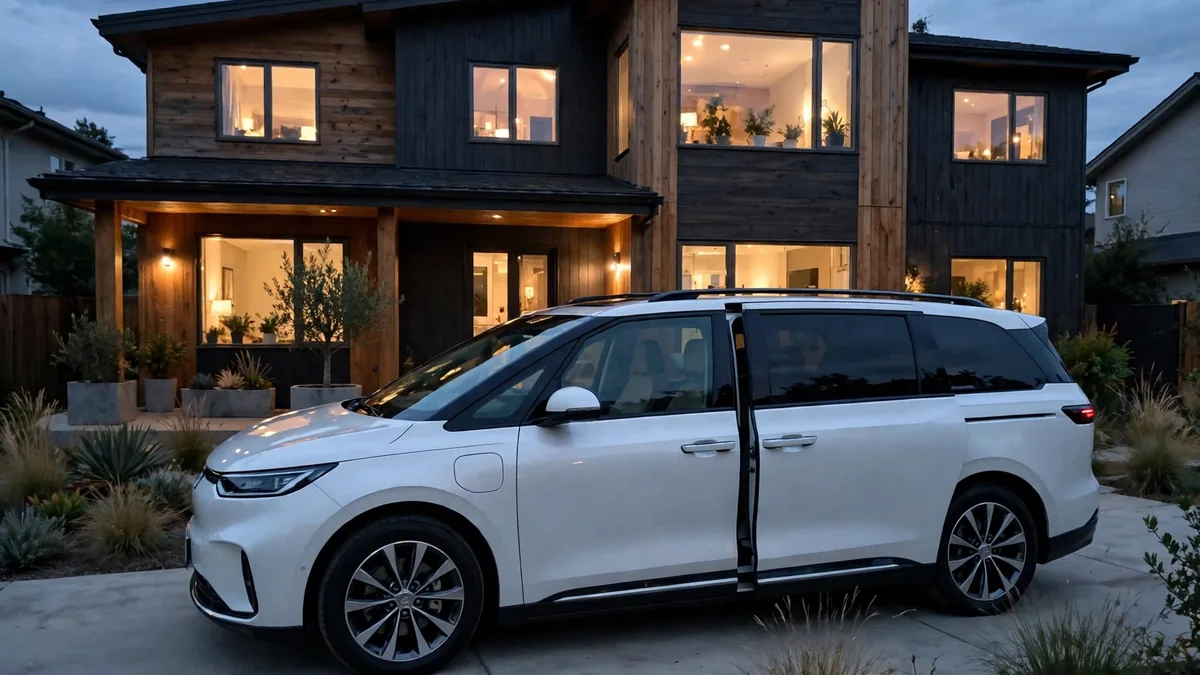
How It Is Made
Step 1: A tall, strong body shell
The build starts with the body-in-white, the bare shell before paint or trim. A minivan shell is bigger and boxier than a saloon, so the presses that shape its panels are among the largest in the factory. High-strength steel is used around the passenger cabin, where protection matters most, while aluminium panels keep the weight down elsewhere. Robots weld and rivet the panels together, and laser scanners check the finished shell against the design. Sliding door tracks are fitted early, because a door that glides smoothly for years depends on the frame being exactly right from the start.
Step 2: The battery under the floor
In a separate clean hall, workers build the battery pack that will power the minivan. Cells are grouped into modules, the modules are sealed into a strong metal case, and cooling channels are fitted between them. The finished pack is flat and wide, shaped to sit under the cabin floor, which is exactly why an electric minivan can have such a roomy, flat interior. There is no transmission tunnel and no fuel tank eating into the space. Each pack is leak-tested, charged and discharged once, and checked for insulation before it is cleared to meet a car.
Step 3: Paint that survives family life
The shell is dipped in a corrosion-proofing bath, dried in an oven, then given a primer, a colour coat and a clear coat in a dust-free booth. Robotic arms apply each layer, and workers inspect the finish by hand between coats. A luxury minivan often wears a soft pearl or deep metallic paint, and the finish is expected to survive years of car parks, school runs and luggage loading. Stone-chip protection is added along the lower panels and behind the wheels, where family life does its worst work.
Step 4: Motors, chassis and the rolling base
On the main line, the battery pack is lifted into the shell from below and bolted to the floor. Electric motors are mounted on the axles, and the suspension is tuned for comfort rather than speed, because a minivan carries sleeping children as often as it carries adults. Steering, brakes and the air conditioning system are fitted, and the wheels go on. For the first time, the vehicle can move under its own power, and it is driven to the next station rather than pushed.
Step 5: Seats, screens and the family cabin
The cabin is where the luxury shows. Second-row captain chairs are trimmed in leather, stitched and checked by hand, and fitted on rails so they can slide, swivel or fold flat. A rear entertainment screen is mounted, the panoramic roof is sealed and tested for leaks, and soft-touch materials cover the surfaces that hands touch most. Sound insulation is layered into the floor and doors, because a quiet cabin is what turns a long drive from a chore into a rest. Cupholders, storage bins and charging points are fitted in places a family will actually reach for them.
Step 6: Software, safety and charging checks
Technicians load the operating software and work through a long checklist. The battery management system is calibrated, the motors are spun up, and the charging port is tested at full power. Safety systems are calibrated, from the cameras that watch the blind spots to the sensors that stop the sliding doors if a small hand is in the way. The air conditioning is tested at both extremes, because a cabin full of passengers generates a lot of heat. Any car that fails a check is pulled aside and fixed on the spot.
Step 7: The road test and final sign-off
A test driver takes the finished minivan out on real roads, listening for rattles and checking that it tracks straight and brakes smoothly. The sliding doors are opened and closed dozens of times, the seats are folded and unfolded, and the car is driven over rough surfaces to make sure nothing squeaks. Back at the factory, it is washed, polished and inspected under bright lights. Only then is it signed off and prepared for delivery to a dealer, and from there to a family driveway.

Key Specifications
The figures below describe a typical current luxury electric minivan; individual models vary.
| Specification | Typical figure |
|---|---|
| Battery capacity | 90 to 115 kWh |
| Power output | 300 to 450 horsepower |
| Range | 400 to 550 kilometres |
| 0 to 100 km/h | 6 to 8 seconds |
| Seating | Six or seven seats |
| Charging | 10 to 80 percent in about 25 to 35 minutes on a fast charger |
| Cargo space | Up to about 2,500 litres with seats folded |
| Doors | Power sliding rear doors |
How Much Does It Cost?
A luxury electric minivan typically costs from around $90,000 to $150,000, depending on the maker, the battery size and the trim level. That is an estimate based on current flagship models, and the price can rise further with executive rear seats, a larger battery or bespoke finishes. Most of the cost sits in the battery, the hand-finished cabin and the low production volumes. Running costs are kinder: electricity costs less than petrol, servicing is simpler, and there is no engine oil or exhaust to maintain. For the driving side of the story, read how a luxury electric minivan works on the road. If the price raises an eyebrow, why a luxury electric minivan is so expensive explains what buyers are paying for. And the luxury electric minivan specs explained breaks down the numbers in plain language.

A Rare Fact
Here is something few buyers ever learn: the sliding doors on a luxury electric minivan are tested more than almost any other part of the car. A single door can be opened and closed more than 50,000 times on a test rig before the design is approved, which is meant to cover a lifetime of school runs, shopping trips and airport pickups. The motors that drive the doors are also tuned to stop at the slightest resistance, so a child’s finger or a bag strap will halt the door instead of being trapped. It is a small, invisible piece of engineering, and it is tested harder than the engine of many sports cars.
A luxury electric minivan will never be the loudest or fastest car on the road, and that is exactly the point. It is built to be the quietest room in the house, one that happens to move. From the first pressed panel to the final road test, hundreds of people work to make sure that when a family climbs in at the start of a long journey, the car simply disappears around them, and the journey itself becomes the luxury.