Step into a luxury electric monorail and the first thing you notice is the view. The train glides above the street on a single concrete beam, and the city spreads out below like a model, with cars and crowds shrinking to the size of toys. There is no rumble from rails, no diesel smell, and no lurch as the train pulls away, just a smooth, silent rise to speed. It feels less like a train and more like flying low over the rooftops.
The second thing you notice is that there are not many of them. A monorail is not a train you can buy from a catalogue and run on any track. Every line is designed for one city alone, with its own curves, its own stations and its own beam, and the price reflects that. A luxury monorail can cost more than a fleet of buses or a whole railway line, and the reasons have nothing to do with fashion. They have everything to do with concrete, electricity and the sky.

The Track Is a Building in the Sky
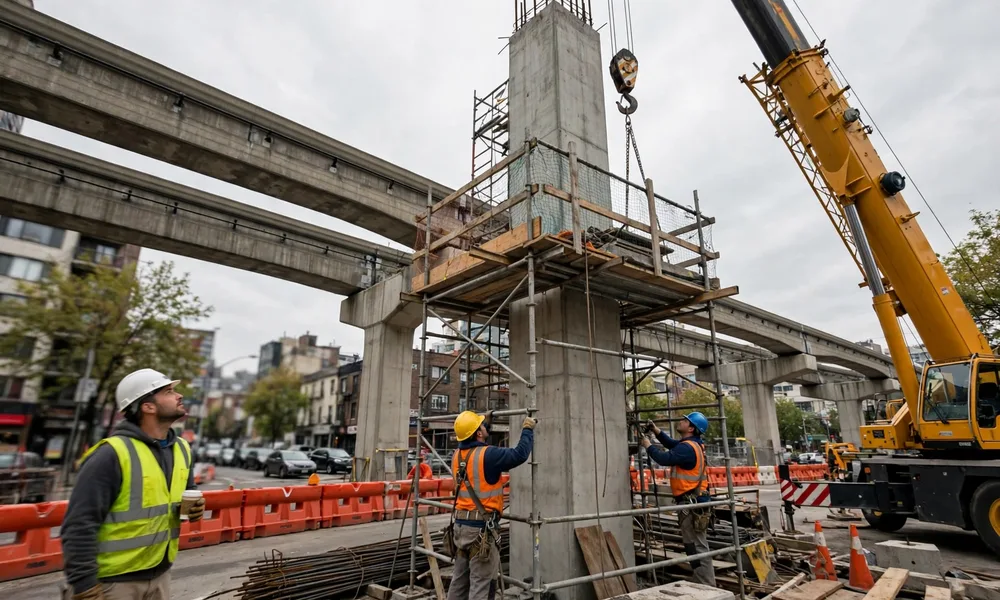
A monorail track is not a track. It is a bridge, kilometres long, held up by pillars that must stand for a century. Each pillar is sunk deep into the ground, poured from special concrete that resists weather and earthquakes, and topped with a beam so smooth that a train can glide along it at speed without a bump. The beam must be perfectly straight and perfectly level, because the train has only one rail to hold on to, and a flaw of a few millimetres can be felt by every passenger.
Building it in a living city makes the cost worse. Roads must be closed, utilities moved, and cranes worked between buildings while traffic flows below. The pillars go up one at a time, each one checked by surveyors again and again, and the beam sections are lifted into place at night, when the streets are quiet. The luxury electric bus specs show the opposite approach, where a bus runs on roads the city already owns, and the monorail is the price of building a road of its own in the air.
Land is the hidden cost. A normal railway needs a wide strip of ground, bought and cleared, while a monorail needs only the footprint of its pillars, so it can thread through a city that has no space left at street level. That narrow footprint is what makes it possible, and what makes it expensive, because every metre of beam is a small bridge that must be engineered, poured and inspected as if it were the only one.
The Train Itself Is a Machine Apart
The train is where the luxury shows. A monorail car is built around its electric motors, with rubber tyres that grip the concrete beam and guide wheels that hug its sides, so the ride is smooth and almost silent. The motors are small and light, but there are many of them, and each one must be cooled, controlled and monitored, because a failure at height is not a breakdown. It is an evacuation.
Inside, the cabin is closer to a lounge than a train carriage. Wide windows, soft lighting, seats chosen for comfort on a short city hop, and air conditioning that keeps the temperature steady while the sun beats on the glass. The doors open level with the platform, so there is no step, and the floor is flat from one end of the train to the other. The how the luxury electric bus is made story shows the same care with a passenger cabin in a different machine, where the interior is the thing riders remember, and the monorail cabin is that idea with a view from the sky.
Safety systems add another layer of cost. The train watches its own speed, its distance from the train ahead, and the state of every door, and it can stop itself if anything looks wrong. The control room watches the whole line at once, and the power supply is duplicated so that a fault in one place cannot strand a train between stations. None of this is visible to a passenger, and all of it is paid for before the first ticket is sold.
Power, Testing and the Price of Trust
Electricity is the monorail’s fuel, and delivering it along a line in the sky is a project of its own. Power rails run beside the beam, substations feed them every few kilometres, and the whole system must keep working through storms, heat and cold. A monorail that loses power does not just stop. It stops in the air, with passengers waiting to be rescued, so the supply is built with backups on top of backups.
Testing is just as thorough. A new line runs empty trains for months, day and night, while engineers measure every vibration, every brake and every door, and then a safety authority inspects the whole system before a single passenger is allowed on board. Each test run costs money, and each delay costs more, but no city will open a line that has not been proven safe. The luxury electric scooter specs show the same electric technology at the smallest scale, where a fault means a walk home, and the monorail is that technology with hundreds of lives riding on it at once.
As an estimate, a luxury monorail line costs about $100 million to $300 million per kilometre, a single train about $5 million to $15 million, and a station about $10 million to $30 million. These are estimated ranges, not quotes, and the final figure depends on the city, the length of the line and the ground it crosses. What never changes is that the monorail is the cheapest way to fly through a city and the most expensive way to travel along the ground, because the track is a building and the train is a machine that lives on top of it.
A Rare Fact From the World of Monorails
Here is a detail few riders ever learn: a monorail train can be quieter than the street below it. The rubber tyres on concrete make far less noise than steel wheels on steel rails, so a monorail gliding overhead is often drowned out by the traffic underneath, and people living beside the line say they forget it is there. Engineers measure the sound and find it lower than a conversation, which is why a monorail can run past bedroom windows at midnight without waking anyone, and that silence is the reason cities choose it over noisier trains.
What the Price Means for You
If you are wondering why a luxury electric monorail costs so much, look at four things: the elevated track, the train, the power supply and the testing. A beam that is also a bridge, a train built to be silent and safe in the air, electricity delivered with backups on top of backups, and months of empty test runs before a single passenger boards are the marks of a monorail worth its price. The view matters less than the brochures suggest, and the silence matters more than anyone admits, because a train this quiet is the one a city can live with. The best monorail is the one nobody notices, gliding overhead day after day, carrying a city without ever getting in its way.


