The showroom was silent in a way car showrooms rarely are. The sedan on the plinth had no grille, no exhaust pipes and no engine noise, yet a small crowd stood around it the way people gather around a grand piano. A salesman opened the rear door and invited a visitor to sit down. She sank into the seat, the door closed with a soft electric sigh, and the cabin sealed itself off from the world like a recording studio. When she asked the price, the salesman named a figure higher than a house deposit, and she did not laugh. She asked what was inside.
That question is the right one, because a luxury electric sedan hides almost all of its cost. There is no big engine to admire, no exhaust note to justify the price, and from the outside it can look like any other large saloon. The money is in the battery under the floor, the motors at the axles, the software that ties them together, and a cabin built to a standard that makes the silence itself feel expensive. This article opens up the price tag and shows where every part of it goes, from the battery under the floor to the software in the dashboard.

Why a Luxury Electric Sedan Costs So Much
Reason 1: The battery is the most expensive part of the car
Almost a third of the cost of a luxury electric sedan sits under the floor in a single component: the battery pack. A flagship sedan carries 100 to 120 kilowatt-hours of capacity, enough for 600 kilometres or more of range, and that pack contains thousands of individual cells, a cooling system, a crash-proof housing and a battery management computer that watches every cell, every second. The cells use expensive chemistry, usually nickel-rich lithium-ion, chosen for energy density and long life, and the pack is engineered to survive a crash, a flood and a decade of daily charging. The numbers behind that pack are explained in our guide to luxury electric sedan specs, which breaks down capacity, range and charging in plain language.
Reason 2: Two motors, one seamless surge
Most luxury electric sedans use two motors, one on each axle, giving all-wheel drive and effortless acceleration. Together they produce 400 to 750 horsepower, and because an electric motor delivers full torque instantly, the car can reach 100 kilometres per hour in under four seconds without any drama, gear changes or noise. The motors themselves are precision machines, wound with copper, cooled by oil or water, and controlled by inverters that switch thousands of times a second. How those motors work together is covered in our guide to how a luxury electric sedan works.
Reason 3: The cabin is a concert hall on wheels
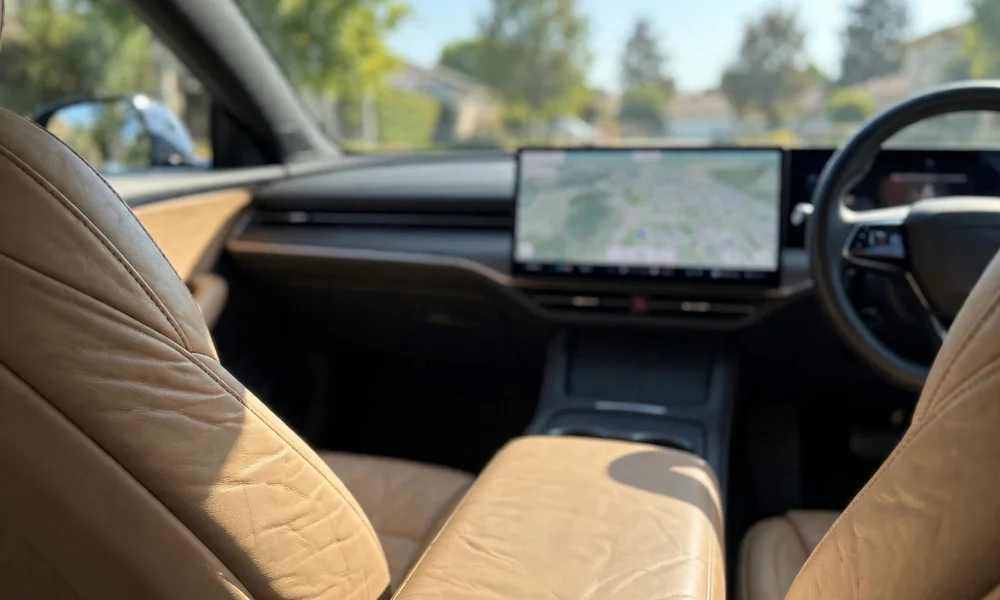
Step inside a luxury electric sedan and the first thing you notice is what is missing: noise. Without an engine, every rattle, tyre roar and wind whistle becomes audible, so engineers fight them all. Acoustic laminated glass, active noise cancellation through the speakers, foam-filled tyres and thick insulation turn the cabin into a quiet room, and the silence becomes the canvas for everything else. The seats are multi-way adjustable, heated, ventilated and massaging, trimmed in leather or sustainable alternatives stitched by hand. The dashboard is a sweep of screens, the sound system can have thirty speakers or more, and the rear seats offer legroom, reclining and their own climate controls. The build process behind that finish is described in our guide to how a luxury electric sedan is made.
Reason 4: Software, sensors and the promise of self-driving
A modern luxury electric sedan is a computer that happens to have wheels. It carries dozens of sensors, cameras, radar and lidar, watching the road in every direction, and a central computer powerful enough to process it all in real time. That hardware enables driver assistance that can steer, brake and park the car, and over-the-air updates that add features years after the car was sold. Developing that software costs billions across a model range, and each car carries its share.
Reason 5: Charging speed is a luxury in itself
Range gets the headlines, but charging speed is the luxury that owners feel every week. A flagship electric sedan runs on an 800-volt electrical architecture, double the voltage of most electric cars, which allows it to charge at 250 to 350 kilowatts and add hundreds of kilometres of range in the time it takes to drink a coffee. That architecture demands expensive components throughout the car: thicker insulation, more robust connectors, advanced cooling and a battery designed to accept huge currents without degrading. The charging hardware, the heat pump that keeps the battery at the perfect temperature, and the software that preconditions the pack on the way to a charger are all part of the package.
Reason 6: Safety, structure and small production runs
A luxury electric sedan must protect a battery the size of a double bed in a crash, and the structure around it is engineered accordingly. High-strength steel and aluminium form a safety cage, the battery housing is designed to deform without piercing, and the car is tested far beyond the legal minimum. Finally, luxury sedans are built in small numbers compared with family cars, so the cost of developing the platform, the factory tooling and the testing is spread across fewer buyers.
Luxury Electric Sedan Specs at a Glance
| Specification | Typical range |
|---|---|
| Battery capacity | About 100 to 120 kWh |
| Range | About 550 to 700 km |
| Power | About 400 to 750 hp, dual motor |
| 0 to 100 km/h | About 3.5 to 4.5 seconds |
| Charging | 800-volt, up to 250 to 350 kW DC fast charging |
| Cabin noise | Around 60 decibels at motorway speed |
| Body | Aluminium-intensive, battery-protecting structure |
What Does a Luxury Electric Sedan Cost?
A luxury electric sedan is estimated to cost roughly $90,000 to $150,000 new, with flagship versions estimated at $170,000 to $200,000 or more when fully optioned. Running costs are estimated to be lower than a petrol equivalent, with home charging estimated at a fraction of petrol prices, though insurance is estimated to be higher because of the cost of battery and body repairs. Prices are estimates only and vary by market, specification and incentives.
A Rare Fact
Some luxury electric sedans can power your house. Their large batteries can send electricity back into a home during a power cut, a feature called vehicle-to-home, and a fully charged flagship sedan holds enough energy to run an average home for several days. It began as a technical curiosity and is now a selling point in regions where storms regularly cut power, turning the most expensive car in the driveway into the most useful appliance in the house.

A luxury electric sedan is expensive because its most costly parts are invisible: a battery the size of a bed, two silent motors, a computer that drives the car, and a cabin engineered around silence. None of it shouts, and that is the point. The price buys a car that does everything a flagship saloon has always done, gliding, quiet, effortless travel, while replacing the engine with something cleaner, quicker and, for the first time, capable of powering the house it is parked outside.