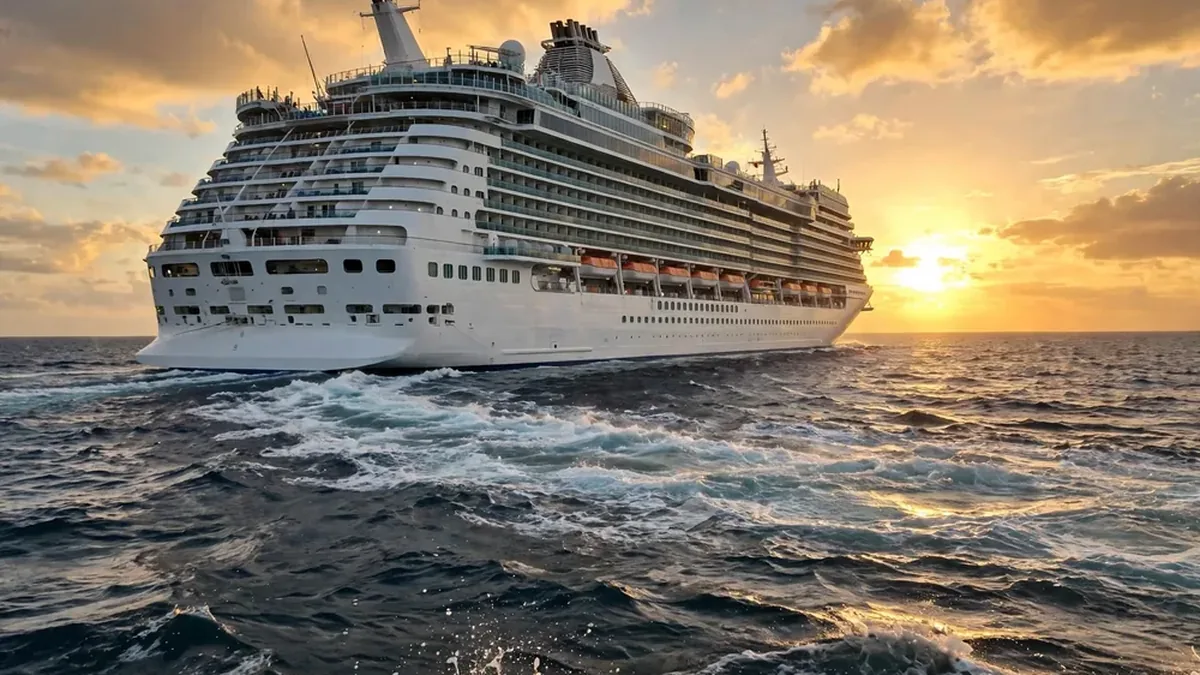
An ocean liner is a city that floats. It carries thousands of people across the sea, with restaurants, theatres, pools and shops on board, yet it must also survive storms, make its own power and water, and keep everyone safe far from land. A luxury ocean liner does all of that while feeling like a grand hotel, with polished wood, soft carpets and service that never seems to stop.
The liner is one of the most complex machines ever built, and its systems work together like the organs of a body. The engines make power, the power makes water and air, the stabilisers keep the ship steady, and the crew keeps the whole floating palace running day and night. Here is how a luxury ocean liner works, from its engines deep below the waterline to the bridge at the top.
How It Works
Step 1: The diesel-electric power plant
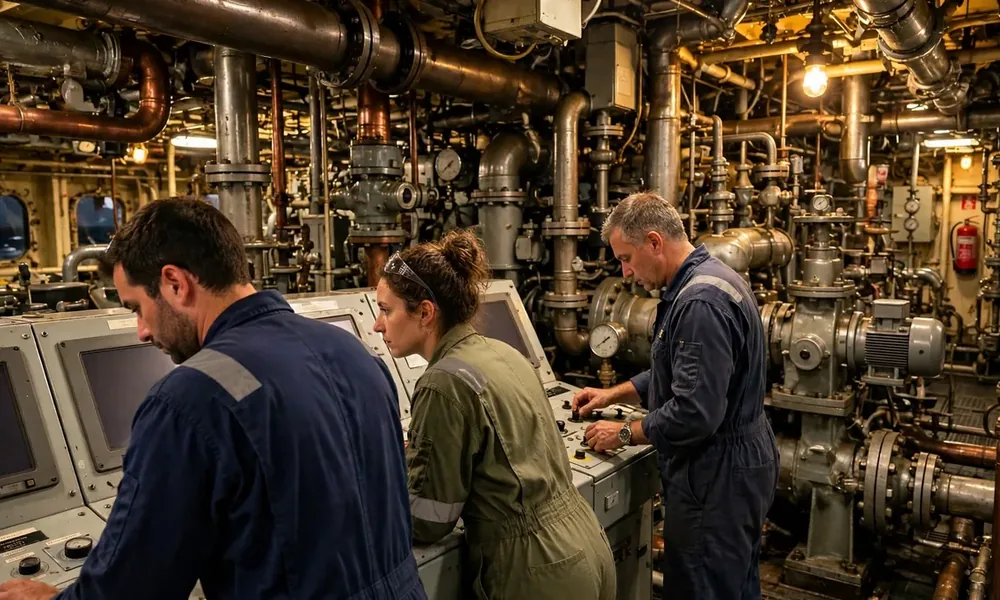
Most modern liners do not use a single giant engine connected to a propeller. Instead, they use diesel-electric power: several large diesel engines drive generators, and the electricity they make powers electric motors that turn the propellers. This gives the captain fine control over speed, and it lets the ship use only as many engines as it needs. The power plant also supplies electricity for lights, lifts, kitchens, air conditioning and the theatre, so it must be both powerful and reliable. Engineers watch it from a control room around the clock, checking temperatures, pressures and fuel use on glowing screens.
Step 2: Azipods, propellers and steering
Under the stern, many liners use Azipods, which are electric motors in a pod that hangs below the hull and can turn a full circle. Each pod drives a propeller, and because the pod can point in any direction, the ship can turn, move sideways or hold its place without tug boats. The story of how a luxury ocean liner is made shows how those pods are fitted into the hull during construction, with cables and cooling pipes running up into the ship. Steering is done by computer, with the captain giving orders on a joystick and the pods and rudders doing the work.
Step 3: Stabilisers and a steady ride
A liner crossing the Atlantic can meet waves several metres high, yet guests should still be able to eat dinner without their plates sliding off the table. Retractable fins under the hull, called stabilisers, tilt against the roll of the sea and keep the ship level. They work with the ship’s own weight and shape to smooth the motion, and the captain can extend or retract them as the weather changes. Inside, the ship is divided into watertight compartments, and ballast tanks are filled or emptied to keep it level as fuel is used and stores are eaten. The story of how a cruise ship engine works explains the power behind that steady ride, and why a liner’s engines are sized for both speed and hotel comfort. Even in a storm, the liner moves with a slow, heavy grace rather than a sharp jerk.
Step 4: Making fresh water and clean air
A liner with thousands of people on board needs an enormous amount of fresh water every day, for drinking, showers, cooking, laundry and the pools. It makes that water on board by heating seawater and collecting the steam, or by pushing it through fine membranes that leave the salt behind. Air conditioning is just as important: the system cools and freshens the air in every cabin and public room, and it can switch to heating when the ship sails into cold northern waters. Waste water is treated in a plant below deck, cleaned to a high standard before it is released, and rubbish is sorted, compacted and stored until the ship reaches port.
Step 5: The hotel at sea
Above the machinery decks, the liner is a hotel. Kitchens the size of restaurants prepare thousands of meals a day, with bakers, butchers and pastry chefs working through the night. Lifts carry guests between decks, laundries wash tonnes of sheets and towels, and shops, spas and theatres open from morning until late at night. The crew is divided into departments, each with its own officers: deck, engine, hotel and medical. The story of how a luxury cruise ship works shows the same hotel systems on a ship built for leisure, where comfort is the whole point of the voyage. Behind every calm corridor, someone is working.
Step 6: Navigation, safety and life at sea
On the bridge, the captain and officers use radar, satellite navigation and weather charts to plan the route, watching for other ships, ice and storms. The liner carries lifeboats for everyone on board, along with life rafts, fire teams and a crew trained in weekly drills. The ship also carries a small army of systems that guests never see: fire doors that close automatically, smoke detectors in every room, and a network of pipes that can flood a compartment if needed. When the liner docks at dawn after a smooth crossing, all of that work disappears behind a simple fact: everyone arrived safely, rested and ready to explore.
Ocean Liner Specifications
| Specification | Typical Luxury Ocean Liner |
|---|---|
| Length | 290 to 345 metres |
| Gross tonnage | 140,000 to 155,000 tonnes |
| Passengers | 2,500 to 3,200 guests |
| Crew | 1,200 to 1,400 crew |
| Power | Around 60,000 to 85,000 kilowatts |
| Service speed | 22 to 24 knots |
| Fresh water made | 2,000 to 3,000 tonnes a day |
The Price
A luxury ocean liner costs an estimated $800 million to $1.2 billion to build, depending on its size and the standard of its cabins and public rooms. A ticket for a transatlantic crossing costs an estimated $1,500 to $8,000 per person, depending on the cabin, the season and the sailing. Running the ship costs an estimated $500,000 to $800,000 a day in fuel, crew, food and port fees, which is why liners sail almost every day of the year.
A Rare Fact
An ocean liner has its own weather station on the bridge, and its officers can read the sea well enough to dodge a storm that is still hundreds of miles away. They use satellite images, wave forecasts and reports from other ships to steer around the worst weather, sometimes adding hours to a voyage to keep it smooth. Passengers may never notice the change, because the ship simply turns a few degrees and the sea stays calm. It is a quiet piece of seamanship that turns a rough ocean into a gentle crossing.

Life on a liner follows a rhythm that guests learn quickly. Mornings are for breakfast and the view from the deck, afternoons for the pool, the library or a lecture, and evenings for dinner, the theatre and dancing. The ship moves steadily through it all, its engines humming far below, its kitchens working through the night and its crew changing shifts without a fuss. There is a sense of being looked after that a hotel on land rarely matches, because the hotel itself is moving.
A luxury ocean liner works because it is many machines in one. Its diesel-electric plant makes power, its pods steer it, its stabilisers keep it level, its watermakers keep it fresh, and its crew keeps it running like a small town. That is what makes it more than a big ship. It is a floating palace at sea, and when it glides into port at dawn, polished and calm, it looks as effortless as it is complex underneath.