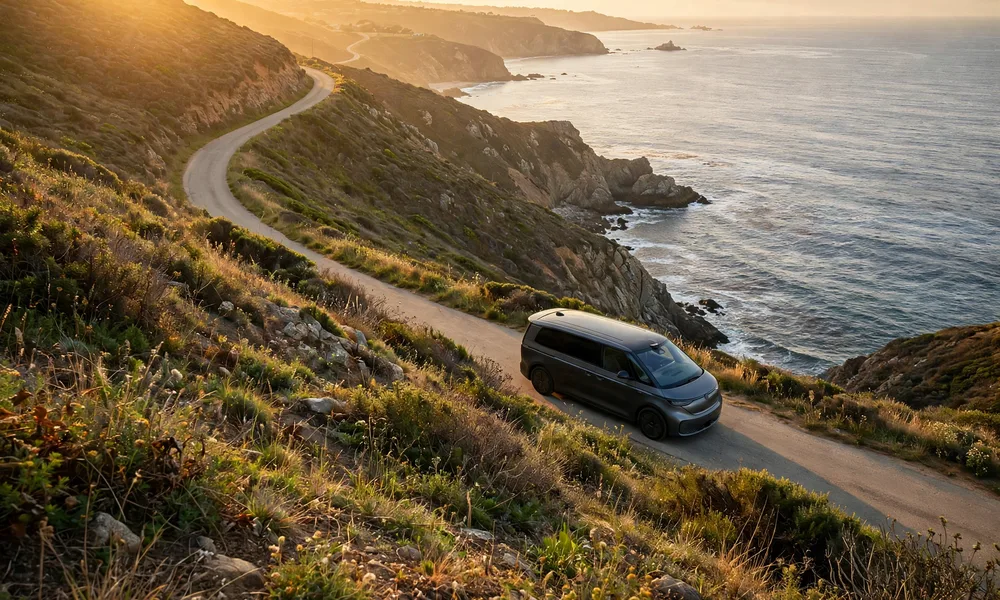
Step inside a luxury electric van and the first thing you notice is the silence. There is no engine rumble, no vibration through the floor, no smell of diesel. The doors close with a soft thunk, the seats are deep and wide, the ceiling is high enough to stand under, and the cabin feels less like a vehicle and more like a small room that happens to move. Then the van pulls away, smoothly and without a gear change, and the room glides down the road as quietly as a lift. It is a strange and pleasant feeling, and it is the reason a van, of all things, can cost as much as a house deposit.
A van is not supposed to be a luxury object. For most of its history it has been a working vehicle, built to carry tools, parcels and people as cheaply as possible. The luxury electric van turns that idea upside down, taking a large, practical box and filling it with the comfort of a first-class cabin, the technology of a flagship car, and a battery big enough to move it all for hundreds of kilometres. This article breaks the price down, explains where the money goes, and ends with a fact that shows how far the humble van has travelled.

Where the Money Goes
The cost of a luxury electric van is dominated by the battery, the cabin and the technology, in that order. The battery must be enormous, because a van is heavy and shaped like a brick, and pushing a brick through the air at motorway speed takes a great deal of energy. The cabin must be finished to the standard of a luxury car, with materials, seats and soundproofing that a working van would never receive. The technology, from driver assistance to entertainment, must match a flagship saloon, because the buyer expects nothing less. Each of those demands is expensive on its own; together, they explain the price.
The table below gives an estimated breakdown of where the price of a top-end model goes. These are estimates, not a manufacturer’s price list, and they vary between brands, but they show the shape of the cost clearly: the battery alone can account for a quarter of the whole vehicle, and the cabin is not far behind.
| Part of the van | Estimated share of the price | Why it costs that much |
|---|---|---|
| Battery pack | About 25 to 30 percent | A 100 kilowatt-hour or larger pack, with cooling, crash protection and fast charging. |
| Luxury cabin and seats | About 20 to 25 percent | Leather reclining seats, wood trim, soundproofing, lighting and a flat floor throughout. |
| Motors and chassis | About 15 to 20 percent | One or two electric motors, air suspension and a chassis tuned for comfort, not load. |
| Technology and safety | About 10 to 15 percent | Driver assistance, large screens, entertainment and the sensors that feed them all. |
| Body and finishing | About 10 percent | Aero-shaped bodywork, sliding doors, paint and the hand finishing of a luxury vehicle. |
The Battery Is a Floor, Not a Box
That engineering is the single biggest cost in the vehicle, and it is also the reason the van works as a luxury machine. A big battery means a long range, often an estimated 350 to 450 kilometres, and it means the cabin’s heating, cooling, screens and lights can run without worrying about the distance home. The electric van explains the drivetrain itself, while the electric bus shows the same battery-floor idea scaled up to carry dozens of people.

A Cabin Like a First-Class Lounge
The cabin is where a luxury van stops being a van at all. The rear seats recline, swivel and slide, often with heating, cooling and massage built in. The floor is flat and covered in wood or thick carpet. The walls are lined in leather and suede, the ceiling carries soft lighting that can change colour, and the windows are large and quiet, with blinds for privacy. Some vans add a small table, a fridge, a television screen and a sound system with speakers hidden in the roof. It is a lounge that moves, and it is built by hand, with the same attention a yacht builder gives to a cabin.
That comparison is not accidental. The buyers of luxury vans often cross-shop them with yachts and private jets, not with other vans, and the builders know it. Soundproofing alone is a major job: a large, boxy vehicle catches wind noise from every angle, and silencing it takes layers of insulation, laminated glass and careful sealing around the sliding doors. The result is a cabin so quiet that passengers can talk at a normal volume at motorway speed, which is a luxury that no ordinary van has ever offered.
Smooth Power and the Quiet Ride
The electric motors help, too. With no gearbox and no engine vibration, the power delivery is perfectly smooth, and with a motor at each axle the van can send power to the wheels that need it most, in rain or on a loose surface. The electric coupe uses the same smooth, instant power in a sports car, but in the van the point is not speed. It is the feeling that the vehicle is gliding, not driving, and that feeling is what the buyer is paying for.
So What Does One Actually Cost?
A luxury electric van typically costs an estimated $90,000 to $150,000, with fully customised and armoured models reaching far beyond that. That estimate covers the large battery, the hand-finished cabin, the air suspension, the technology and the small production numbers, because luxury vans are built in the hundreds or thousands a year, not the hundreds of thousands. The price also reflects that the van is often bought as a mobile office, a family tourer or a chauffeur vehicle, where the cabin is used for work and rest as much as for travel.
Whether it is worth it depends on how the van will be used. For a business that moves executives between cities, or a family that travels long distances together, the van replaces a car and a hotel lounge in one vehicle, and the cost starts to make sense. For carrying parcels, it never will. The luxury electric van is not a better working van. It is a different vehicle entirely, one that happens to share the shape of a van, and its price is the price of that transformation.
A Rare Fact Worth Knowing
Here is a fact that shows how far the van has come: the first vans were little more than a car with the back cut off and a box bolted on, built for deliveries in the early 1900s, with wooden wheels, a top speed slower than a bicycle, and a driver who sat out in the weather. A century later, the luxury electric van carries its passengers in silence, in leather seats, with a battery under the floor that holds more energy than a house uses in a week. The shape is the same, a tall box on four wheels, but everything inside it has changed, and the price tells that story in a single number.