A city bus is the hardest-working vehicle on the road. It stops and starts hundreds of times a day, carries dozens of people, climbs hills fully loaded, and does it all in traffic, in rain, and in heat. A luxury electric bus does all of that without a puff of exhaust, without the rumble of a diesel engine, and with a ride so smooth that passengers can read a book without the words shaking on the page.
The secret is scale. An electric bus is not a car with more seats; it is a rolling power station, with a battery the size of a small room, motors the size of oil drums, and a computer that thinks about every stop before the driver does. Here is how it works, from the battery under the floor to the wheels that carry a whole neighbourhood.
How It Works
Step 1: The battery pack powers everything
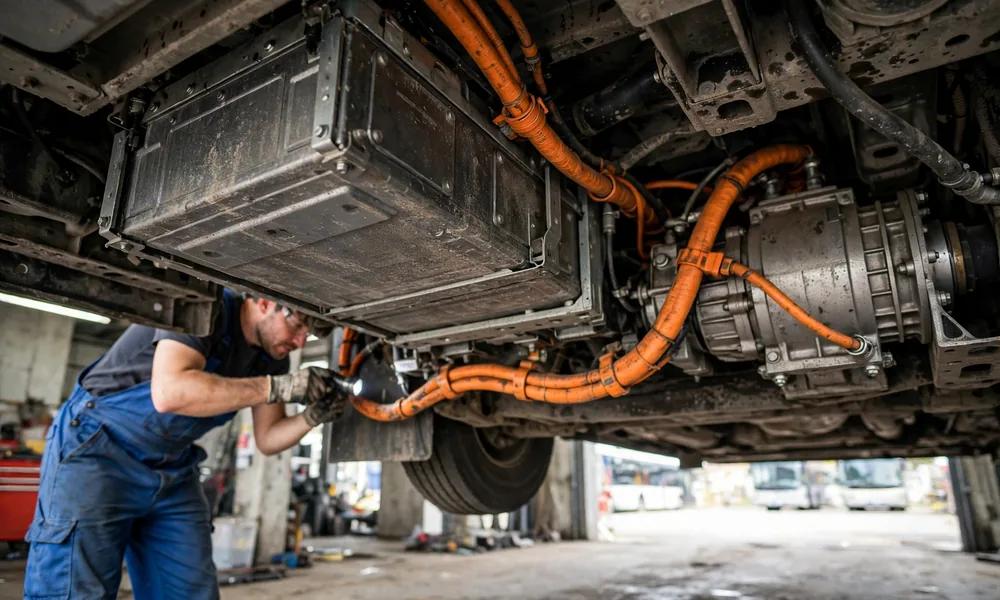
Under the floor of a luxury electric bus sits a battery pack weighing several tonnes, made of thousands of lithium cells grouped into modules. The pack is divided into sections with their own cooling circuits, so a fault in one section does not take the whole bus down. A management system watches every module, balancing charge and keeping temperatures even. The pack stores enough energy for a full day of city routes, and it also powers the doors, the lights, the air conditioning and the wheelchair ramp, so the bus is a self-contained machine from the moment it leaves the depot.
Step 2: The driver asks for power
The driver controls the bus with a pedal, much like a car, but the signal travels by wire to a central controller. The controller checks the battery, the motor temperature and the speed, then decides how much power to deliver. Pulling away from a stop with fifty passengers aboard needs a huge surge of torque, and the controller delivers it smoothly so nobody is thrown backwards. Luxury buses tune this carefully, because a jerky start is the first thing passengers notice and the last thing they forgive.
Step 3: The motors drive the wheels
Most electric buses use one or two large motors mounted at the rear axle, driving the wheels through a simple gearbox. Some use hub motors built into the wheels themselves, which frees up floor space for a flat, low entry. Either way, the motors produce their full torque from a standstill, which is why an electric bus pulls away so eagerly even when fully loaded. The motors are liquid-cooled, because moving forty tonnes through a city on a hot day generates a great deal of heat, and the cooling system is as important as the motor itself.
Step 4: Regenerative braking recovers energy
A city bus brakes constantly, and an electric bus turns that braking into free energy. When the driver lifts off the pedal or touches the brake, the motors switch into generator mode, turning the bus’s momentum back into electricity and feeding it into the battery. On a stop-start city route, regeneration can recover a large share of the energy used to accelerate, which is why electric buses are so efficient in town and less so on a motorway. The friction brakes, large discs at every wheel, are there for emergencies and for the final stop, but on a normal day they do far less work than on a diesel bus.
Step 5: The air suspension keeps the ride level
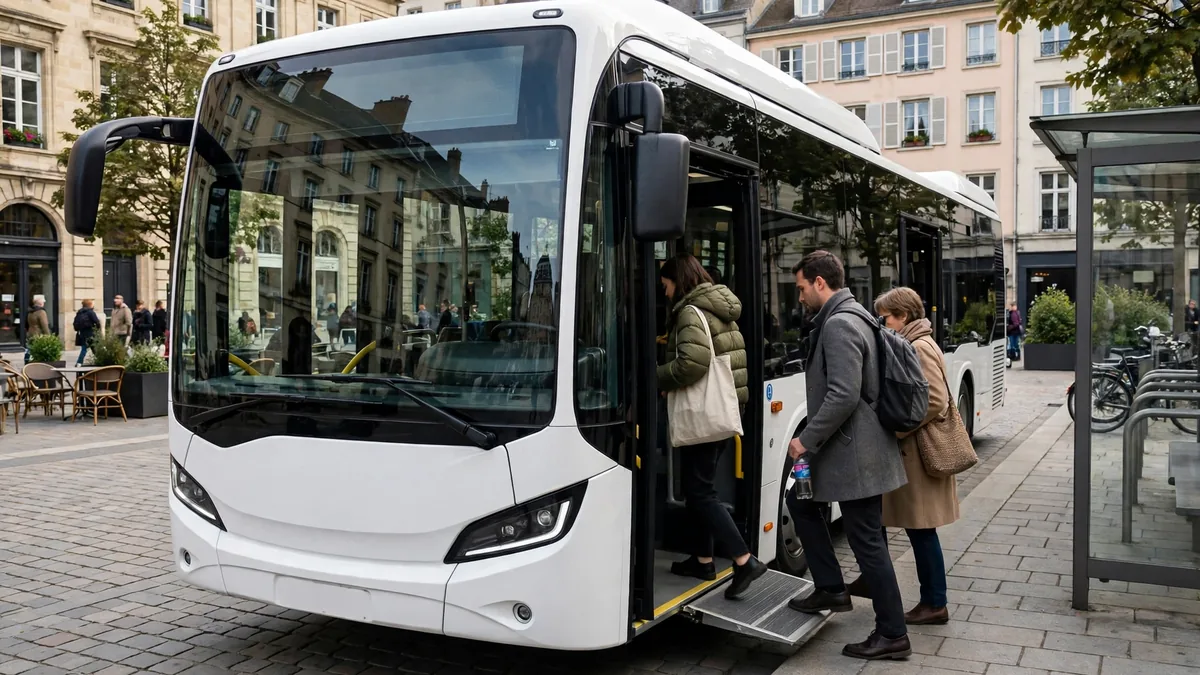
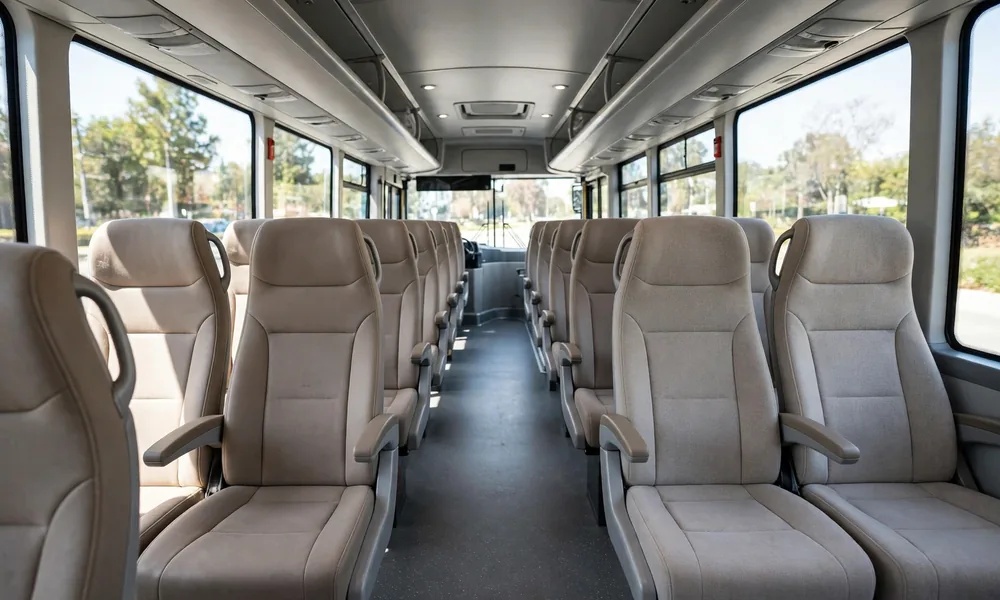
Passengers judge a bus by its ride, and luxury electric buses use air suspension to keep the floor level no matter how many people board. Air springs at each wheel inflate or deflate as the load changes, and the bus can even kneel at a stop, lowering the entrance so a wheelchair or a pram can roll straight on. The suspension also absorbs the potholes and speed bumps of a city street, and because there is no engine shaking the chassis, the cabin stays quiet enough for conversation. A smooth, level, silent ride is the luxury in a luxury bus.
Step 6: Heating and cooling run on electricity
A diesel bus heats its cabin with waste heat from the engine, but an electric bus has no engine to waste. Instead, it uses a heat pump, a device that moves heat from the outside air into the cabin in winter and reverses in summer to cool it. The system is efficient, but it is also the biggest drain on the battery after the motors, so the bus is insulated carefully and the windows are double-glazed on luxury models. Pre-heating the bus while it is still plugged in at the depot saves battery for the road, and drivers are trained to use it.
Step 7: The depot charges the bus overnight
At the end of the day, the bus returns to the depot and plugs in. Overnight charging fills the battery slowly and gently, which is kinder to the cells than fast charging and cheaper, because electricity costs less at night. Some depots use pantographs, arms that drop down from the ceiling onto the bus roof, so drivers never have to handle a cable. The depot’s software plans the charging so every bus is full by morning, and a bus that needs a top-up during the day can take a fast charge at a terminus while passengers board.
Key Specifications
The figures below describe a typical luxury electric city bus; individual builds vary.
| Specification | Typical figure |
|---|---|
| Battery capacity | 300 to 500 kWh |
| Motor power | 200 to 350 kW |
| Range per charge | 250 to 400 km on city routes |
| Passenger capacity | 70 to 90, seated and standing |
| Charging time | 4 to 6 hours overnight, faster at terminus |
| Suspension | Air suspension with kneeling at stops |
| Emissions at the tailpipe | None |
How Much Does It Cost?
A luxury electric city bus typically costs from around $400,000 to $700,000, depending on the battery size, the length and the interior fittings. That is an estimate based on current premium models, and a replacement battery pack alone can cost over $100,000. Most of the price sits in the battery, the motors and the depot charging equipment. To see how the bus is put together, read how a luxury electric bus is made for the factory side. The smaller electric workhorse is covered in how a luxury electric van works, and the luxury electric golf cart specs explained shows the same ideas at their smallest scale.
A Rare Fact
Here is something few passengers know: the first electric buses ran in cities more than a century ago, powered by overhead wires, and they were so quiet that cities had to fit them with bells so pedestrians could hear them coming. One early operator in London found that passengers preferred the electric buses so much that they would wait for the next one rather than board a noisy petrol bus that arrived first. The modern battery bus is the return of that idea, with the wires replaced by a battery and the bell replaced by a soft warning sound at low speed.
A luxury electric bus is a city in miniature, carrying a neighbourhood in silence. From the battery under the floor to the motors at the axle, from regenerative braking to the kneeling suspension, every part exists to move dozens of people smoothly, cleanly and quietly. When the bus pulls away from a stop without a sound and the passengers never look up from their books, the machine has done its job.