A buyer standing beside a luxury hydrogen car in a showroom usually asks the same question first, and he asks it quietly, as if the car might hear him. The car in front of him is a sleek saloon with a quiet cabin and a fuel gauge that reads in kilograms, and it looks simple enough. Then he hears the price, and the question comes out: why does a car that runs on the most common element in the universe cost as much as a small house? The answer is not one thing. It is a stack of expensive choices, each one invisible from the kerb, and each one adding thousands to the bill before the car ever leaves the factory.
An engineer in Japan once told a story that still circulates among hydrogen car buyers. A client had compared a luxury hydrogen saloon with a luxury electric saloon of the same size, and the hydrogen car cost nearly twice as much. He bought the electric car, drove it happily for a year, and then borrowed a hydrogen car for a long road trip. He discovered the difference in a single day: the hydrogen car refuelled in five minutes and drove for 400 miles without a charging stop, while his electric car had needed two long charging breaks on the same route. He still loved his electric car, but he understood the hydrogen price for the first time. The lesson was not that hydrogen cars are overpriced. It was that the price is a list of engineering decisions, and the cheap comparison had skipped most of them.
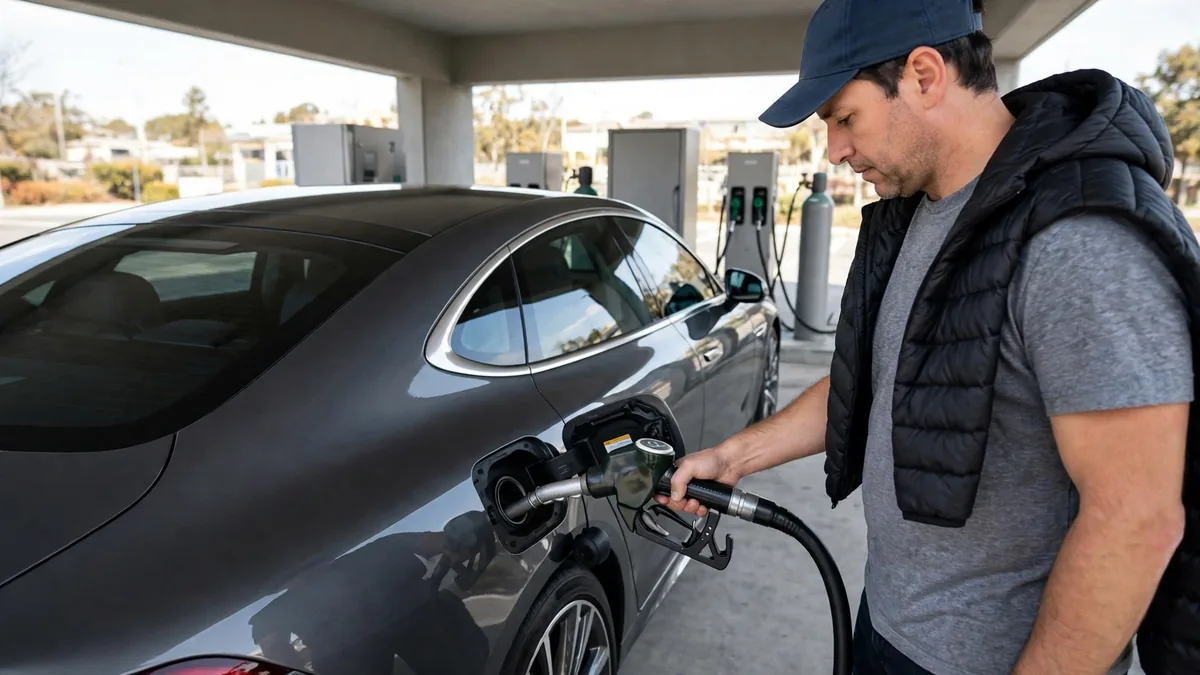
The fuel cell is where the money starts
The first big cost is the part of the car the buyer never sees: the fuel cell stack. A luxury hydrogen car typically carries a fuel cell that produces 120 to 180 kilowatts, turning hydrogen and oxygen into electricity and water, with no combustion at all. The stack is built from hundreds of thin cells, each one coated with platinum catalyst, and the platinum alone is a major cost. The membranes inside the cells must stay wet to work, so the car carries a humidification system, and the stack must be kept at a precise temperature, so it carries a cooling system of its own. A cheap comparison with a battery car misses all of this: a battery is a box of cells, while a fuel cell is a small chemical plant, and building one that lasts for a decade is expensive.
The hydrogen tanks are the second hidden cost. A luxury hydrogen car typically carries two or three tanks, holding 5 to 6 kilograms of hydrogen at 700 bar, which is roughly 700 times normal air pressure. The tanks are built from carbon fibre wrapped around a plastic liner, and each one is tested far beyond its working pressure, then fitted with valves that seal instantly in an accident. A single tank can cost several thousand pounds to build and certify, and a car needs several of them, mounted where they are protected in a crash. The tanks are also the reason the car cannot simply be made cheaper by using a smaller one: range depends on hydrogen capacity, and capacity depends on tank volume and pressure, both of which cost money.
Materials, safety and the small numbers
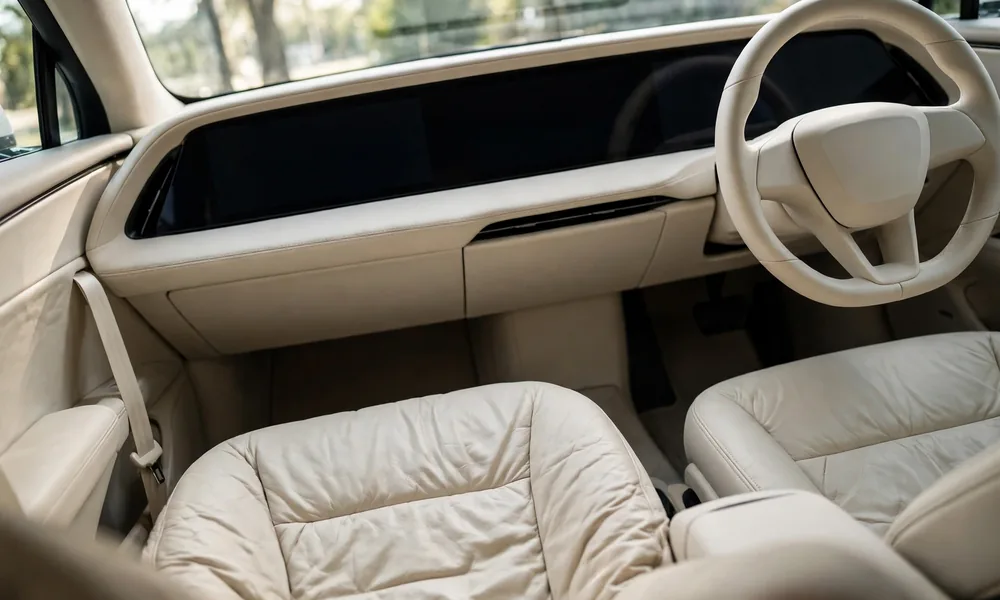
Materials are the next large line on the bill. A luxury hydrogen car is built largely from aluminium and high-strength steel to keep weight down, because the tanks and the fuel cell already add hundreds of kilograms. The body is engineered to protect the tanks in a crash, with reinforced sills and a floor structure that channels impact forces away from the high-pressure system. The interior is finished to the same standard as any luxury saloon, with leather, real wood, and acoustic glass that keeps the cabin quiet. The car also carries sensors throughout the hydrogen system, watching for leaks and shutting valves in milliseconds. The safety engineering alone, tested and certified to standards that are stricter than those for a petrol car, adds a real cost that the buyer never sees.
The price, broken down
As an estimate, a well-equipped luxury hydrogen car typically sells for roughly $70,000 to $130,000, with flagship models passing $150,000 once the larger fuel cell, premium interior, and driver assistance package are added. The fuel cell stack accounts for a large share, the tanks and high-pressure system for another large share, and the electric drivetrain, body, and interior for the rest. Labour is a real part of the bill too: a luxury hydrogen car is largely built by hand in small numbers, with testing and certification that take longer than for a conventional car. The manufacturer also carries the cost of training dealers, supporting the refuelling network, and warranting a fuel cell for many years. None of this is printed on a price tag, but every line of it is in the car, and the car that skips it is the car that cannot be trusted with a family aboard.
A rare fact worth knowing
Here is a detail that rarely appears on any price list and that engineers love to share. On some of the finest luxury hydrogen cars, the fuel cell is deliberately kept warm by the waste heat from its own operation, so that on a cold morning the car warms itself before the driver even opens the door. The result is a car that starts instantly in winter, with full power from the first mile, and the giveaway is the silence: the car makes almost no sound while it prepares itself, and the only thing it emits is a few drops of pure water. Engineers call it cold-start management, and it is one of those invisible luxuries that costs real software work and real testing time. The price tag lists a single number, but the warm start is why two cars with the same range can feel completely different on a frosty morning. The numbers tell the buyer what the car costs. The cold morning tells him how it was engineered.
The best way to judge a luxury hydrogen car is to look below the floor, test it on a long journey, and ask what each part of the price is paying for, in that order. The car that answers those questions well is worth its price, even if another car is cheaper in the showroom. For a closer look at the numbers behind the car, see the luxury hydrogen car spec sheet, and for how it runs, see how a hydrogen car works. For a useful comparison with its electric rival, see how a luxury electric car works.

| Cost area | Typical share / estimate | Why it costs |
|---|---|---|
| Fuel cell stack | $15,000–$30,000 | Platinum catalyst, membranes, cooling |
| Hydrogen tanks | $10,000–$20,000 | Carbon fibre, 700 bar, certification |
| Electric drivetrain | $10,000–$20,000 | Motor, inverter, buffer battery |
| Body and safety | $15,000–$30,000 | Reinforced structure, sensors, crash protection |
| Interior and finish | $10,000–$20,000 | Leather, wood, acoustic glass |
| Scale and support | $10,000–$20,000 | Low volume, training, network support |
| Total price (estimate) | $70,000–$150,000+ | Fuel cell, tanks and low volume |


