The call came in just after midnight: a cargo ship had reported a suspicious small boat shadowing it twenty miles off the coast, and the harbour authority wanted eyes on the water before dawn. The patrol boat crew cast off into a black sea, the twin diesels settling into a low growl as the hull rose onto the plane. Forty minutes later they were alongside the contact, searchlight sweeping the deck, the boat holding steady in a two-metre swell while the boarding team did its work. By sunrise the patrol boat was back at its berth, fuelled, washed down, and ready for the next call. That is the luxury patrol boat in its element: a machine built for long hours, rough water, and absolute reliability, finished to a standard that would not embarrass a superyacht.
A patrol boat is a working vessel first and a luxury vessel second, and its specification sheet reflects that order. Range, seakeeping, speed, and deck equipment come before leather and lighting, but the luxury versions refuse to treat comfort as an afterthought. The crew may spend twelve hours aboard in bad weather, and the owner may spend a weekend aboard in good weather, so the same cabin has to serve both. This guide explains what each figure on a luxury patrol boat spec sheet actually means, and how the numbers work together when the sea turns rough.
How a Luxury Patrol Boat Works
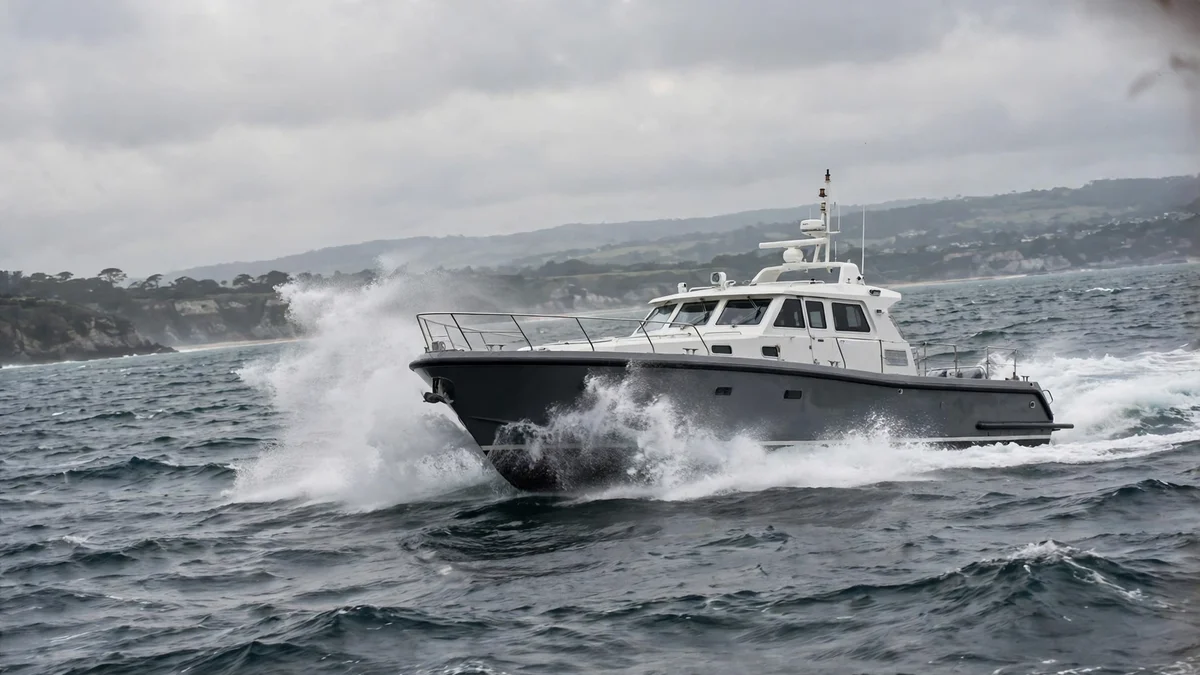
A patrol boat’s job is to get to a location quickly, stay there for hours in rough conditions, and bring its crew home safely. The systems that make that possible run through six stages, and each one appears on the spec sheet in a different place.
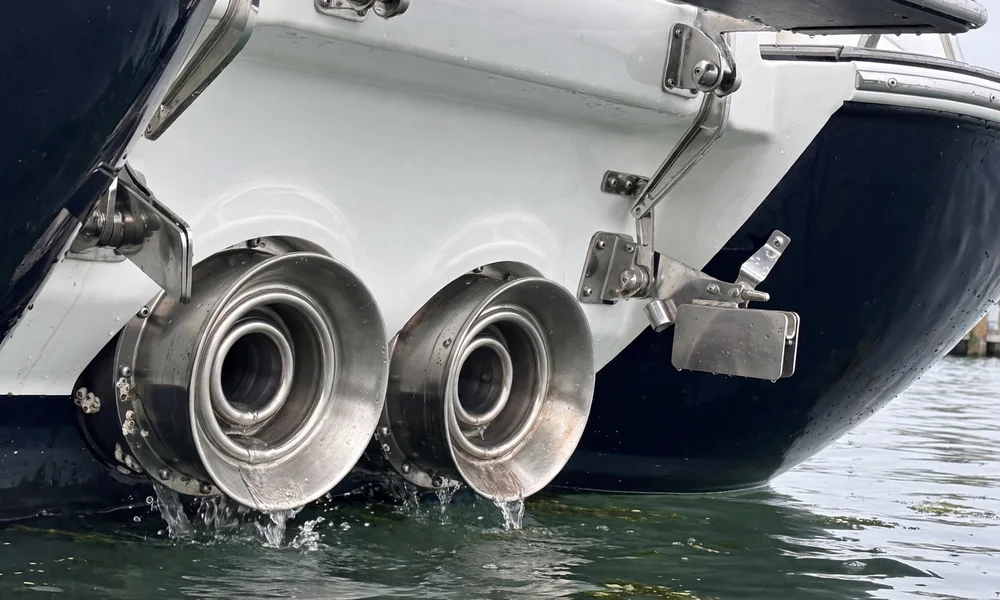
- Propulsion. Twin or triple diesel engines, usually between 800 and 2,000 horsepower in total, drive the boat through waterjets or conventional shafts. Waterjets are the luxury choice: they give superb manoeuvrability at low speed, allow the boat to operate in shallow water, and remove the exposed propellers that can foul on ropes or debris.
- Hull form. A deep-V hull slices through waves rather than slamming over them, which keeps the ride comfortable and the structure intact at high speed. The deadrise angle at the transom, usually listed on the spec sheet, tells you how sharp that V is: a steeper angle means a softer ride in a chop, at the cost of slightly more fuel.
- Seakeeping and stabilisation. Gyroscopic stabilisers or interceptors reduce roll, keeping the deck steady enough for a crew to work in a swell. The stabiliser system is what lets a patrol boat hold station alongside another vessel without wallowing, and it is one of the features that separates a luxury build from a basic one.
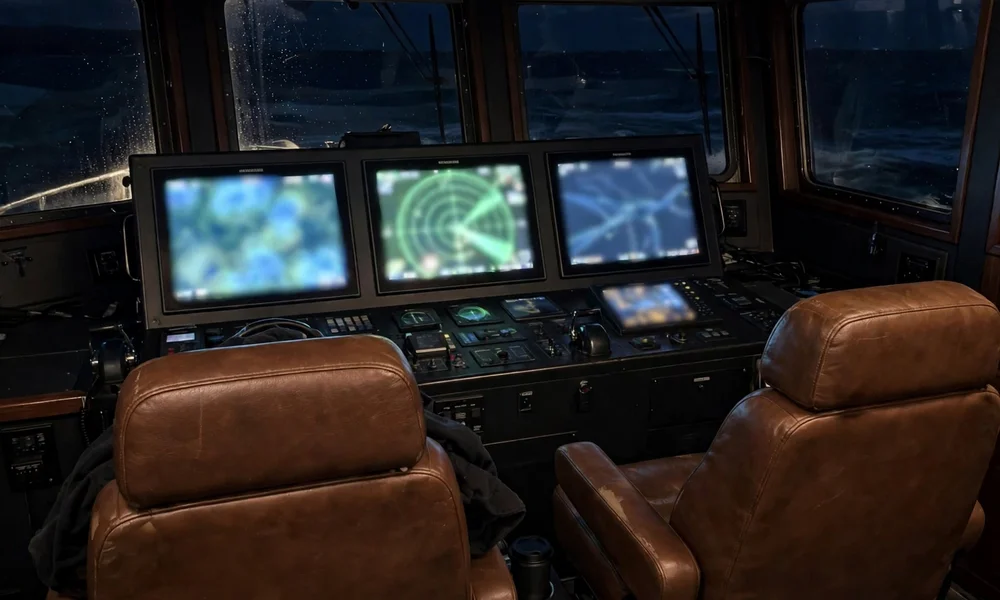
- Navigation and sensors. Radar, thermal cameras, automatic identification system receivers, and a high-resolution chart plotter give the crew a complete picture of the water around them, day or night. The sensor suite is often the most expensive single item on the boat after the engines.
- Deck equipment. A stern launch ramp or davit for a small interceptor boat, a fire monitor, a searchlight, and deck lighting turn the boat into a working platform. The launch system is the number that tells you whether the vessel can deploy a boarding team quickly and safely.
- Cabin and endurance systems. Air conditioning, a galley, sleeping berths, and a large freshwater capacity let the crew stay aboard for days. Fuel capacity and cruising speed together define the patrol radius, which is the single most important operational number on the sheet.
Speed without seakeeping is useless in a storm, and sensors without endurance are useless on a long patrol. The best luxury patrol boats balance all six, which is why their spec sheets read like a compromise written by engineers who have actually been to sea. The same balance of speed and control shapes other fast workboats, and the how a luxury chase boat is made guide shows how a similar hull is built for a very different job.
The Spec Sheet, Decoded
Patrol boat manufacturers publish a long list of figures, but a handful decide how the vessel actually performs at sea. The table below lists the headline specifications of a typical top-tier luxury patrol boat, with a plain explanation of what each number means in practice.
| Specification | Typical Luxury Figure | What It Means |
|---|---|---|
| Length overall | 18–25 m | Longer hulls ride better and carry more equipment |
| Beam | 5–6 m | Width decides deck space and stability at rest |
| Top speed | 35–45 knots | Fast enough to intercept, slow enough to stay safe |
| Cruising speed | 25–30 knots | The economical speed for long patrols |
| Range | 600–1,000 nautical miles | Distance at cruising speed on one fuel load |
| Fuel capacity | 4,000–8,000 litres | Large tanks are what make the range possible |
| Engine power | 1,600–3,000 hp total | Twin or triple diesels driving waterjets or shafts |
| Deadrise at transom | 20–24 degrees | Steeper V means a softer ride in rough water |
| Crew and guests | 4 crew, 8–12 guests | Working crew plus room for owners or officials |
| Draft | 1.0–1.5 m | Shallow draft allows close inshore work |
Two numbers deserve special attention. Range is the figure that decides whether the boat can do its job, because a patrol boat that must return to port every few hours is not a patrol boat at all. Deadrise is the number that decides how the crew feels at the end of a twelve-hour shift: a steep V costs fuel, but it saves backs, knees, and tempers. The luxury builders understand this, and they fit the stabilisers, the insulation, and the seating that make the numbers on the sheet feel like comfort rather than compromise. A similar philosophy shapes the smaller fast boats that work harbours and rivers, and the luxury pilot boat specs explained guide shows how a near-identical mission produces a different set of figures.
What a Luxury Patrol Boat Costs
A new luxury patrol boat typically costs an estimated $2,500,000 to $6,000,000, depending on length, sensor fit, and cabin finish. That figure is an estimate based on published list prices and dealer reports, and it excludes crew training, insurance, and the annual maintenance that a high-performance diesel vessel demands. Used boats in good condition can be found for less, but the sensor suite and the engines are the expensive parts, and a refit of either can quickly consume any saving on the purchase price.
The price makes sense when you divide it by what the vessel does. A patrol boat that can run at forty knots in a two-metre sea, stay out for three days, and bring its crew home safely is a serious piece of engineering, and the luxury finish means it can also serve as a representative vessel for a port, a company, or a private owner. It is a workboat that does not look like one, and the spec sheet is the proof. For the firefighting cousin of the patrol boat, the luxury fireboat specs explained guide shows what happens when the same hull is built around pumps instead of speed.
A Rare Fact
Here is a detail few passengers ever learn. Some of the most advanced luxury patrol boats carry a gyroscopic stabiliser the size of a washing machine, spinning at several thousand revolutions per minute inside a vacuum chamber. The gyroscope resists roll so strongly that the boat can sit almost flat in a swell that would have other vessels rolling twenty degrees. The same technology was first developed to steady the guns on warships a century ago, and it is now what lets a patrol boat crew drink coffee from a mug, rather than a sealed flask, while holding station in open water.