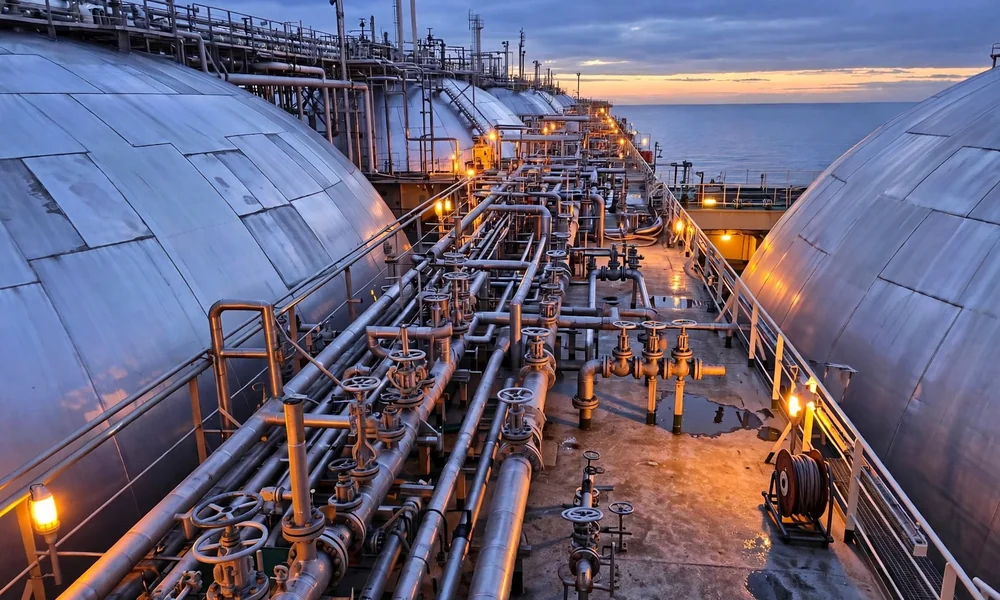
From the shore, the LNG carrier looks like any other large ship, until you notice what is missing: There is no smoke from the funnel and no deck cargo. The deck is dominated by four huge domes rising like a row of silver hills. Inside those domes is a cargo that behaves like nothing else on earth: natural gas, chilled until it becomes a liquid, carried at a temperature so cold it would freeze steel brittle in seconds. The ship is a thermos flask the size of a skyscraper, and it has to work perfectly for weeks.
An LNG carrier is one of the most expensive ships ever built, and the luxury end makes it more expensive still. The newest carriers have dual-fuel engines and re-liquefaction plants. But the price is not about comfort. It is about a single, unforgiving fact: the cargo is worth millions, it is carried at minus 162 degrees, and there is no room for error.
Here is where the money actually goes.

How a luxury LNG carrier works
An LNG carrier is a system, not just a ship. Every part exists to keep the cargo cold, safe, and moving.
1. The gas is chilled to minus 162 degrees
Before loading, natural gas is cooled until it becomes a liquid at minus 162 degrees Celsius, shrinking it to about one six-hundredth of its volume as a gas. That is what makes shipping it possible: a single carrier holds enough liquid gas to heat a city for weeks. The chilling happens ashore, and the ship’s job is to keep it cold all the way across the world.
2. The cargo tanks are insulated like nothing else
The cargo sits in membrane tanks or spherical Moss tanks, each wrapped in layers of insulation and steel. The insulation is so good that only a tiny fraction of the cargo warms up each day, and that fraction, the boil-off gas, is captured and burned as fuel in the engines.
3. The hull is built around the tanks
The ship is built around its cargo tanks. The hull is a double-hulled structure with space between the inner and outer skins, so a grounding or a collision does not reach the cargo. The whole vessel is designed so the cargo system and the hull move together as the ship flexes in heavy seas.
4. The engines burn the cargo itself
Modern LNG carriers use dual-fuel engines that burn the boil-off gas from the tanks, with heavy fuel oil as backup. The gas is cleaner than oil and always available, because the cargo is constantly producing a small amount of it. Some carriers add re-liquefaction plants that turn the boil-off back into liquid, so the cargo arrives as full as possible.
5. The bridge watches the cargo constantly
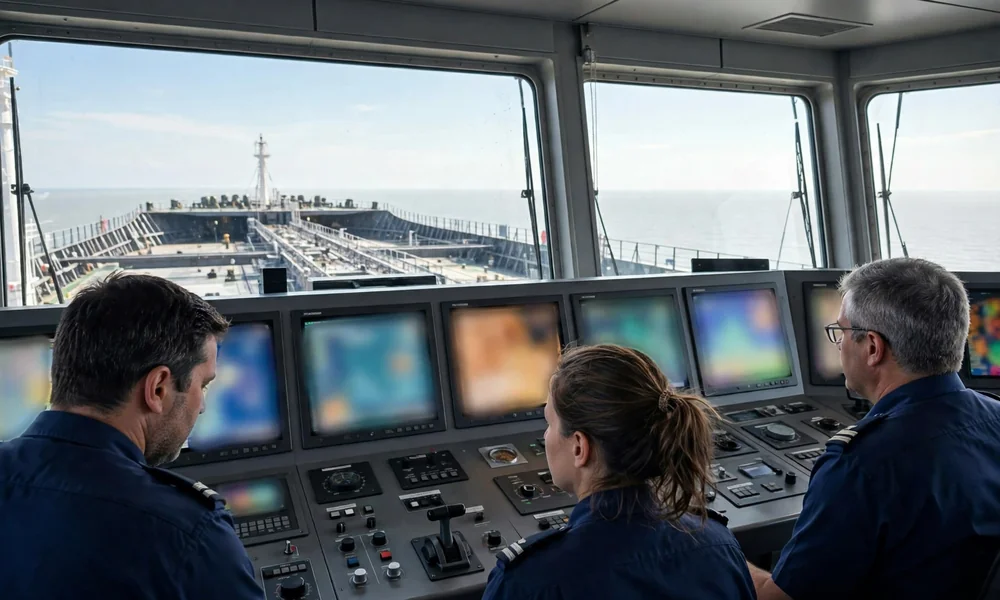
The bridge and the cargo control room monitor the temperature and pressure of every tank, every minute. Alarms are set tight, and the crew trains for the failures that must never happen: a tank warming up, a valve failing, a leak in the insulation. The monitoring systems are duplicated, because a ship carrying this cargo cannot afford a blind spot.
6. The crew lives well, because they must stay sharp
A luxury LNG carrier carries about thirty crew, and the accommodation keeps them rested and alert on voyages lasting weeks. Cabins are quiet and well finished, the mess and recreation spaces are generous, and the ship carries a gym and good internet. A tired crew makes mistakes, and on this ship, mistakes are not affordable.
7. Unloading is as careful as loading
At the destination terminal, the liquid gas is pumped ashore through insulated arms, warmed back into gas, and sent into the pipelines. The whole operation takes about a day, and it is watched as closely as the voyage itself. A single error can damage the tanks, the terminal, or both, so the crew and the terminal work through a checklist that leaves nothing to chance.
The numbers that matter
The headline figures for a modern large luxury LNG carrier:
| Specification | Typical figure |
|---|---|
| Length overall | 290 to 300 metres |
| Beam | 45 to 48 metres |
| Cargo capacity | 170,000 to 180,000 cubic metres |
| Cargo temperature | Minus 162 degrees Celsius |
| Service speed | 19 to 20 knots |
| Main engines | Dual-fuel, about 30,000 kilowatts |
| Boil-off rate | About 0.1 percent per day |
| Crew | About 30 |
The figure that deserves the most attention is the cargo capacity, because it decides what the ship earns. A carrier of 174,000 cubic metres holds enough liquid gas to supply a small country for a day, and a single voyage can be worth tens of millions of dollars. The ship’s value is tied to how much it can carry and how little boils away, which is why the insulation matters so much.
Speed is the other number people misunderstand. Nineteen knots is not fast for a ship of this size, but speed is not the point: the carrier runs at the speed that balances fuel use, boil-off, and arrival time, and going faster would burn more of the cargo as fuel. The newest ships use air lubrication and better hull shapes to squeeze more efficiency out of every voyage. The build is covered in the guide to the making of a luxury LNG carrier.
What a luxury LNG carrier costs
A new large luxury LNG carrier costs an estimated 200 to 260 million dollars, depending on size, cargo system, and equipment. The estimate covers the hull, the cargo tanks and insulation, the engines, and the electronics, but not the crew or the fuel. The cargo containment system is the most expensive single part of the ship, and it can account for a third of the total price. The insulation and the specialist steel cost far more than the steel of the hull itself.
Running costs are heavy too. The crew is large and highly trained, the cargo systems need constant monitoring, and the ship must be inspected in dry dock on a strict schedule. Owners accept this because the earnings are enormous: a carrier on a long-term charter can earn hundreds of thousands of dollars a day, and a single ship can pay for itself in a decade of good markets. The ship is expensive because the cargo is valuable, the physics are unforgiving, and there is no cheap way to do the job safely. The day-to-day operation is covered in the guide to how a luxury LNG carrier works.
A rare fact about LNG carriers
An LNG carrier’s cargo is so cold that a spill would freeze the steel of the deck in seconds, so the decks and cargo areas are built with special low-temperature steel and protected by water curtains and drip trays. Some carriers carry enough insulation to keep the cargo cold for days even if every system on board fails, which is the kind of safety margin that only exists because the consequences of getting it wrong are unthinkable.
The scale of these ships is hard to grasp until you compare them with their cousins, The specs of a luxury oil tanker show a ship of similar size carrying a cargo that is far easier to handle, and the price difference is mostly the cost of keeping gas at minus 162 degrees. The tanker carries liquid at room temperature; the LNG carrier carries a winter that never ends.
A luxury LNG carrier is expensive because it has to be. The cargo is dangerous, the temperatures are extreme, the distances are vast, and the margin for error is zero. Every dollar is there for a reason, and most of those reasons are things you will never see: insulation, monitoring, training, and the quiet discipline of a crew that keeps a floating winter safe across the ocean.