The truck is parked outside a farmhouse at dusk, its headlights still on, its chrome grille catching the last of the light. Inside there are leather seats, a panoramic roof, and a screen the size of a small television. A visitor asks the price, hears a number that would buy a respectable house deposit, and laughs, assuming it must be a joke. It is not a joke. A luxury pickup truck can cost more than twice its work-truck twin, and the reasons are not obvious until you open the bonnet, sit in the cabin, and start counting what it took to build a vehicle that is two machines at once.
A luxury pickup is a workhorse and a luxury car sharing one body, and that double life is what makes it expensive. Every part of it is made to do two jobs: haul a trailer and cosset a family, survive a building site and glide down a motorway, tow four tonnes and park itself. This article follows the money through the seven costs that add up to the price tag, and explains why a cheaper pickup, for all its similarities, is a very different vehicle underneath.

1. The base truck: a heavy frame underneath the luxury
Everything starts with the base truck, and a luxury pickup does not start with a light van. It starts with a heavy ladder-frame chassis, a big engine and a four-wheel-drive system built to tow and carry, and that hardware alone costs as much as a good family car before a single luxury part is fitted. The frame must be strong enough to carry a tonne in the bed and tow four tonnes behind it without flexing, because flexing cracks joints, breaks seals and lets water and dust into the cabin. The numbers behind that frame are laid out in luxury pickup truck specs explained, where payload, torque and towing figures decide what the truck can actually do.
2. The engine and drivetrain: torque costs money
The second cost is the drivetrain. A large diesel or twin-turbo petrol engine making 600 to 800 newton-metres of torque, a ten-speed automatic gearbox, a transfer case and locking differentials are all expensive, precision parts, and they must work together for hundreds of thousands of kilometres under heavy load. The gearbox alone is a marvel: ten ratios that keep the engine in its sweet spot whether the truck is towing up a mountain or cruising empty on a motorway. The way the whole system works together is explained in how a luxury pickup truck works, from the transfer case to the locking rear differential.
3. The cabin: a luxury car interior in a truck body
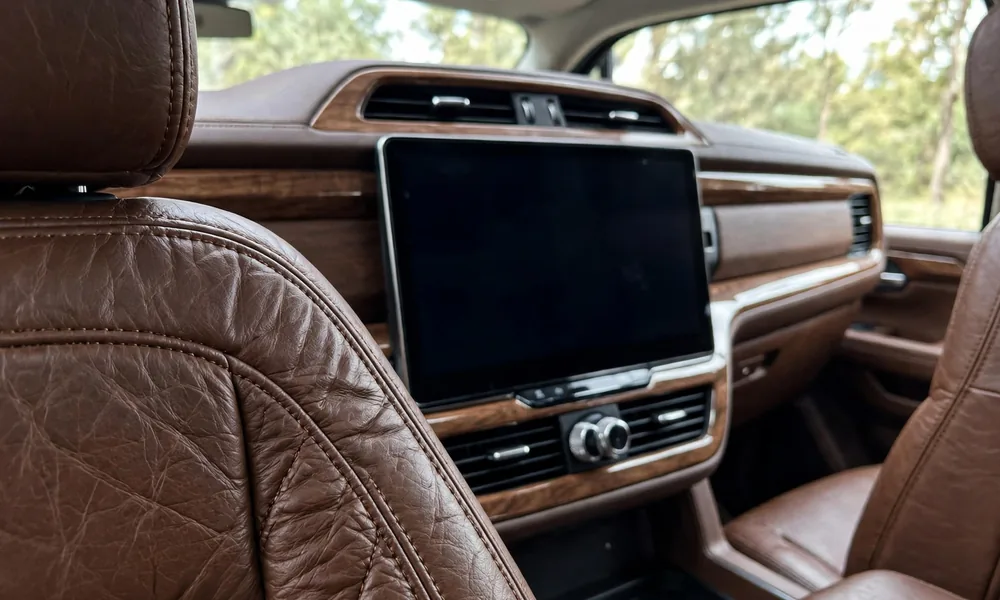
Inside, a luxury pickup is a joiner’s workshop on wheels. Stitched leather seats that are heated and ventilated, real wood or metal trim, a panoramic roof, thick glass and extra sound insulation are fitted by hand, and the result is a cabin that is quiet at motorway speed in a way a work truck never is. The rear seats matter more than buyers expect: a luxury crew cab has proper legroom and its own vents, because the truck is often the family car as well as the work vehicle. Every switch, every vent and every stitch is made to feel expensive, and that feeling is the product of hundreds of small, costly decisions.
4. Technology: screens, cameras and driver aids
The fourth cost is the technology, and it is what separates a luxury pickup from a truck with leather seats. A 12-inch touchscreen, a premium sound system, wireless phone connection, a 360-degree camera, a trailer reversing aid and a full set of driver assistance systems are all fitted as standard at this level. The cameras matter most: parking a five-metre truck is hard, and the bird’s-eye view makes it easy. The screens and speakers themselves are covered in how luxury car infotainment is made, which follows the hardware from the factory bench to the dashboard.
5. Suspension and refinement: riding like a car, working like a truck
The fifth cost is the ride. A work truck rides on stiff leaf springs that bounce when the bed is empty, but a luxury pickup uses coil springs, adaptive dampers and sometimes air suspension, so it soaks up broken roads far better while still carrying a full load. Making a truck ride like a car without losing its ability to work is an engineering puzzle, and it takes expensive parts and careful tuning. The sound deadening is part of it too: extra insulation, laminated glass and active noise cancelling keep the cabin quiet, and quiet is one of the most expensive things a vehicle can be.
6. Small production runs and special editions
The sixth cost is scale, or the lack of it. A luxury pickup in top trim is built in far smaller numbers than the base work truck, and every part that is unique to the luxury model, from the grille to the seats, must pay for its own tooling across a small number of vehicles. Special editions make it worse, in the best way: unique paint, unique wheels, a numbered plaque and a limited run of a few hundred trucks, each one carrying the cost of parts that will never be made again. Rarity is part of the price, and it is also part of the appeal.

7. Warranty, service and the dealer experience
The seventh cost is the one buyers forget: the support that comes with the truck. A flagship pickup comes with a long warranty, free servicing for the first years, roadside assistance that will recover a truck and its trailer, and a dealer experience that treats the owner like a luxury car buyer rather than a fleet customer. That support is priced into the truck, and it is real money: a single repair to a ten-speed gearbox or an air suspension system outside warranty can cost thousands, so the warranty is not a favour but a product in itself.
The price in context
A luxury pickup truck typically costs an estimated 70,000 to 120,000 dollars in top trim, with the most exclusive special editions going higher still. The base work truck underneath may cost half as much, and the difference is the leather, the technology, the bigger engine, the suspension and the sound deadening, plus the warranty and dealer support. Options add up fast: a premium paint finish, a sunroof, a bed cover and a tow pack can add thousands more, and the most expensive trucks are rarely bought in base luxury trim at all.
A rare fact worth knowing
Some luxury pickups carry a hidden engineering trick: an onboard generator that can power tools, a campsite or even a house. Using the engine as a power station, the truck can deliver several kilowatts through sockets in the bed, running a welder on a remote site or keeping a fridge and lights going during a power cut. It is a small detail on the spec sheet, listed as a power output figure, but for an owner who works far from mains electricity it can be the single most useful feature on the whole vehicle, and the one that justifies the price all on its own.