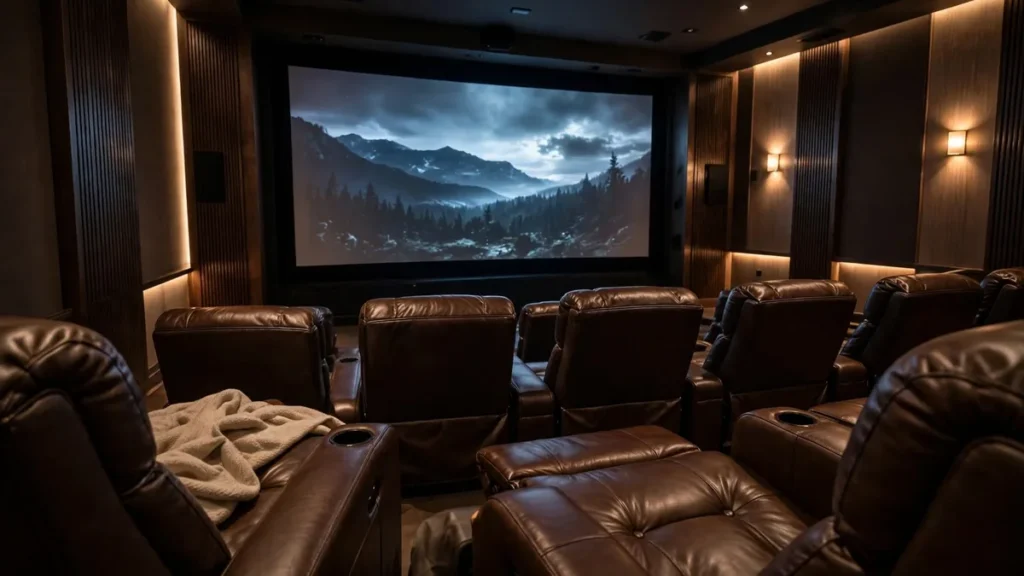
The lights go down in a room that looks nothing like a cinema and everything like a very expensive living room, and then the screen wakes up, twenty feet wide, and the sound arrives from everywhere at once, low and clean, so that the floor seems to hum under your feet. The owner smiles in the dark, because this is his cinema, built into his house, and it cost more than the first house he ever bought. Nobody in the room asks why. After the first minute, nobody needs to.
This is why a luxury home theatre is so expensive, in seven costs, from the room itself to the screen, the speakers, the amplifiers and the people who tune it all by ear. Each reason alone sounds reasonable, and it is only when they are added together that the price starts to make sense, because a luxury home theatre is not a big television, it is a concert hall that fits inside a house.
Reason 1: The room itself has to be built, not decorated
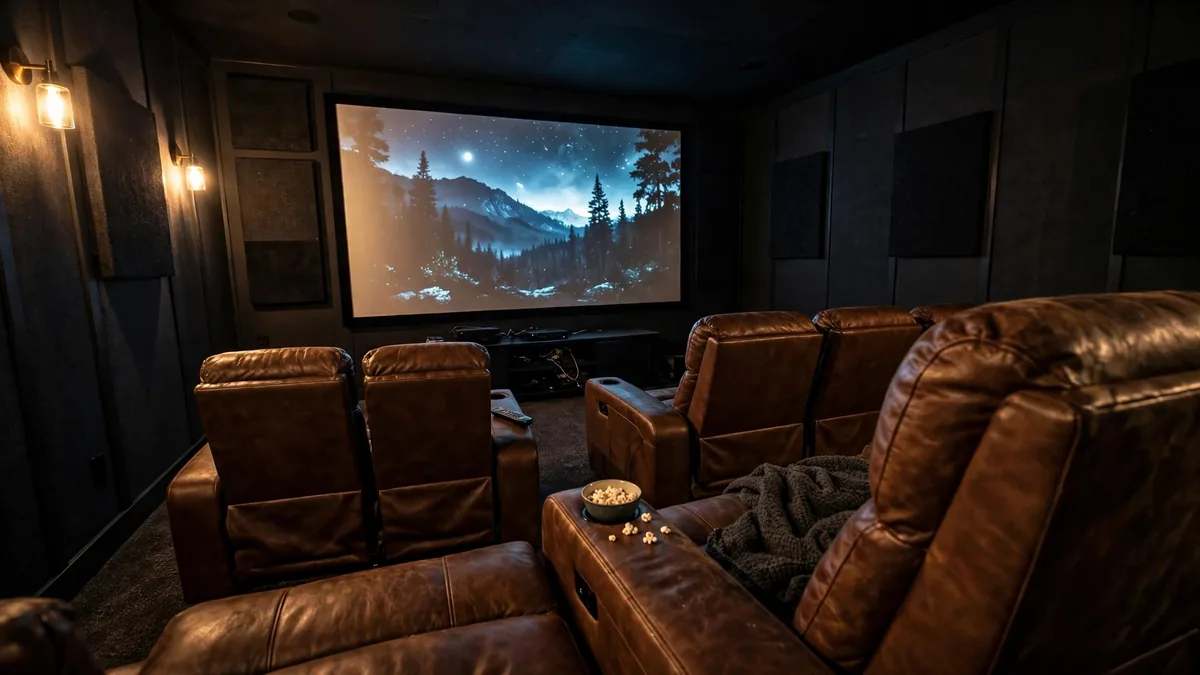
The first cost is the room, and it is the one buyers forget because it is not a thing they can carry home. The room is shaped so sound does not bounce back on itself, with no parallel walls where the design allows it, and every surface is planned before a single speaker is bought. A room built this way cannot be undone cheaply, which is why the best theatres are planned when the house is built, not added to a spare bedroom afterwards.
Reason 2: A screen and projector that disappear into the dark
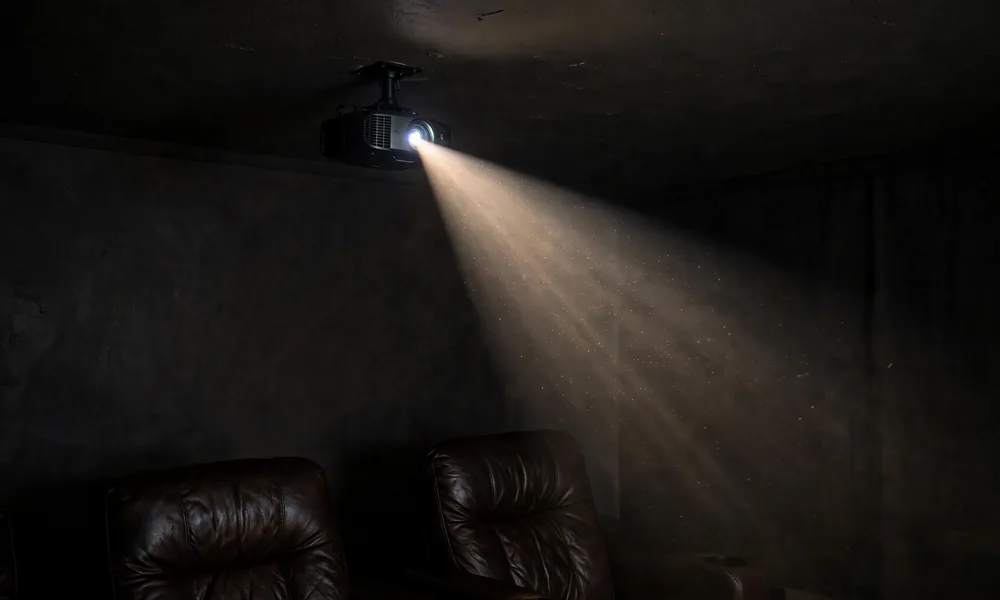
The second cost is the picture, and on a luxury system it comes from a projector, not a television, because no television made can fill a wall the way a projector can. A high-end projector throws a picture twenty feet wide with colours that stay true in a dark room, and it needs a screen made to match it, a woven fabric that lets sound pass through from speakers hidden behind it. The guide to the superyacht cinema specs, explained sets out what screen size, brightness and contrast mean when the room is moving on the sea, and the numbers there are a useful guide to what matters on land too.
Reason 3: Speakers in every direction, all matched to each other
The third cost is the speakers, and there are far more of them than most people expect. The guide to the best superyacht cinemas, ranked shows how the same speaker layouts are fitted into the tightest rooms afloat, and the lesson is the same on land: the number of speakers matters less than how carefully they are matched and placed.

Reason 4: Amplifiers and processing that steer the sound
The fourth cost is the electronics that drive the speakers, and it is the part of the system nobody sees. The guide to how a luxury car sound system is made follows a similar problem in miniature, fitting powerful sound into a small space without letting the car itself rattle, and the home theatre is the same craft at ten times the scale.
Reason 5: Acoustic treatment you cannot see and cannot skip
The fifth cost is the acoustic treatment, and it is invisible by design. Bass traps sit in the corners, soaking up the low notes that would otherwise pile up and boom, and diffusers on the back wall break up reflections so the sound behind the seats stays as clean as the sound in front. A room without treatment sounds like a cave no matter how good the speakers are, and the treatment is what makes the expensive speakers worth their price.
Reason 6: Seating, lighting and control that behave like a cinema
The sixth cost is everything the audience touches: the seats, the lights and the single remote that runs the whole room. The owner never sees the racks of equipment or the cables behind the walls, and that invisibility is itself expensive, because every wire must be hidden, every vent must be silent, and every control must work the first time, in the dark, for a guest who has never used it.
Reason 7: Installation, calibration and very few customers
The seventh cost is the simplest: very few of these rooms are ever built. A luxury home theatre company might finish a few dozen rooms a year, not thousands, so the cost of designing the room, training the installers and keeping the calibration equipment is spread across a tiny number of buyers. The company stays on call for years afterwards, because a projector lamp, a software update or a new sound format can put the whole room out of tune, and the owner is paying for a team that knows the room by name.
The spec sheet at a glance
| Specification | Typical luxury figure | What it tells you |
|---|---|---|
| Screen | Roughly 120 to 200 inches wide, projector fed | How large the picture is, and how it fills the wall |
| Projector | High-end laser projector, calibrated on site | How bright and true the colours stay in the dark |
| Speakers | Often 11 to 15 channels, plus subwoofers | How completely the sound surrounds the seats |
| Amplifiers | One clean channel per speaker, rack mounted | How much power each speaker gets without strain |
| Room build | Double walls, floating floor, sealed door | How well the sound stays in and the house stays out |
| Acoustic treatment | Absorbers, diffusers and bass traps behind fabric | How clear the sound stays, without echoes or boom |
| Seating | Two rows of motorised leather recliners on risers | How long the audience can sit in comfort, with a clear view |
| Control | One-touch lighting, screen, sound and projector | How simply the whole room wakes up and goes to sleep |
| Calibration | Measured in every seat, tuned by ear and microphone | How even the sound is from the front row to the back |
What it costs
A luxury home theatre typically costs an estimated $100,000 to $500,000, depending on the room build, the projector, the speaker count and the level of acoustic treatment. The estimate covers the room and its equipment, not the house around it, and the projector lamps, software updates and re-calibration that follow in the years afterwards are a real part of owning the room.
A rare fact
One detail few guests ever learn is that the best seat in a luxury home theatre is not the one in the middle of the front row, but the one in the middle of the room, about two-thirds of the way back. The front row is for the picture, close and huge, but the middle seat is where the sound was tuned, and regulars in private cinemas learn to claim it before anyone else sits down.
Add the seven costs together, the room, the picture, the speakers, the electronics, the treatment, the seats and the team that tunes it all, and the price of a luxury home theatre stops looking like a luxury and starts looking like a small concert hall. It is a room built to make films feel the way they felt in a great cinema, and the price is the price of that feeling, charged one dark room at a time.