The gates open onto a vehicle that looks less like a camper and more like a small hotel that has learned to drive. The paint is deep and flawless, the windows are tinted, and the side slides outwards with a quiet hum, revealing a living room bigger than some city flats. A visitor asks the price, hears the answer, and laughs, assuming it must be a joke. It is not a joke. A luxury RV can cost more than a house, and the reasons are not obvious until you step inside and start counting what it took to build.
A luxury RV is three expensive things at once: a heavy truck, a hand-built home and a hotel, all sharing the same chassis. Every part of it is made in small numbers, fitted by hand, and expected to survive years of roads, weather and daily use. This article follows the money through the seven costs that add up to the price tag, and explains why a cheaper RV, for all its similarities, is a very different machine underneath.
1. The chassis: a truck underneath the house
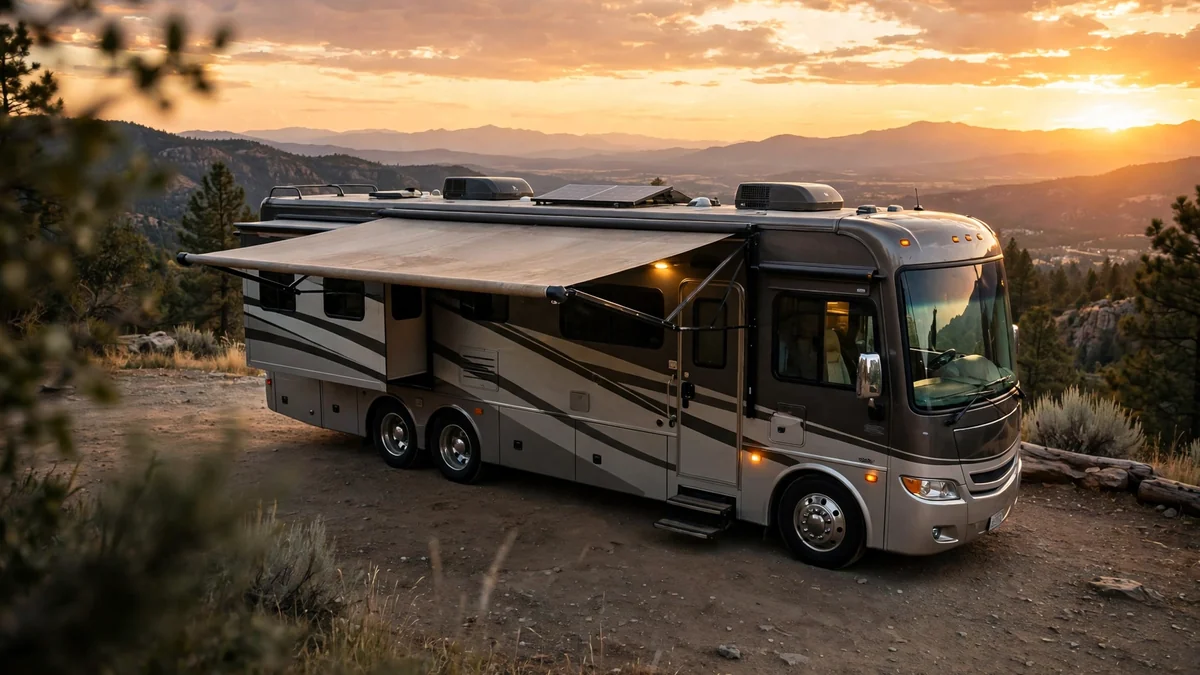
Everything starts with the chassis, and a luxury RV does not sit on a van frame. It sits on a heavy-duty truck or bus chassis, built to carry ten tonnes or more, with an air suspension that keeps the ride smooth and a diesel engine making hundreds of horsepower and enormous torque. That chassis alone costs as much as a good car, before a single wall is built on top of it, and it has to be strong enough to carry a house without flexing, because flexing cracks walls, breaks seals and lets water in.
The engineering is closer to a coach than to a camper, and how a luxury motorhome is made follows the build from bare chassis to finished home, showing how much structure hides behind the paint. A cheap RV uses a lighter chassis and accepts the flex; a luxury one pays for steel, and the owner pays for the silence that follows.
2. Hand-built interiors: a house, fitted by hand
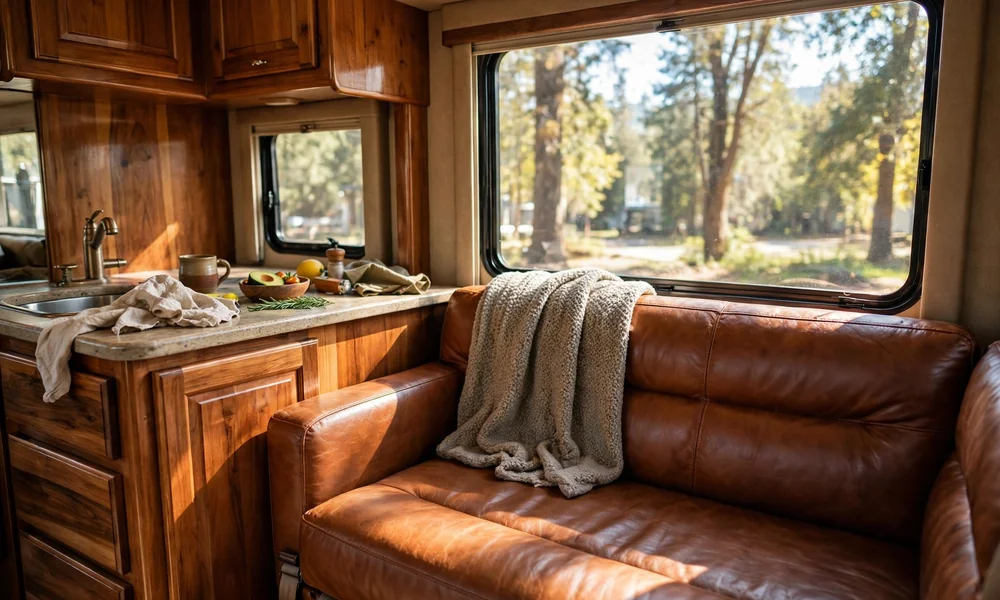
Inside, a luxury RV is a joiner’s workshop on wheels. Solid wood cabinets, stone worktops, leather sofas and a full-size shower are fitted by hand, one vehicle at a time, by craftspeople who spend weeks on a single interior. There is no production line, no robot, and no second identical vehicle coming down the track. The labour alone runs into hundreds of hours, and skilled labour is the most expensive part of any hand-built product.
The materials cost as much as the labour. Real stone is heavy and hard to fit in a moving vehicle; real wood needs to be sealed against damp and movement; leather has to be cut and stitched to fit curves that change with every model. A cheaper RV uses printed plastic that looks like wood and vinyl that looks like leather, and the difference is invisible in a photograph but obvious the first time you touch it.
3. Systems: power, water and climate
A luxury RV carries its own power station, water supply and climate system, and each one is specified like a small building’s. A large lithium battery bank, a big inverter, solar panels on the roof and a quiet generator mean the owner can run air conditioning, cook dinner and charge everything at once without a hook-up. The water system holds hundreds of litres, heats it on demand and filters it, and the heating and cooling are zoned, so the bedroom can be cool while the living room is warm.
4. Slide-outs and space: engineering that moves
The slide-out is the luxury RV’s party trick, a whole section of wall that glides outwards to add a room, and it is also one of its most expensive features. The mechanism has to move tonnes of wall, furniture and glass smoothly, seal perfectly against rain when closed, and stay rigid when open, all while the vehicle drives over rough roads. The motors, rails, seals and structural reinforcement cost thousands, and a single leaking seal can cause damage worth far more.
5. Small numbers: no economies of scale
A car factory makes hundreds of thousands of identical vehicles a year, and the cost of designing each part is spread across all of them. A luxury RV maker might build a few hundred a year, and sometimes only a few dozen of one model. Every mould, every jig and every hour of design time is divided by a tiny number, so each vehicle carries a far larger share of the development cost.
The same logic applies to parts. A luxury RV uses custom windows, custom furniture and custom fittings that are made for that model alone, and suppliers charge more for small orders. The hybrid car in the family garage benefits from mass production; the RV in the driveway does not, and how a luxury hybrid car is made shows the contrast, a complex machine built by the hundred thousand.
6. Technology and safety
The technology in a luxury RV reads like a list from a smart home: touchscreens that control lights, heating, water and power, cameras all round, satellite internet, and driver aids that help a ten-tonne vehicle stay in its lane. Each system has to be integrated with the others, tested in a moving vehicle, and supported for years afterwards, and integration is expensive work that never appears on a brochure.
Safety adds its own bill. Air suspension, stability control, tyre-pressure monitoring and a reinforced structure all cost money, and they are tested to standards that a converted van never faces. The off-road world has its own version of the same logic, and how a luxury off-roader works shows how much engineering goes into keeping a heavy vehicle safe when the road disappears.
7. The price of exclusivity, and a rare fact
Finally, there is the simple fact that luxury RVs are sold to people who want something few others have, and the makers price accordingly. Custom paint, a bespoke interior layout, a nameplate with the owner’s initials: all of it is possible, and all of it costs. The price tag is part of the product, a signal that this is not a holiday vehicle but a statement, and buyers pay for the statement as well as the machine.
A luxury RV costs an estimated $500,000 to $2,000,000, with fully custom builds going higher still. Those are estimates, because prices vary by maker, size and specification, but they explain why a $100,000 RV, for all its comforts, is a different class of machine: lighter chassis, printed surfaces, fewer systems, and a production line instead of a workshop.

Here is the rare fact the price tag never mentions. The most expensive RVs ever built were made for heads of state and rock stars, with bulletproof panels, satellite offices and bedrooms bigger than hotel suites. The modern luxury RV still answers the same question those one-off machines asked: how much of home can you take with you, and how much are you willing to pay to take it?