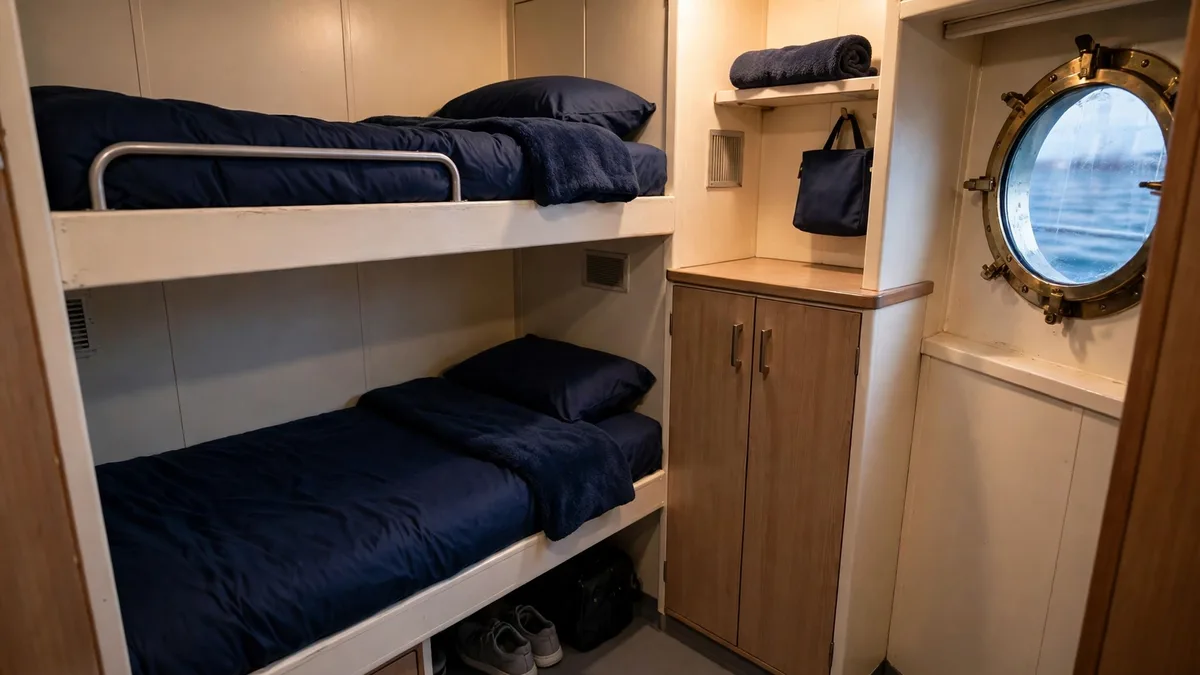
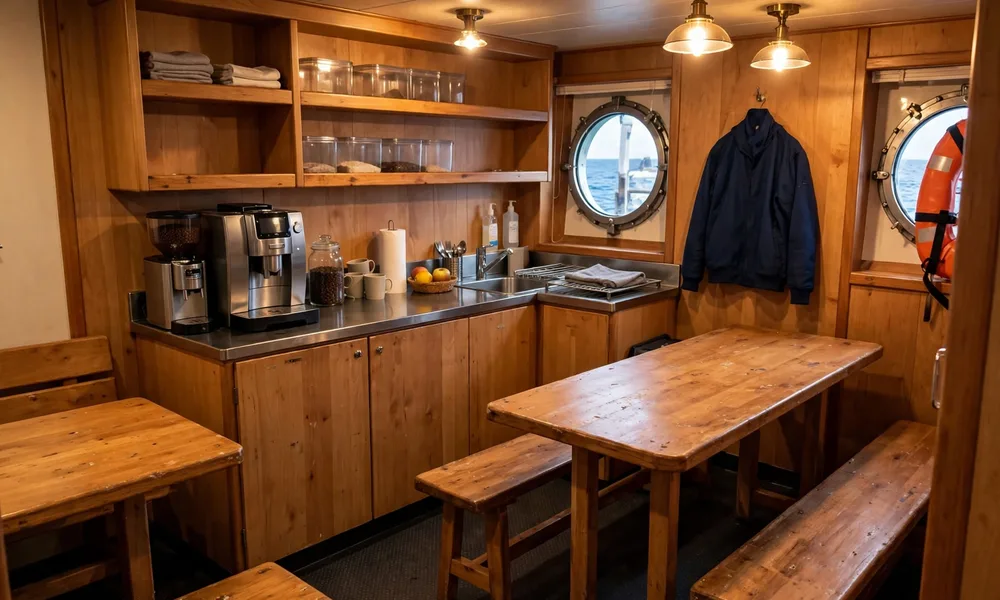
Walk through a luxury ship and the guest suites get all the attention: marble bathrooms, king beds, balconies over the sea. Then open a door below deck and you find the crew quarters, where twenty or thirty people live for months at a time. The rooms are small, the furniture is plain, and nothing in them looks expensive.
That is the surprise. Building crew quarters on a luxury ship costs a fortune, and on a large ship the crew accommodation can run to several million dollars. The cabins are not luxurious, but everything about them is engineered, regulated and fitted to a standard that a hotel on land would never have to meet. Space is the scarcest thing on a ship, and every square metre given to the crew is a square metre taken from the guests.
This article explains where the money goes: the space, the rules, the silence, the systems and the fitting out that make a plain cabin cost far more than it looks.
The Space: Prime Real Estate Afloat
The first cost driver is space itself. On a luxury ship, a square metre of interior is worth more than a square metre of almost any building on land, because the hull is a fixed size and every use competes with every other. A guest suite earns charter income. A crew cabin does not. Yet the rules demand a minimum of space per crew member, and on a ship carrying thirty crew that adds up to hundreds of square metres below deck.
The layout makes it harder still. Crew quarters sit in the least valuable parts of the hull: low down, near the engine room, in spaces with low headroom and awkward shapes. Fitting cabins, bathrooms, corridors and stairways into that space is a puzzle that takes months of design work. Every cabin must have a way out in an emergency, every corridor must be wide enough for a stretcher, and the whole area must be reachable without passing through guest spaces.
The Rules: Minimum Standards That Cost Real Money
Crew accommodation on a large ship is governed by international rules, and those rules are detailed. They set minimum cabin sizes, minimum headroom, ventilation rates, lighting levels, noise limits and the number of bathrooms per crew member. A cabin that meets the rules on paper but fails a noise test in practice has to be rebuilt, and rebuilding a finished cabin inside a steel hull is one of the most expensive jobs in shipbuilding.
Ventilation is one of the biggest hidden costs. Crew cabins are deep inside the ship, far from fresh air, so the ventilation system must bring in clean air, remove stale air, and do it without carrying smells from the galley or the engine room. The system runs day and night, and it is sized for full occupancy in tropical heat. The ducting alone, threaded through a crowded hull, costs more than most people would guess.
Fire rules add another layer. Every cabin needs fire-resistant bulkheads, a fire detection system, and escape routes that work in smoke and darkness. The materials must be certified, the doors must close by themselves, and the whole arrangement is inspected and approved before the ship can sail. The luxury yacht galley sits under the same rules, and the crew quarters share its fire zones, which means the standards apply to the whole lower deck, not just one room.
Silence and Systems: The Invisible Luxury
The most expensive thing about a crew cabin is something you cannot see: silence. Crew work in shifts, so at any hour half the crew is asleep while the other half is working. The cabins sit near the engine room, the generators and the laundry, and the ship itself hums, vibrates and creaks. Making a small cabin quiet enough to sleep in takes floating floors, double-skinned walls, acoustic doors and vibration mounts under every piece of equipment nearby.
The systems inside the cabin are small but costly. Each cabin has its own climate control, its own lighting, its own intercom and its own alarm panel, all wired to work when the ship loses power. The bathrooms are shared between two cabins in most cases, but they are built like small wet rooms with waterproof floors, marine toilets and ventilation that never stops. A leaking bathroom in a steel hull rots the structure around it, so the waterproofing is done to a standard a land hotel would never need.
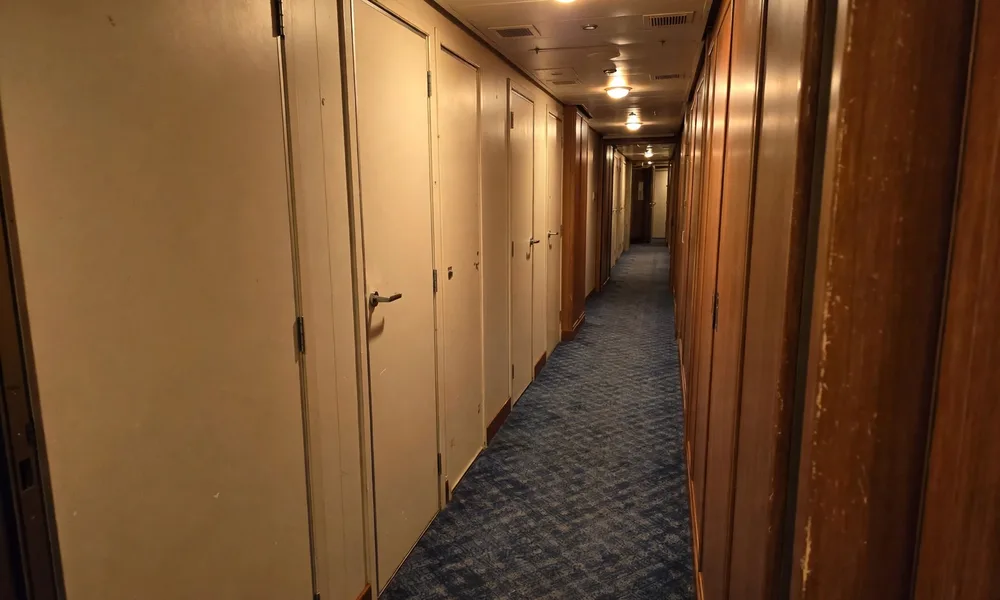
The Price, in Plain Terms
So what does it all cost? The figures are estimated, because every ship is different and yards rarely publish their prices, but the shape of the bill is well understood. A single crew cabin, fully fitted with its share of bathrooms, corridors and systems, is estimated to cost between 60,000 and 120,000 dollars on a large luxury ship. Multiply that by twenty-five or thirty cabins and the crew accommodation alone is estimated at 1.5 to 3.5 million dollars.
The mess room, laundry and recreation spaces add an estimated 300,000 to 600,000 dollars more, and the ventilation, fire protection and acoustic work are usually counted inside the cabin figures rather than as a separate line. A full refit of crew quarters on an older ship can cost as much as building them new, because the old modules have to be cut out of the hull before the new ones can go in.
That is a large sum for rooms the guests never see. But it is small next to the cost of a crew that cannot rest, cannot eat properly and cannot work safely. A tired crew makes mistakes, and on a ship worth hundreds of millions of dollars, a mistake is far more expensive than a good cabin. The estimated price of the crew quarters is really the price of keeping the whole ship running.
A Rare Fact About the Crew Quarters
Here is a detail that surprises people who have never lived below deck. On many luxury ships the crew cabins are fitted with blackout blinds that are heavier and better made than the ones in the guest suites. The reason is simple: crew sleep during the day, and a guest suite is only ever slept in at night.
What the Price Means for You
If you are buying or chartering a luxury ship, the crew quarters tell you more about the ship than the guest suites do. A ship with quiet, well-ventilated crew cabins, a proper mess room and a laundry that works will have a crew that stays, works well and looks after the ship. A ship that saved money below deck will show it in other ways: high crew turnover, tired faces, and small things going wrong.
And the luxury yacht master cabin may be where the owner sleeps, but the crew quarters are where the ship is really run from, which is why how a luxury yacht gym is made and every other guest comfort depends on people who rest below deck. Ask to see the crew area on your next tour. The answer will tell you how the ship is really run.