You will never see the propeller shaft of a luxury ship while it is working. It runs in a tunnel under the floor, from the gearbox in the engine room to the propeller at the stern, turning day and night in darkness. Yet it is one of the most important parts of the ship. If the shaft fails, the ship stops, and there is no spare carried on board.
The specification sheet for a propeller shaft reads like a list of big numbers: diameter, length, weight, material grade, and the speed at which it turns. Each number is the result of a calculation about torque, bending, vibration and corrosion, and each one is a compromise between strength and weight. A shaft that is too thin will twist and break. One that is too thick wastes fuel carrying its own weight.
This guide explains the figures on a luxury ship propeller shaft specification sheet in plain language, from the steel it is made of to the bearings that hold it in line.
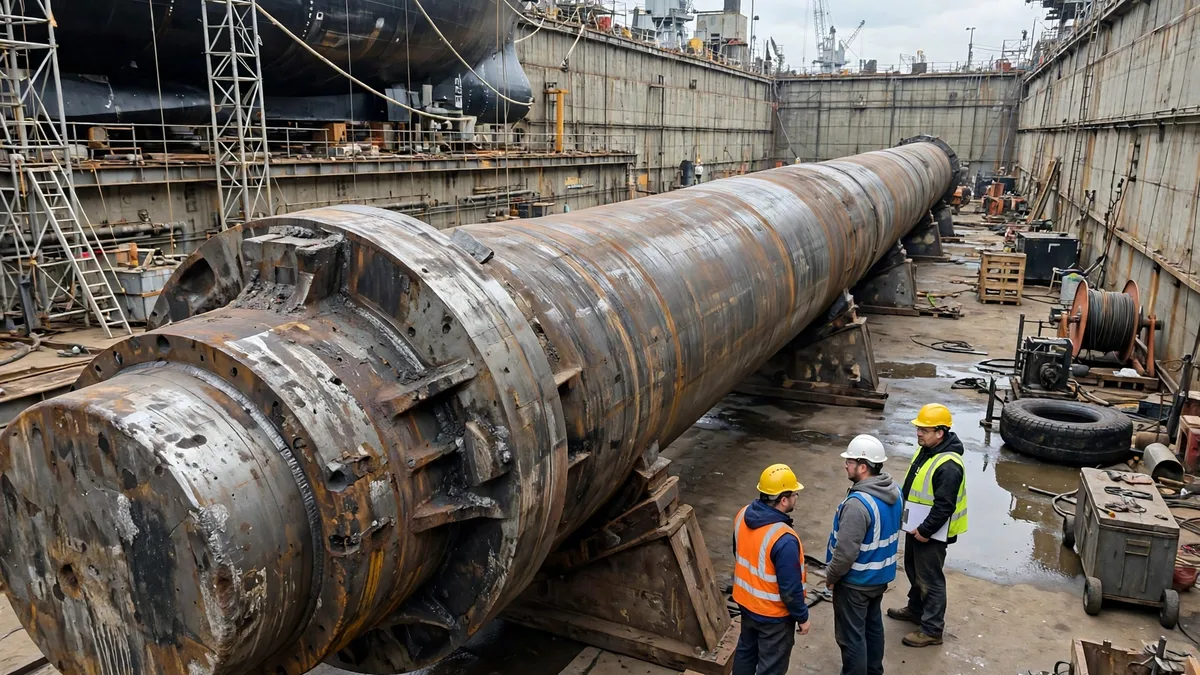
Luxury Ship Propeller Shaft Specs at a Glance
| Specification | Typical 50 m Ship | Typical 80 m Ship | Typical 120 m Ship |
|---|---|---|---|
| Shaft diameter | 250-300 mm | 350-450 mm | 500-650 mm |
| Shaft length | 12-18 metres | 20-30 metres | 30-45 metres |
| Shaft weight | 8-15 tonnes | 20-40 tonnes | 50-90 tonnes |
| Shaft speed | 150-250 rpm | 120-200 rpm | 90-150 rpm |
| Material grade | Forged carbon steel | Forged alloy steel | Forged alloy steel |
| Bearings in line | 3-4 bearings | 4-6 bearings | 6-8 bearings |
Diameter and Length: The Shaft Is Sized by Torque
The diameter of a propeller shaft is decided by torque, the twisting force the engine sends down the shaft to the propeller. On a 50 metre ship the shaft is usually 250 to 300 millimetres across. On a 120 metre ship it can be 500 to 650 millimetres, as thick as a tree trunk. The diameter grows faster than the ship, because torque grows with engine power, and a bigger ship needs far more power to move at the same speed.
Length is the other big number, and it is simply the distance from the gearbox to the propeller. On a 50 metre ship that is 12 to 18 metres. On a 120 metre ship it can be 30 to 45 metres, which means the shaft is made in sections and joined with couplings. Each section is machined, balanced and aligned on its own, then joined in the ship so the whole line runs true. A shaft that is out of line by even a millimetre will vibrate, and vibration is the enemy of everything it touches.
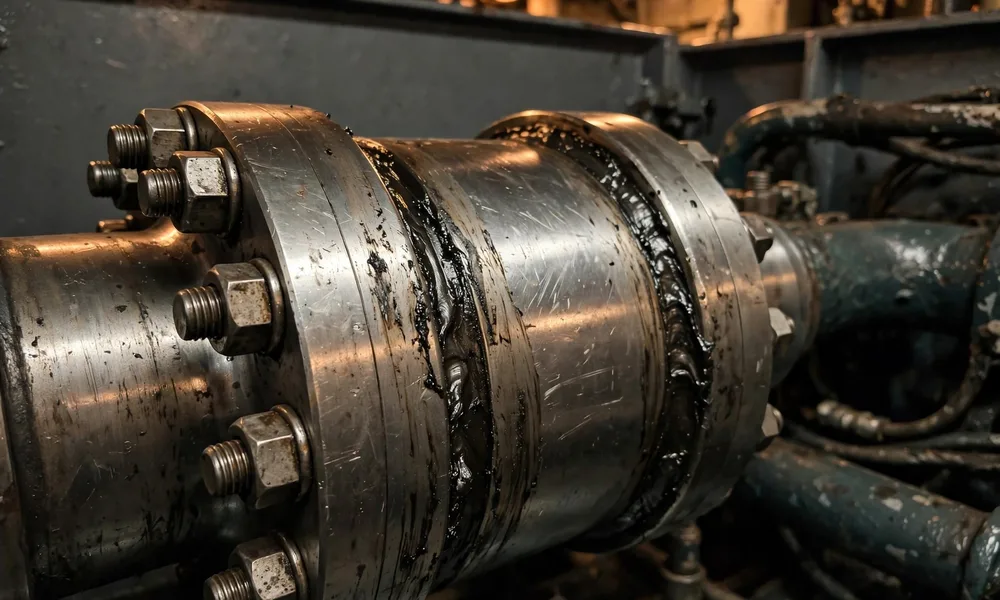
Material: Forged Steel, Tested Piece by Piece
A propeller shaft is not cast or rolled: it is forged, hammered into shape while hot so the grain of the steel follows the shape of the shaft. Forging makes the steel tougher and less likely to crack, which matters when the shaft is twisting back and forth thousands of times an hour. The specification sheet names the material grade, usually a forged carbon steel on smaller ships and a forged alloy steel on larger ones, with added elements that improve strength and resistance to corrosion.
Bearings and Alignment: Keeping a Long Shaft True
A propeller shaft does not hang in the air: it is held by bearings along its length, three or four on a small ship and six to eight on a large one. The bearings support the weight and let the shaft turn freely, and they are the parts that wear out first. The specification sheet lists the bearing type, usually white metal or a modern polymer, and the clearance between the shaft and the bearing, measured in fractions of a millimetre.
Alignment is the most demanding part of the whole installation. The gearbox, the bearings and the propeller must all sit on exactly the same line, and that line changes as the ship loads, unloads and flexes in a seaway. The yard aligns the shaft with the ship afloat and loaded, using lasers and dial gauges, and the sheet records the tolerances. A shaft that is aligned on land and wrong at sea will eat its bearings in months.
The stern tube is the bearing where the shaft leaves the hull, and it has its own seals to keep the sea out and the lubricating oil in. Modern stern tubes use water lubrication or sealed oil systems, and the sheet states which one is fitted and how it is monitored. A stern tube leak is not a small problem: it can flood the engine room or pollute the sea, and the rules on both are strict. The yacht propeller specifications describe the blades at the end of the line, but the shaft is what delivers the power to them, and it deserves the same attention.
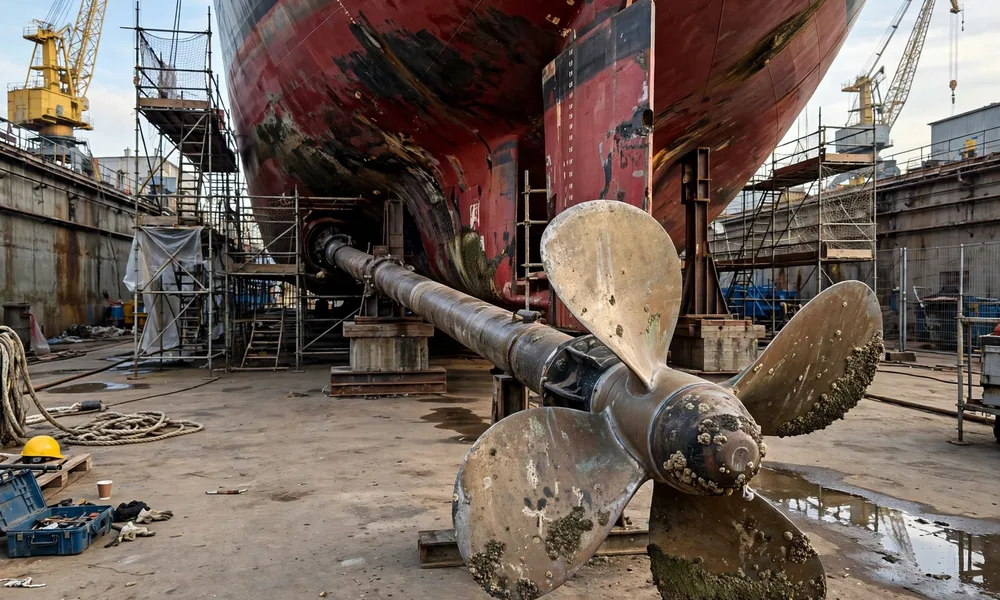
Speed and Vibration: The Numbers That Keep It Quiet
Shaft speed is listed in revolutions per minute, and it falls as ships get bigger: 150 to 250 rpm on a 50 metre ship, and only 90 to 150 rpm on a 120 metre ship. Big propellers turn slowly, because a large propeller turning fast would cavitate, tearing the water apart and losing thrust. The shaft speed is matched to the propeller and the gearbox, and the sheet records the full range, from slow manoeuvring speed to full sea speed.
Vibration is the number the crew feel rather than read. A shaft that is even slightly out of balance, or a propeller with a damaged blade, sends a tremor through the whole ship. Guests feel it in their cabins and the crew feel it in the engine room. The specification sets limits for vibration, measured during sea trials, and the yard must show the shaft meets them before the ship is handed over. The luxury ship engine room is built around the shaft line, and a quiet shaft is the sign the whole installation was done right.
A Rare Fact About the Propeller Shaft
Here is a detail that surprises people who work with ships. A propeller shaft is so long and heavy that it sags under its own weight when it is lying on supports in the workshop, and the sag is measured and allowed for when the shaft is machined. Instead, the machinists work to a curve that becomes straight once the shaft is held by its bearings. The shaft is built bent, on purpose, so that it runs true.
What the Specs Mean for You
If you are buying, chartering or touring a luxury ship, you will probably never see the propeller shaft. But the specification sheet tells you a great deal about the ship. A forged shaft with full test records, sensible bearing clearances, a sealed stern tube and vibration figures from real sea trials all point to a ship built to last. Vague figures or missing test standards point the other way.
The shaft is the longest single piece of steel on the ship, and it does its work unseen, turning in the dark for years at a time. When it is right, nobody notices it. When it is wrong, everyone does, and the yacht hull fairing specifications will not save a ship whose shaft is shaking itself apart. That is why the numbers on this sheet, dull as they look, are worth reading properly.