Step aboard a luxury ship and the first surface you meet is the deck. It looks simple, just a flat surface to walk on, warm under bare feet and pale gold in the sun. It is also one of the most expensive square metres on the whole ship. A teak deck on a large yacht can cost as much as a house, and the bill keeps growing every year it is kept in the condition owners expect.
The surprise is understandable, because a deck does not move, it has no engine, and it holds no electronics. Yet it is a working surface that carries thousands of people, tonnes of equipment, and the full force of the sea, all while staying dry, level and safe. It must be strong enough for the machinery below and comfortable enough for bare feet above, and that compromise is where the money goes.
This guide explains where the money goes, from the timber in the planks to the hands that lay them, so the price of a luxury ship deck starts to make sense.
Where the Money Goes
| Cost Driver | Typical Share | Why It Costs |
|---|---|---|
| Teak timber | 30–35% | Slow-grown, certified, scarce |
| Skilled laying labour | 30–35% | Weeks of hand fitting per deck |
| Steel structure below | 15–20% | Stiff, level, watertight framing |
| Caulking and adhesives | 5–10% | Marine sealants, applied by hand |
| Fittings and drainage | 5–10% | Rails, scuppers, hatches, drains |
The Timber: Teak That Took a Lifetime to Grow
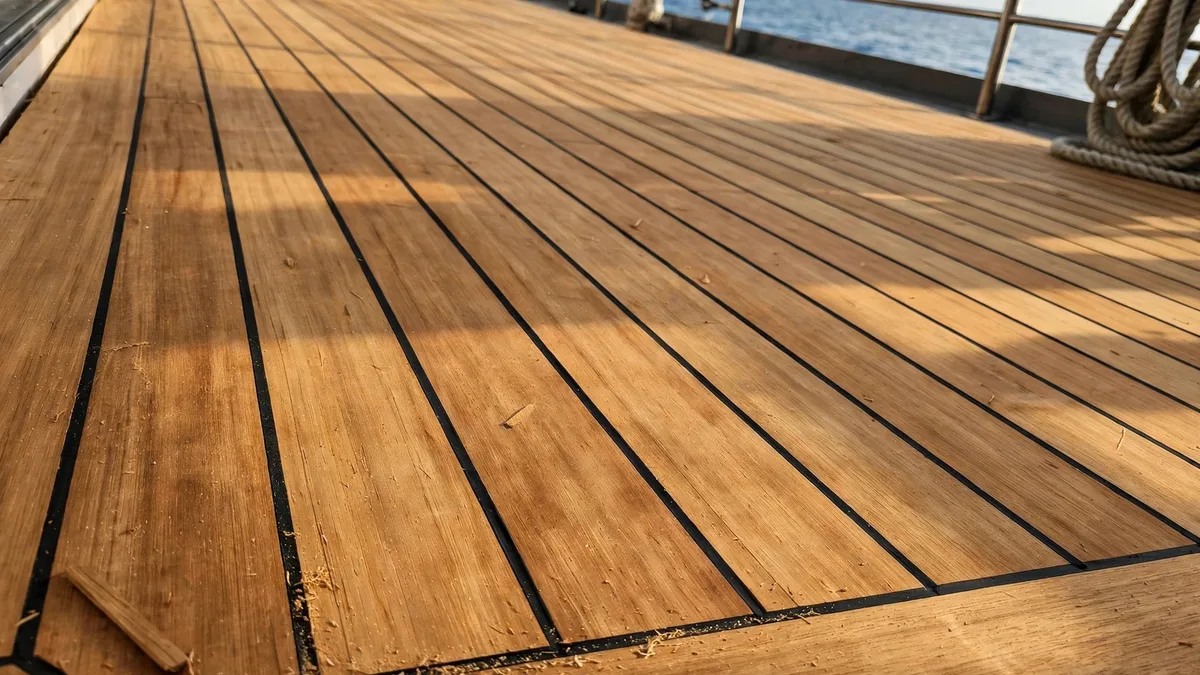
The biggest single cost is the timber itself. A luxury deck is laid in teak, a hardwood that is naturally oily, resists rot, stays cool in the sun, and grips bare feet even when wet. No other wood does all of that, and teak is becoming harder to buy. The best timber comes from slow-grown trees that are decades old, it must be certified as legally and sustainably harvested, and much of each log is wasted, because only the straightest, clearest boards are good enough for a deck.
A large ship can need thousands of square metres of teak, and every plank is cut, graded and matched before it is laid. The boards must be thick enough to be sanded many times over the life of the deck, usually 8 to 12 millimetres of teak over the steel below, and the colour must match from one end of the ship to the other. The luxury ship deck specifications list the thicknesses and loads, and the timber bill is the price of meeting them in wood that took a lifetime to grow.

The Labour: Weeks on Hands and Knees
The second cost is the labour, and it is the part most people underestimate. A teak deck is not laid by machine. Each plank is cut to fit the curve of the deck, bedded in adhesive, screwed down, plugged, and then caulked by hand with a sealant that must be forced into every seam and left to cure. A team of deck carpenters can spend weeks on a single deck, working on their knees, and a large ship has many decks.
The skill is in the details the eye barely notices. The seams must run true across the whole deck, the planks must follow the gentle camber that sheds rainwater, and the pattern must flow around hatches, rails and fittings without a single awkward joint. A deck laid by a rushed crew looks fine for a season, then the seams open, the plugs lift, and water finds its way to the steel below. The how a yacht sun deck is made guide shows the same hand work at a smaller scale, and the same weeks of kneeling that the bill pays for.
The Steel Below: A Deck That Must Not Flex
Under the teak sits the steel deck itself, and it is the third cost. The steel is usually 10 to 20 millimetres thick, laid over a frame of beams and girders, and it must be stiff as well as strong. A deck that flexes underfoot feels wrong even when it is perfectly safe, so the designers add depth to the beams until the surface stays flat and quiet, and that steel is heavy, expensive, and slow to weld.
The steel is also part of the ship’s overall structure. The main deck acts like the top flange of a giant beam, carrying the bending loads as the ship rides over waves, which is why every opening for a hatch or a stairwell is carefully framed and reinforced. The deck must also be watertight, cambered so rain runs to the scuppers, and fitted with drains that never clog. The swim platform guide shows what happens when a deck must also move, and the same structural thinking behind a surface that looks simple.
Upkeep: The Bill That Never Stops
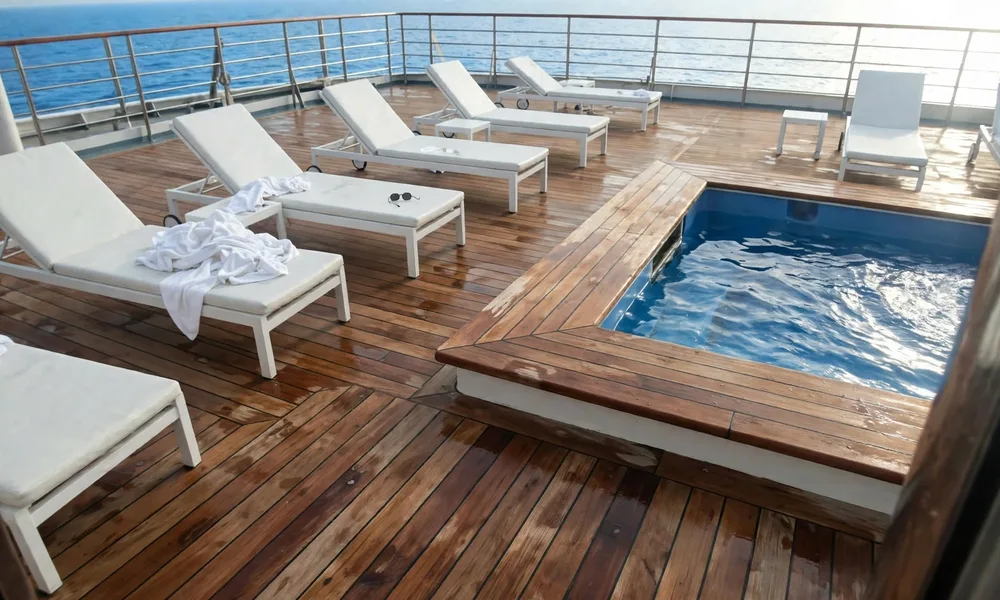
The last cost is the one owners feel every year: upkeep. Teak is not a fit-and-forget surface. It must be washed with salt water, never scrubbed across the grain, and sanded lightly when the surface greys. The caulking must be checked seam by seam, and any seam that opens must be cut out and refilled before water reaches the steel. On a large ship that work never ends, and the crew spend part of every week on it.
Every decade or so the deck must be replaced outright, because the teak has been sanded down to the screws. A full re-deck is a refit in itself: the old planks are stripped, the steel is inspected and repaired, and thousands of new planks are laid by hand all over again. Owners who buy a ship with a tired deck soon learn that the purchase price was only the first payment, and the deck is the reason why.
A Rare Fact About Deck Prices
Here is a detail that surprises people who price a deck by the square metre. The fittings in the deck often cost more than the timber around them. A single flush hatch, a deck light, or a section of polished rail can cost thousands, and a large ship carries hundreds of them, each one set into the teak, sealed against the sea, and finished to the same standard as the planks. The deck looks like wood, but much of its price is in the metal and glass hidden in plain sight.
What the Price Buys You
If you are buying a ship, the deck price buys three things: timber that will last decades, hands that laid it properly, and steel below that will not flex or leak. A cheap deck can look the same on the day it is laid, and the difference only shows in the third season, when the seams open, the plugs lift, and the water finds the steel.
If a price looks too good, ask what was left out. A deck without certified teak, without proper camber, or without sealed fittings is not a bargain. It is a surface that will ask for its money later, under bare feet, in the rain, when there is nowhere else to walk. A good deck is expensive once, and a cheap one is expensive forever.


