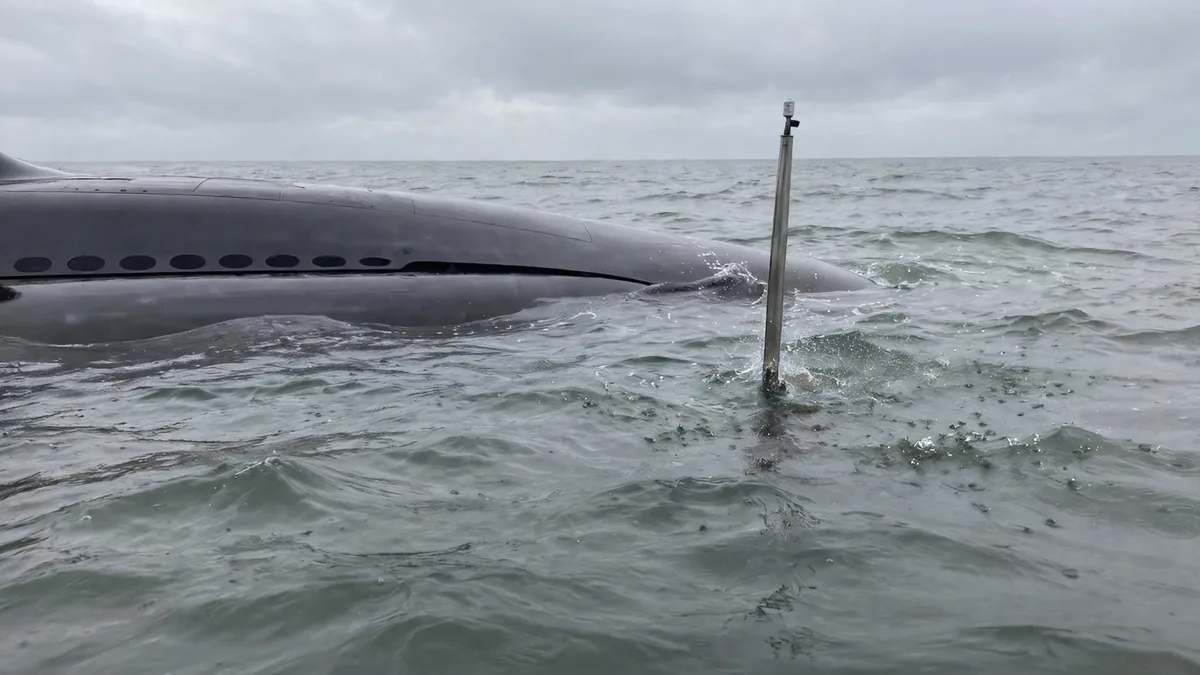
It is a tube. A long, thin tube that pokes out of the top of a submarine, just far enough to break the surface and let the engines breathe while the boat stays hidden below. There are no screens, no leather, no polished wood, nothing a guest would ever admire. And yet a snorkel mast on a luxury submarine can cost hundreds of thousands of dollars, and the bill for the whole breathing system runs higher still. Owners who have happily paid millions for a submarine look at the invoice for a mast and ask the same question: how can a tube cost that much?
The answer is that the snorkel mast is the one part of a submarine that must do two opposite things at once, perfectly, every time. It must let air in freely, in large volumes, so the diesel engines can run at full power. And it must keep water out completely, in an instant, the moment a wave breaks over it, because a single gulp of seawater into a running diesel engine can destroy it in seconds.
This article follows the money up the mast. It looks at the precision head valve, the pressure seals, the exotic alloys, the testing regime and the certification that turn a simple tube into one of the most expensive small parts on a submarine, and it explains why each one costs what it does. By the end, the mast will still look like a tube, but its price will make sense. Breathing underwater is a simple idea. Doing it safely, at speed, in a storm, is one of the hardest engineering problems on the boat.
Where the Money Goes
1. The head valve: a decision made in milliseconds
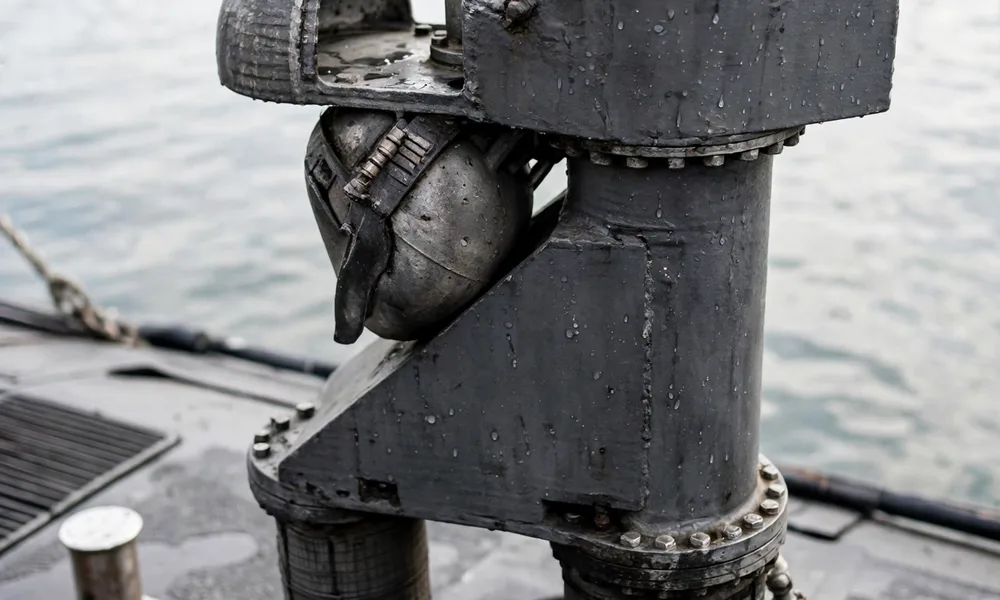
The first cost is the head valve, the device at the very top of the mast that opens and closes the air intake. It is not a simple flap. It is a precision-engineered valve, balanced so that it can snap shut in a fraction of a second when a wave covers it, and open again just as fast when the wave passes, dozens of times a minute. The valve must seal perfectly against seawater at pressure, yet move freely enough to respond to a wave, and it must do this without any power of its own, because it has to work even if the electrics fail. Designing and machining a valve to that standard is specialist work, and each one is tested, adjusted and tested again before it is allowed near a submarine.
2. Pressure seals and the gland at the bottom
The second cost is the sealing. The mast slides up and down through the hull, raised when the submarine is at periscope depth and lowered flush when it dives deep, and the seal where it passes through the hull must hold back the sea at the submarine’s full diving depth. That seal, called a gland, is a stack of precision rings and packing, machined to tolerances of hundredths of a millimetre, and it must stay watertight while the mast moves, while the boat rolls, and while the pressure outside rises to many times atmospheric. A seal that weeps is not a nuisance on a submarine. It is a leak into a pressure hull, and it is treated as seriously as any other.
3. Exotic alloys and the tube itself
The third cost is the tube. The mast is not made from ordinary steel. It is built from high-strength, corrosion-resistant alloys, often with specialist coatings, because it lives in salt water, it is thin, and it must be both strong and light: strong enough to survive a wave slamming into it at speed, light enough not to unbalance the submarine’s trim. The tube is machined, ground and polished to a finish that would shame a rifle barrel, because any roughness creates drag and noise, and a noisy submarine is a submarine that can be found. The outside of the tube is coated to resist marine growth, because even a thin layer of weed changes the way water flows past the mast and makes the submarine easier to hear.
4. Testing, testing and more testing
The fourth cost is the testing, and it is the largest single item on the bill. A snorkel mast is tested more than almost any other part of the submarine. The head valve is cycled thousands of times in a test tank, with waves thrown at it, to prove it will close every time. The mast is pressure-tested to depths beyond the submarine’s rating. The whole assembly is run in a simulator, then fitted to the boat and tested again at sea, in real waves, with the engines running, while engineers watch the valve work and measure every drop of water that gets through.
5. Certification, spares and the cost of getting it wrong
The fifth cost is certification and spares. The snorkel mast is a safety-critical system, so its design must be approved by the submarine’s classification society, its materials must be certified, and its test results must be documented and kept for the life of the boat. Then comes the spare: a submarine that loses its snorkel mast to storm damage or a collision cannot simply wait for a new one to be built, so yards and operators keep spare masts and spare head valves in store, each one tested and sealed against the weather. The spare is insurance, and like all insurance it costs money while it sits unused. When it is finally needed, in a refit or after damage, it pays for itself in the weeks of patrol time it saves.
What It Costs
A luxury submarine snorkel mast is typically an estimate of $200,000 to $600,000 fitted and tested, depending on the size of the boat and the depth it is rated for, with the most elaborate masts, carrying extra sensors and the fastest valves, reaching the top of that range. The head valve and the gland account for a large share, the alloys and machining for another, and the testing and certification for the rest. Running costs are steady: the head valve is tested on a schedule, the seals are changed before they wear out, and the coating is renewed whenever the boat is in dry dock.
A Rare Fact
Here is something few people outside the submarine world know: the mast has a drain. When the head valve closes and a wave passes, the water trapped in the top of the tube has to go somewhere, so a drain line carries it away before the valve reopens. Without it, the first breath after a wave would be a gulp of seawater. It is a humble line on the spec sheet, a pipe no wider than a finger, and it is one of the reasons the engines keep running when the sea is doing its worst.
A snorkel mast looks like a tube because it is a tube, but it is a tube that must think, in milliseconds, about whether the sea above it is air or water, and it must never make a mistake. The price is the cost of that certainty. Readers who want to see how these masts work in practice can read how a luxury submarine snorkel mast works, while luxury submarine snorkel mast specs explained and how a luxury submarine conning tower is made show its closest neighbours on the boat.