At first light in a quiet anchorage, the foredeck wakes before the guests do. A crew member walks forward to the steel machine bolted to the deck behind the bow. Soon the chain will rattle out and the anchor will sink to the seabed. That machine is the anchor windlass.
A windlass looks simple from the outside, a toothed wheel, a drum and a motor housing, but it does three very different jobs. It lets the anchor fall under control, holds chain and anchor while the ship rides at anchor, and hauls everything back up again.
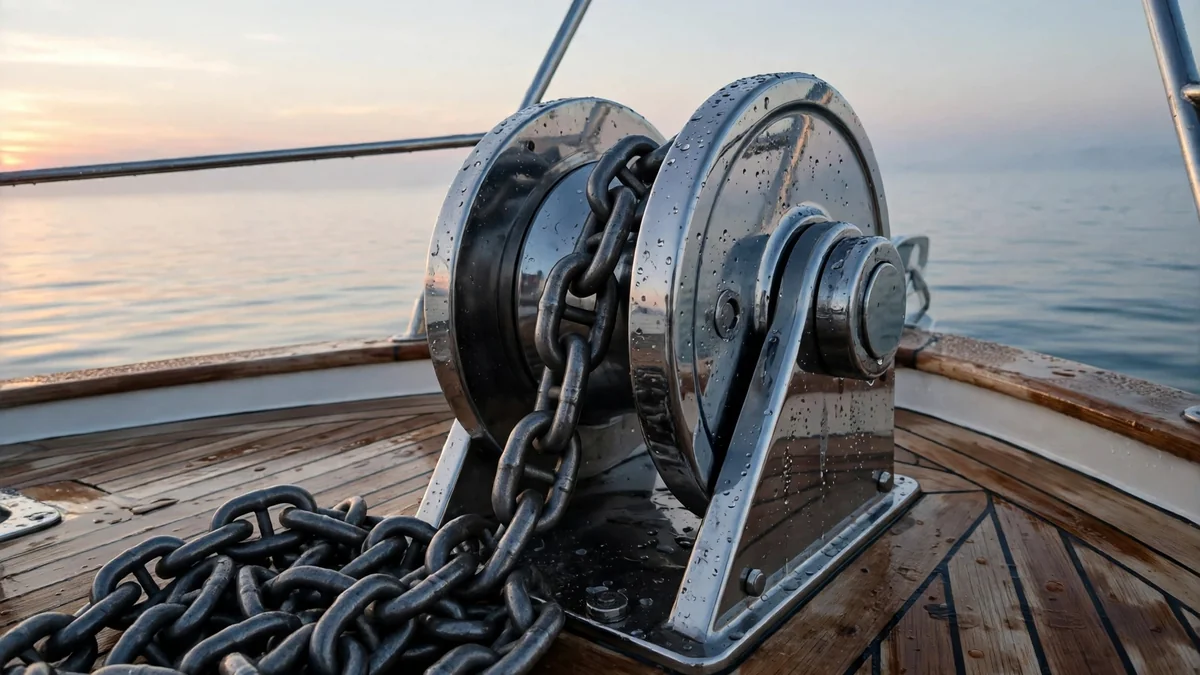
How It Works
Step 1: Standing by with the anchor secured
Long before the order to anchor, the windlass is already holding the anchor. The anchor sits snug in its pocket, its weight hanging on the chain, which runs up over the gypsy, the toothed wheel that grips it. The brake is set hard so the gypsy cannot turn, and a chain stopper takes the strain off the windlass.
As the ship slows, the crew prepares the foredeck. The brake is tested, the clutch is worked in and out, and the chain is confirmed free in its locker below. The anchor is eased out of its pocket to hang clear of the bow, held only by the brake. The way a luxury anchor windlass is made shows the parts the crew is trusting: gypsy, gearbox and brake.
Step 2: Letting go, the controlled fall
When the bridge gives the order, the crew does not switch the motor on. Dropping anchor is a job for gravity, not power. The operator disengages the clutch, freeing the gypsy from the motor, and eases the brake off by hand. The anchor’s weight pulls the chain over the gypsy, and the chain pours out.
Speed is everything here. Run the chain too fast and it piles up in the locker, or the anchor hits the seabed too hard to hold. The operator controls the fall with the brake alone, squeezing the band tighter to slow the gypsy, easing it to let the chain run. You can hear when the anchor touches bottom: the chain goes slack, then tightens as the ship drifts back over it. The chain is the windlass’s partner here, and the way a luxury ship anchor chain works explains how each link carries the load.
Step 3: Holding fast at anchor
Once enough chain is out, usually five to seven times the water’s depth, the operator sets the brake hard and locks the gypsy. But the brake is not what holds the ship for the day. The crew sets a chain stopper or a devil’s claw, a steel hook that takes the pull, so the windlass does not carry the strain for hours. The brake stays on as backup, but the stopper does the holding.
With the anchor set, the ship swings gently on its chain as the wind shifts, and the windlass simply waits. The crew checks it through the day: the brake is still tight, the stopper is still seated, and the chain is not sawing against the hawsepipe.

Step 4: Weighing anchor, the long haul home
Leaving is when the windlass earns its keep. The crew takes the load back onto the windlass, releases the stopper, and engages the clutch, connecting the gypsy to the motor and gearbox. The operator presses the foot switch, the motor turns, the gearbox steps the speed down and the torque up, and the gypsy hauls the chain in.
At first the work is light, just the weight of the chain lying on the seabed. Then the chain comes taut, the bow dips slightly, and the windlass is pulling the ship forward over its own anchor. This is the hardest part of the haul. The crew hoses the mud off each link before it disappears down the chain pipe, because mud carried into the locker turns to concrete and jams the gypsy next time. When the anchor breaks free, the load drops, the chain comes up faster, and the anchor rises below the bow.
Step 5: Stowing the anchor and securing for sea
The last metres are the most careful. The operator slows the windlass to a crawl as the anchor nears the bow, so it does not slam into the hull. The anchor is drawn up into its pocket and seated home, the chain is tensioned just enough to hold it firm, and then the brake is set hard and the clutch is disengaged.
Below deck, the chain falls into its locker in a neat cone, guided by the chain pipe. If the pile grows lopsided, a crew member goes below to level it, because a leaning pile can collapse and jam the pipe. The pipe is part of the same system, and the way a luxury ship hawsepipe is made follows the steel tube the chain rattles through.
Step 6: Controls, safety and what goes wrong
On a modern luxury ship the windlass is driven from more than one place. There are foot switches on deck, so the operator can keep both hands on the brake and the washdown hose, and a remote control on the bridge, so the captain can haul the anchor. The controls are simple, one switch for up, one for down, and a big stop button.
When things go wrong, they go wrong fast. A chain that jumps the gypsy can jam the wheel solid, and the crew must stop the motor at once before the gearbox is damaged. A brake that slips will let the anchor run away, so the operator’s first move is always to the brake, never to the motor. If the power fails entirely, the windlass can still be worked by hand: the brake lowers the anchor, and a hand lever walks the chain in, one pull at a time.
| Part | What it does while anchoring |
|---|---|
| Gypsy | Toothed wheel gripping the chain, free on the way down, driven on the way up |
| Brake | Controls the falling chain and locks the gypsy |
| Clutch | Connects the gypsy to the motor, frees it for the fall |
| Motor and gearbox | Hauls chain and anchor up, trading speed for torque |
| Chain stopper | Takes the strain off the windlass at anchor |
| Controls | Foot switches on deck and a bridge remote, up, down and stop only |
| Power failure | Brake lowers the anchor by hand, lever walks the chain in |
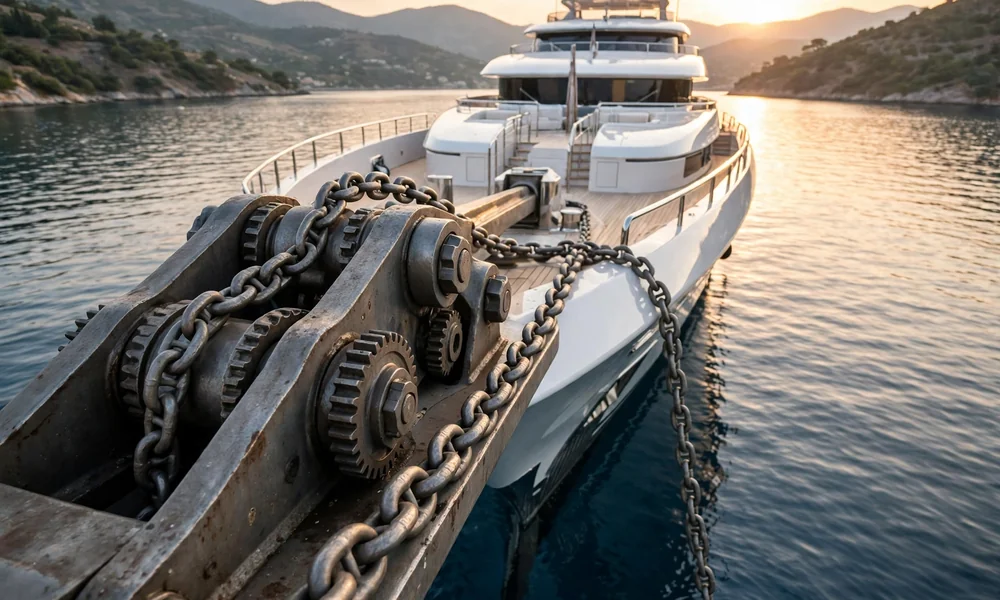
A luxury ship anchor windlass typically costs an estimated $8,000 to $50,000 installed, depending on ship size and the weight of chain and anchor it must lift. A compact unit for a modest yacht sits near the bottom, while a large hydraulic windlass for a superyacht costs far more.
Here is a rare fact worth knowing. The word windlass comes from the Old Norse vindass, a winding axle, older than the steam engine. Sailing ships used a hand-worked windlass, the crew pushing wooden bars and walking in circles. The motor and the gypsy are new, but the job has not changed in a thousand years: let the anchor down gently, hold it fast, and bring it home.
A luxury ship anchor windlass is a quiet machine for most of its life, sitting polished on the foredeck in the sun. Twice a day it does the hardest job on the ship, dropping tonnes of steel to the seabed and hauling them back. The anchor goes down on gravity, the ship rides on a stopper, and the windlass brings it all home, one slow link at a time.


