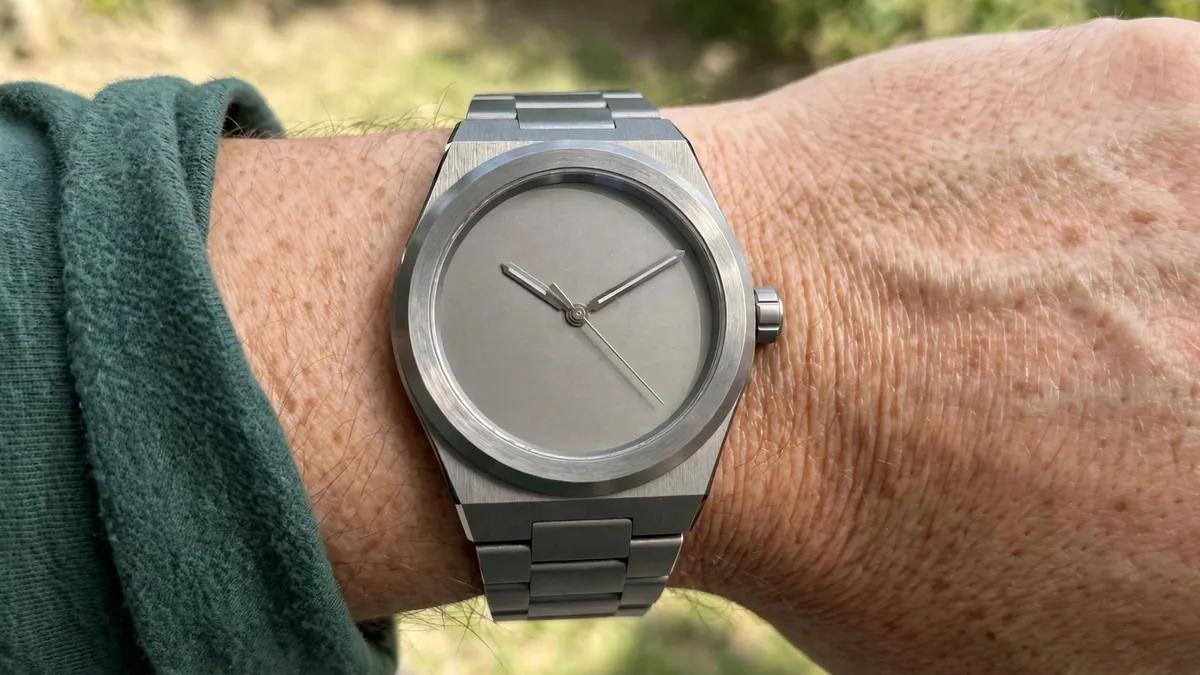
Hold a steel watch in one hand and a titanium watch in the other, and the difference is immediate and slightly unsettling. The titanium watch feels like a trick, as if someone forgot to put the works inside, yet the second hand is sweeping and the case is solid. It is about forty percent lighter than steel, it barely feels cold against the skin, and it will not rust, stain or irritate most wearers. The surprise is not that it is light. The surprise is the price, because a watch that feels like almost nothing can cost as much as a small car.
The cost is not a marketing trick. Titanium is famously difficult to work with: it is hard to cut, it wears out tools quickly, it must be machined slowly, and it catches fire in fine shavings if it is handled carelessly. A watch case that a steel maker could finish in an afternoon can take a titanium specialist days, and every step needs a craftsman who has learned the metal’s moods. This article breaks down where the money goes, from the raw metal to the final polish, and why a featherweight watch commands a heavyweight price.
Where the Money Goes
The figures below are estimates for a typical luxury titanium watch, based on the usual costs of materials, machining, movement and finishing. Individual watches vary widely by maker, complication and brand.
| Cost area | Estimated share | Why it costs so much |
|---|---|---|
| Titanium case and bracelet | 25 to 35 percent | The metal is costly and slow to machine, wearing out tools fast |
| Movement | 25 to 35 percent | A mechanical movement has hundreds of tiny parts, assembled by hand |
| Finishing and polishing | 10 to 15 percent | Titanium resists a bright polish, so the finish takes far longer |
| Dial, hands and crystal | 5 to 10 percent | Sapphire crystal and hand-applied details add up quickly |
| Testing and regulation | 5 to 10 percent | Days of accuracy and water-resistance testing before sale |
| Brand, warranty and service | 10 to 15 percent | The maker’s name, guarantee and after-sales care carry real cost |
Why the Metal Itself Is So Demanding
It fights every tool that touches it
Titanium is strong and light, but it is also springy and a poor conductor of heat, which makes it a nightmare to cut. Heat builds up at the cutting edge instead of flowing away, tools blunt quickly, and the work must be done slowly, with frequent tool changes. A case maker can spend several times longer on a titanium case than on an identical steel one, and the cost of that time, plus the worn-out tools, goes straight into the price. The lightness you feel on your wrist was bought with patience at the cutting bench.
It refuses to shine the easy way
Steel takes a mirror polish readily, but titanium is softer on the surface and smears rather than shines, so a bright finish demands special compounds, slower passes and a steadier hand. Many makers settle for a brushed finish, which suits titanium’s grey, understated look, but even brushing must be perfectly even, because any uneven patch shows immediately. The quiet grey of a titanium watch is not an unfinished look. It is a finish that took longer to achieve than the gleaming steel beside it in the shop window.
It is kind to the skin and the sea
Titanium is hypoallergenic, so it rarely irritates the skin, and it resists salt water and corrosion far better than steel, which is why divers and sailors favour it. A titanium watch can be worn every day for years without the case pitting or the bracelet staining, and it will still look much as it did on the day it was bought. That durability is part of the price: you are paying for a watch that asks very little of its owner and gives back decades of quiet service.
The Movement and the Making
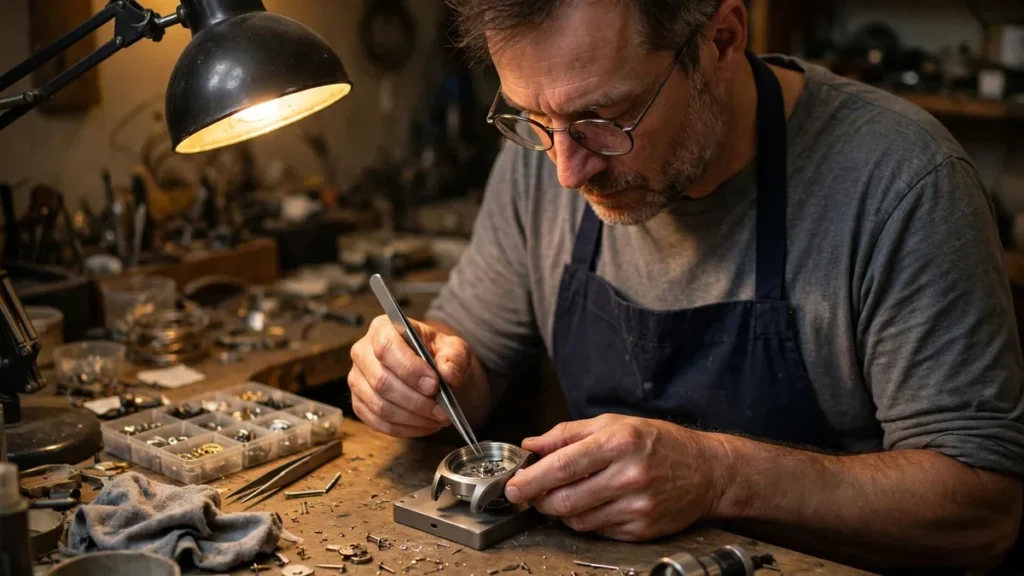
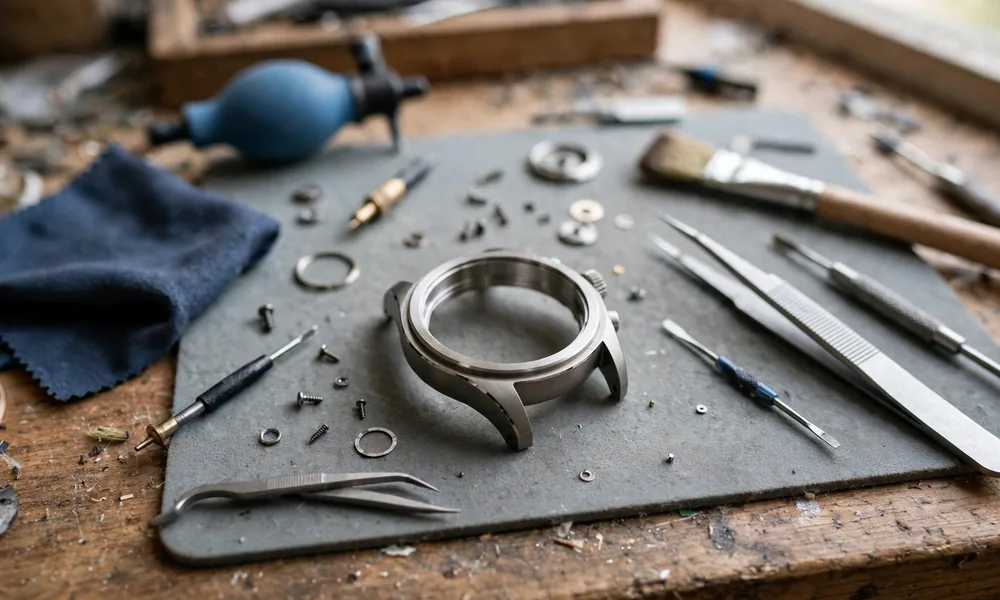
The movement inside a luxury titanium watch is usually mechanical, built from hundreds of tiny parts, each finished and assembled by hand. A single watchmaker may spend a day assembling one movement, then days more regulating it so it gains or loses only a few seconds a day. The case is no simpler: it is milled from a solid block, drilled for the crown and pushers, fitted with gaskets for water resistance, and tested under pressure before the movement ever goes inside. None of this can be rushed, because a mistake in a titanium case cannot be polished away the way it can in steel. The watch is expensive because every hour of skilled labour is visible in the finished object, even if the object itself weighs almost nothing.
Typical prices tell the story plainly. A luxury titanium watch from a respected maker usually costs an estimated 8,000 to 25,000 dollars, with complicated models reaching far beyond that, and the titanium case alone can add an estimated 2,000 to 5,000 dollars over the same watch in steel. The premium is not for the metal by weight, since titanium is not a precious metal. It is for the time, the tooling and the skill needed to shape a metal that resists being shaped, and for a watch that will outlast most of the things its owner buys in a lifetime.
For the numbers behind the lightness, luxury titanium watch specs explained decodes the weight, water resistance and dimensions, and why a luxury mechanical watch is so expensive explains the hand-built movement inside. For a different kind of precision engineering, luxury smartphone specs explained shows how titanium is used in the device in your pocket.
A Rare Fact
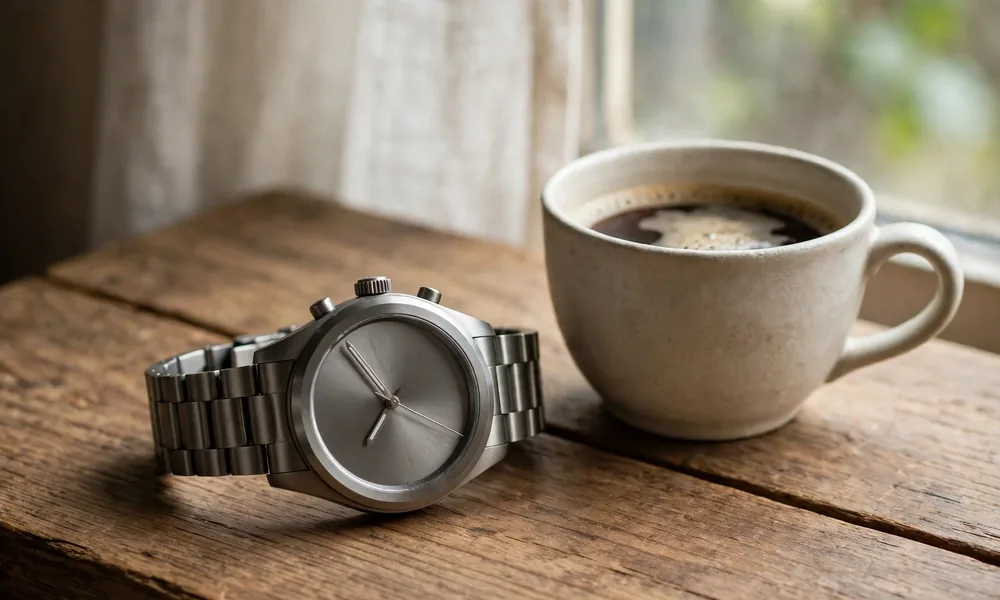
Here is something few buyers know: titanium was once so difficult to work with that watchmakers avoided it entirely, and the first titanium watches were made for divers and pilots who needed lightness more than they needed beauty. The metal’s grey colour was seen as a drawback, and early cases looked dull beside polished steel. Today that same grey is prized as a sign of serious engineering, and the dullness that once put buyers off is now the very thing that marks a titanium watch out in a crowd. The watch did not change. The world learned to read its colour as a promise instead of a flaw, and the price followed the new reading.
A titanium watch is expensive because the metal is honest about what it demands: slow machining, worn tools, patient finishing and a movement built by hand. The lightness is the reward, not the reason, and the price is the receipt for all the hours that went into making something so light feel so solid. Wear one for a week and the weight disappears from your mind entirely, which is, in the end, exactly what you paid for.