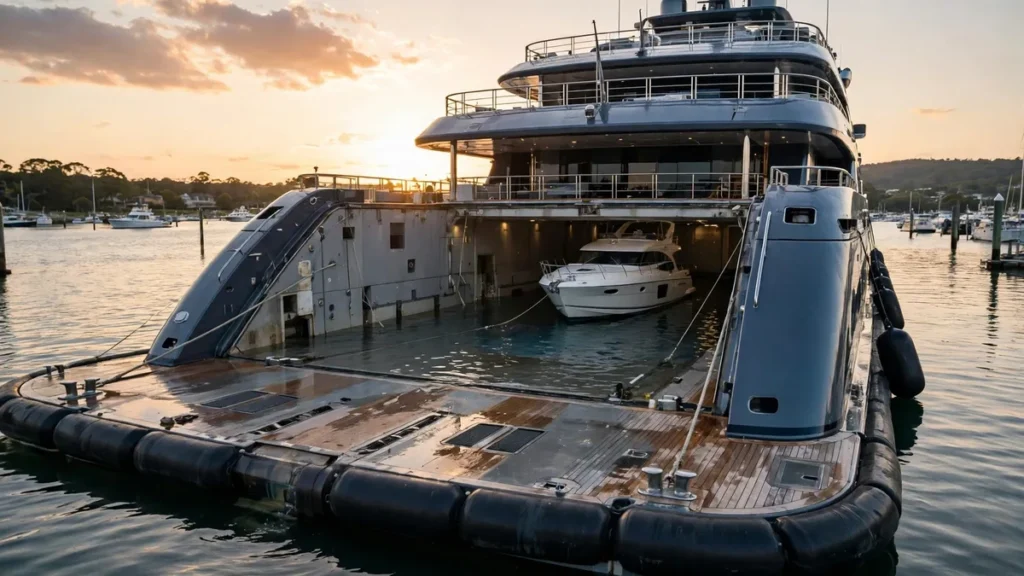
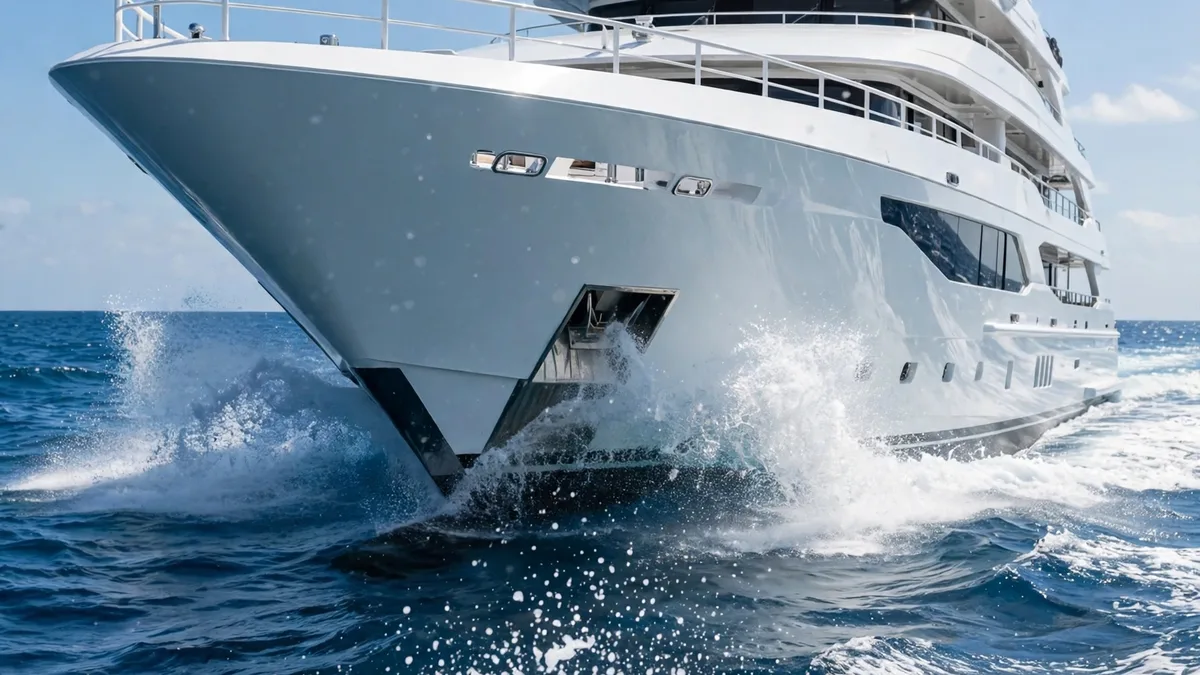
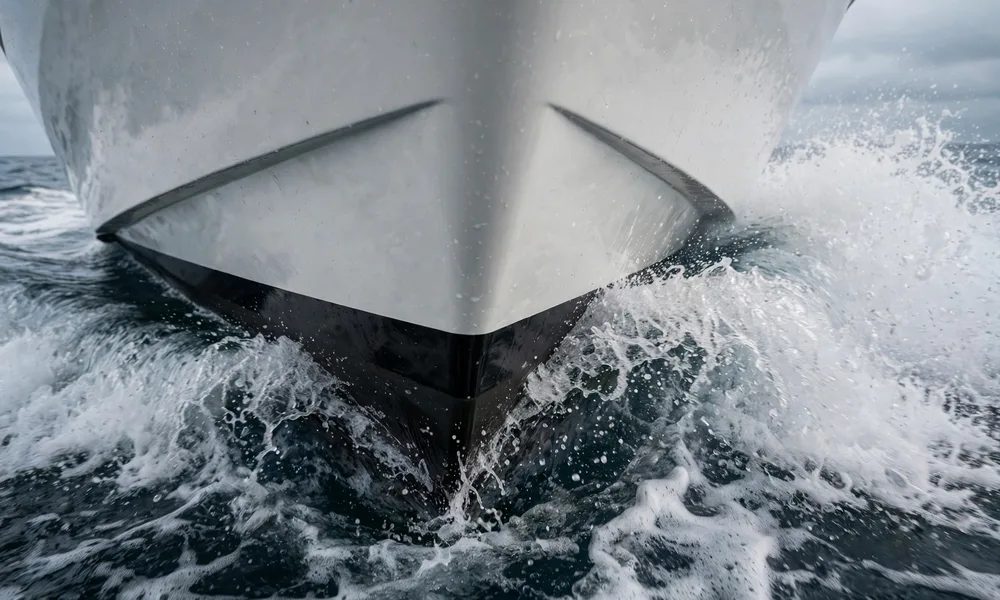
From the dock, a wave-piercing yacht looks wrong. Its bow leans backwards, like a ship built in reverse, and where you expect a proud, flaring curve you find a sharp, narrow blade that seems to point at the water rather than rise above it. Then the yacht leaves the harbour, meets its first real wave, and instead of climbing over it and crashing down, it cuts straight through. The deck stays level. The glasses stay on the table. The passengers keep talking. That impossible calm is what the owner paid for, and it is not cheap.
A wave-piercing yacht is expensive because almost everything about it is a departure from how yachts have been built for a century. The hull is a different shape, the structure is loaded in different ways, the interior has to survive a different kind of motion, and the shipyard has to learn new skills to build it. This is where the money goes, and why the result is worth it to the people who buy one.
Where the Money Goes
Six costs dominate the price of a wave-piercing yacht, and each one follows from the shape of the bow. Change the bow, and everything else has to change with it.
| Cost driver | What it covers | Why it costs so much |
|---|---|---|
| Inverted bow hull | Narrow, wave-cutting bow and fine hull lines | Tank testing, custom moulds, and a shape no yard builds by habit |
| Structural reinforcement | Stronger frames, decks, and bow structure | The bow takes the sea head-on, so it must be built like a warship |
| Advanced materials | Carbon fibre, aluminium, and composite panels | Light, stiff materials, shaped by hand and cured under pressure |
| Stabilisation systems | Active fins, gyroscopes, and ride control | The hull does half the work, and the systems do the rest |
| Custom interior | Cabins and saloons fitted to an unusual hull | No standard layout fits, so everything is drawn and built once |
| Sea trials and certification | Months of testing, tuning, and classification approval | An unfamiliar shape must prove itself, in real weather, before delivery |
The Bow: A Blade Instead of a Shovel
An ordinary yacht bow is shaped like a shovel. It meets a wave, climbs it, and then falls down the other side, and the whole yacht pitches with it. A wave-piercing bow does the opposite. It is narrow and sharp, and it cuts into the wave rather than riding over it, so the yacht stays level and the wave passes around the hull instead of under it. The effect is dramatic in rough weather: less pitching, less slamming, less spray, and a deck that feels more like a building than a boat.
Getting that shape right is the first great expense. The hull has to be tested in towing tanks, with scale models run through artificial waves again and again, until the designers know exactly how it behaves in every sea state. The shape is then refined by computer, tested again, and refined once more, in a cycle that can take a year. A conventional hull can be borrowed from an earlier design. A wave-piercing hull cannot, because every change to the bow changes the whole yacht. The numbers behind the shape are set out in the wave-piercing yacht specification sheet, which shows how the hull dimensions drive everything else.
Structure: Built to Take the Sea Head-On
Cutting through a wave instead of riding over it puts different loads on the hull, and the structure has to be built for them. The bow takes the full force of the sea directly, and the frames, decks, and bulkheads around it are reinforced to spread that force through the whole yacht. The result is a hull that is heavier in the places that matter and lighter everywhere else, and getting that balance right is a job for naval architects, not guesswork.
Stabilisation: The Calm Behind the Blade
The hull does half the work of keeping the yacht calm, and stabilisation systems do the rest. Active fins extend from the hull and adjust constantly to cancel roll, while gyroscopic stabilisers spin deep inside the yacht, resisting motion with sheer rotational force. Together, they can cut roll by as much as eighty percent, which is the difference between a dinner party and a disaster in a rough sea. The machinery that makes the ride possible is explained in how a wave-piercing yacht works, which follows the forces from the bow to the fins.
The Interior: Luxury in an Unusual Shape
Testing: Proving a Shape Nobody Has Built Before
Before a wave-piercing yacht is delivered, it must prove itself in sea trials that are longer and harder than those of a conventional yacht. The yard takes the yacht into real weather, measures its motion, its speed, and its fuel consumption, and tunes the fins, the trim, and the ballast until the numbers match the design. If the bow slams where it should slice, the yacht goes back for changes, and the clock keeps running on a build that is already years in the making.
Classification societies add their own demands. They must be convinced that the unfamiliar shape is safe, and they ask for more calculations, more inspections, and more evidence than they would for a hull they have certified a hundred times. That caution is justified, because the sea does not forgive a bad hull, and it is also expensive, because every extra month of testing is a month of yard time, crew wages, and insurance. A specialised vessel built around a single idea carries the same lesson in a different form, and why a luxury cable-laying ship is so expensive shows how a ship designed for one job ends up priced like a fleet.
What a Wave-Piercing Yacht Costs
A large wave-piercing yacht typically costs between $80 million and $250 million, and these are estimates, not a price list, because every yacht is a one-off and the final figure depends on its size, its materials, and its interior. A smaller wave-piercing yacht can be built for $20 million to $50 million, but it will not carry the same stabilisation, the same range, or the same finish. Running costs run to several million dollars a year, covering a crew of a dozen or more, fuel, berthing, insurance, and maintenance of systems that must never fail at sea.
The owner is not buying speed, although the yacht is fast. The owner is buying calm: the ability to cross an ocean in weather that would keep a conventional yacht in port, and to arrive with guests who never felt the sea at all. That calm is a luxury no conventional hull can offer, and the price is the price of a shape that took a century of yacht design and turned it on its head.
A Rare Fact Worth Knowing
Here is a detail that puts the wave-piercing idea in perspective. The design did not start with yachts at all. It started with naval patrol boats and offshore supply ships, where crews needed to work in rough seas without being thrown around the deck, and the inverted bow proved itself in service long before any yacht owner saw it. The first wave-piercing yachts were, in effect, warships dressed in evening clothes, and the idea only reached the luxury world when owners realised that the same hull that kept a patrol crew working could keep their dinner party calm. The yacht world spent a century perfecting the flaring bow, and then discovered that the answer had been working on the other side of the harbour all along.