Somewhere in the middle of the Atlantic, a ship is moving at the speed of a brisk walk, and it has been doing so for weeks. There is no hurry, because hurry would break the cargo. The cargo is a cable, thousands of kilometres of it, coiled in a giant carousel below deck, and it is being lowered, metre by metre, onto the ocean floor. When the ship finally reaches the far shore, the cable will carry a large share of the world’s internet traffic. The ship that laid it costs more than a small fleet of luxury yachts, and almost nobody has ever heard of it.
A cable-laying ship is not a luxury vessel in the usual sense. There are no marble bathrooms or helipads, and the crew works in shifts around the clock. But it is one of the most specialised and expensive ships ever built, because it does a job no other ship can do: it lays a fragile glass thread across an ocean, precisely, in all weather, without breaking it. The price tag follows from that single, unforgiving job. Here is where the money goes.

The Hull and the Carousel: A Ship Built Around Its Cargo
A cable-laying ship is built around its cable, not the other way round. At the heart of the vessel sits a carousel, a giant rotating drum that holds thousands of tonnes of cable in a single continuous coil. The carousel on a large cable layer can hold more than 10,000 tonnes of cable, and it must turn smoothly and precisely while the ship rolls in a swell, paying the cable out at exactly the speed of the ship. If the carousel turns too fast, the cable slackens and tangles. If it turns too slowly, the cable stretches and snaps. The machinery that controls it is built to tolerances more often found in a watch factory than a shipyard.
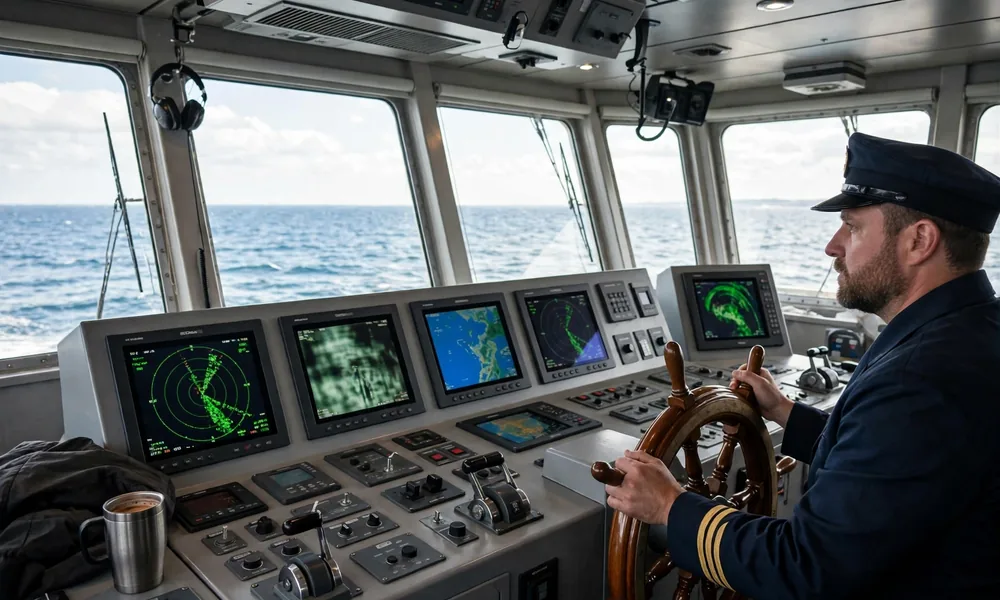
The hull itself is shaped for the job. It is long and narrow, with a flat stern where the cable slides into the sea over a curved chute called a cable engine. The ship must hold a straight course at very low speed, sometimes less than two knots, for days on end, while wind and current push it sideways. To do that it carries dynamic positioning: computer-controlled thrusters that hold the ship within a metre of its intended track, using satellite navigation and seabed sensors. The system runs constantly, and it is the reason the ship can lay a cable along a planned route that was surveyed to the metre, even in a storm.
The Cable Itself: Glass, Steel, and Armour
The cable is the reason the ship exists, and it is far more than a wire. At its centre are hair-thin strands of glass fibre that carry data as pulses of light, and around them are layers of steel armour, copper power conductors, and waterproof sheathing. A single kilometre of deep-sea cable weighs several tonnes, and a transatlantic cable can weigh more than 10,000 tonnes in total. The cable for one crossing costs an estimated $100 million or more to manufacture, and the ship carries it all at once, which means the vessel is sailing with a fortune in its hold.
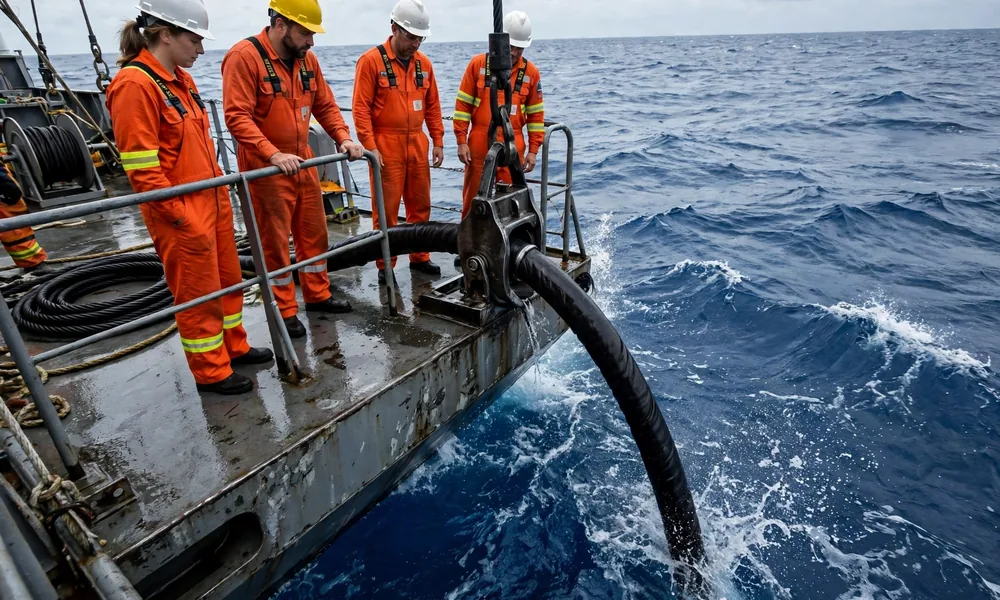
Laying that cable is a slow, exacting operation. The ship moves at a walking pace while the cable pays out over the stern, and a plough or a remotely operated vehicle buries it in the seabed where the water is shallow enough for fishing trawlers and anchors to threaten it. In deep water, the cable simply rests on the ocean floor, and the ship must place it exactly along the surveyed route, avoiding wrecks, reefs, and the cables laid by earlier ships. A single mistake can mean a repair operation that costs millions and takes weeks, so the crew works with the patience of surgeons.
The Crew and the Cost of Standing Still
A cable-laying ship carries a crew of around 60 to 100 people, including cable engineers, remotely operated vehicle pilots, surveyors, and a full ship’s company. They work in shifts around the clock for voyages that last weeks or months, and the ship must feed, house, and pay them all while it earns nothing until the cable is laid. The daily running cost of a large cable layer is estimated at $100,000 to $200,000 a day, and a single transoceanic lay can take a month or more. The bill for the voyage alone can run into millions before the ship has even reached the far shore.
The ship is also expensive when it is doing nothing. There are only a few dozen large cable-laying ships in the world, and they are booked years in advance, because the world’s appetite for data keeps growing. Between jobs, a cable layer must be maintained, crewed, and kept ready, and its specialised equipment, from the carousel to the plough, needs constant care. The owners charge accordingly, and the telecom companies pay, because there is no cheaper way to move data across an ocean. Satellites are slower and more expensive per bit, and a cable, once laid, carries data for twenty-five years or more.
Where the Money Goes
| Cost driver | Why it costs so much | Estimated cost |
|---|---|---|
| The ship itself | Custom hull, carousel, and cable-handling machinery | $200–$400 million to build |
| Dynamic positioning | Computer thrusters holding the ship within a metre of its track | Tens of millions in the build |
| The cable cargo | Thousands of tonnes of armoured fibre-optic cable per crossing | $100 million or more per crossing |
| Daily running cost | Crew of 60–100, fuel, and specialist equipment running day and night | $100,000–$200,000 a day |
| Seabed survey and burial | Surveying the route and burying the cable with a plough or submersible | Millions per route |
| Repairs and standby | Few ships in the world, booked years ahead, kept ready between jobs | Millions a year to keep ready |
What a Cable-Laying Ship Costs
A new large cable-laying ship costs an estimated $200 million to $400 million to build, and a single transoceanic cable project, ship and cable together, typically costs an estimated $300 million to $500 million. The numbers are so large that they are usually shared: a consortium of telecom companies funds the cable, and the ship is chartered for the voyage. The daily charter rate alone runs to an estimated $100,000 to $200,000, and the whole project is planned years in advance. It is an extraordinary price, but the cable it buys carries a large share of the world’s internet traffic for a quarter of a century, and there is still no cheaper way to cross an ocean.
To see the vessel at work, our guide to how a luxury cable-laying ship works explains the carousel, the cable engine, and the positioning system. For the build, how a luxury cable-laying ship is made follows the ship from steel to sea trials. And for a different kind of vessel that works in the deep, how a luxury submarine works takes you below the surface.
A Rare Fact Worth Knowing
Here is a detail that puts the whole business in perspective. More than 99 percent of the world’s intercontinental internet traffic travels through submarine cables, not satellites, and there are fewer than 500 of those cables in the entire ocean. Every email, video call, and bank transfer that crosses an ocean almost certainly travelled through a cable laid by a ship like this one, at walking pace, in all weather, by a crew that spent weeks at sea. The next time a video loads instantly from the other side of the world, it is worth remembering the ship that put the wire there, one slow metre at a time.


