Step aboard a superyacht and the first thing you notice is not the size of the rooms but the silence of them. Doors close without a sound. Drawers glide open and shut on a whisper. The wood under your hand is warm, seamless, and patterned like it grew that way — because, in a sense, it did, and then someone spent weeks making sure no one could tell where one piece ended and the next began. Nothing creaks. Nothing rattles. Nothing is quite square, because nothing on a ship ever is.
That is the work of the yacht joiner, the carpenter who fits a superyacht’s interior. On land, a joiner works with flat floors and right angles. On a yacht, every surface curves, every bulkhead moves with the hull, and every panel must survive years of salt air, vibration, and sun without warping, cracking, or coming loose. The result looks like furniture. It is built like a ship.
The cost is not the wood alone, though the wood is dear. It is the labour — hundreds of hours per room, by people whose skills take a decade to learn. Here is where the money goes.

Why Superyacht Interior Joinery Costs So Much
1. Wood that is chosen tree by tree
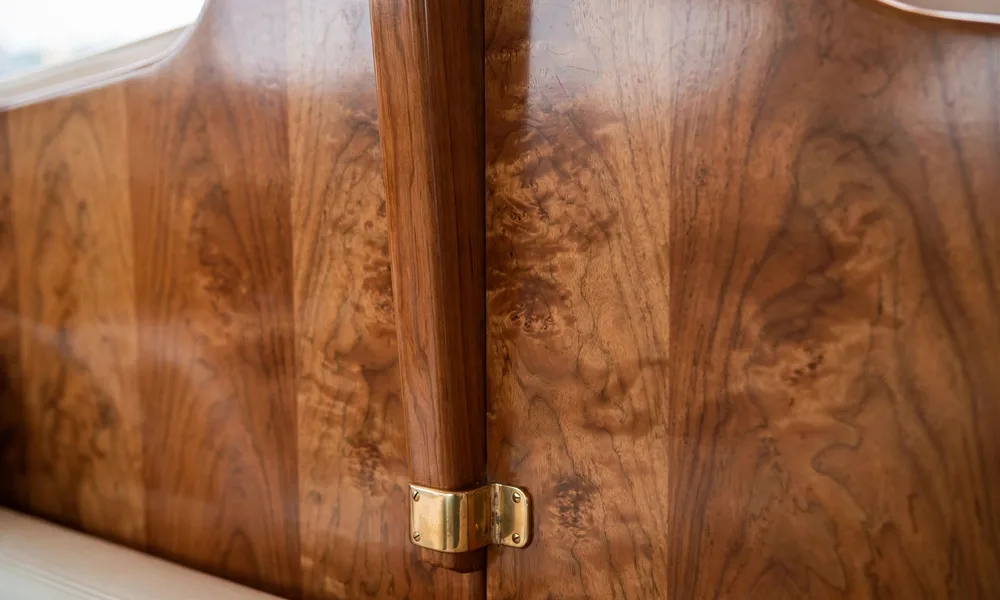
The timber in a superyacht interior is not bought by the pallet. Veneers are selected from single trees so the grain matches across a whole room — a technique called book-matching, where consecutive slices of veneer are opened like a book so the pattern mirrors itself. A single panel may need veneer from a tree felled years earlier and dried slowly to stop it moving. Rare woods such as figured walnut, Macassar ebony, and burr oak cost thousands of dollars per cubic metre, and the offcuts are too small to reuse. How the panels are made, from the first veneer to the final polish, is covered in our guide to how superyacht interior joinery is made.
2. Nothing on a yacht is straight
A yacht’s hull curves in every direction, and the interior must follow it. Bulkheads lean, ceilings rise and fall, and doorways sit at angles that would be mistakes on land. Every panel is measured, templated, and cut to fit a specific place on a specific hull — there are no standard sizes and almost no two yachts are alike. A joiner works from full-size templates taken from the hull itself, and a panel that fits perfectly in the workshop may need trimming again once it is aboard, because a hull flexes and settles. The way the joinery fits into the moving structure of the ship is covered in our look at how superyacht interior joinery works.
3. Finishes that must survive the sea
A yacht interior lives in salt air, bright sun through huge windows, and constant vibration. Ordinary varnish would crack and peel within a season. Yacht finishes are built up in many coats — sometimes a dozen or more — each one sanded flat before the next is applied, until the surface is deep, glassy, and hard enough to resist a dropped glass. The work is done in dust-free conditions, because a single speck in the final coat means sanding back and starting again. The specifications behind the finishes, the panels, and the hardware are explained in our guide to superyacht interior joinery specs.
4. Hardware that is silent and invisible
Open a drawer on a superyacht and it moves on soft-close runners rated for the sea, made from stainless steel that will not rust. The hinges are hidden, the handles are flush or recessed, and the latches hold fast when the yacht rolls — because a drawer that flies open at sea is a danger, not an annoyance. Every fitting is marine-grade, and marine-grade hardware costs several times its domestic equivalent. The locks, catches, and hinges are often custom-made for the yacht, in small batches, by specialist firms.
5. Sound, fire, and weight rules that shape every choice
Joinery on a superyacht is not decoration alone. Panels must deaden sound so a cabin stays quiet, meet fire-retardant rules for materials used at sea, and stay light — every kilogram of interior is a kilogram the yacht must carry, and weight costs speed and fuel. Joiners work with honeycomb-core panels, fire-rated foams, and lightweight substrates that look like solid wood but weigh a fraction of it. Meeting all three demands at once — beautiful, safe, and light — is a puzzle that only experienced yards solve well.
6. Hundreds of hours per room, by very few people
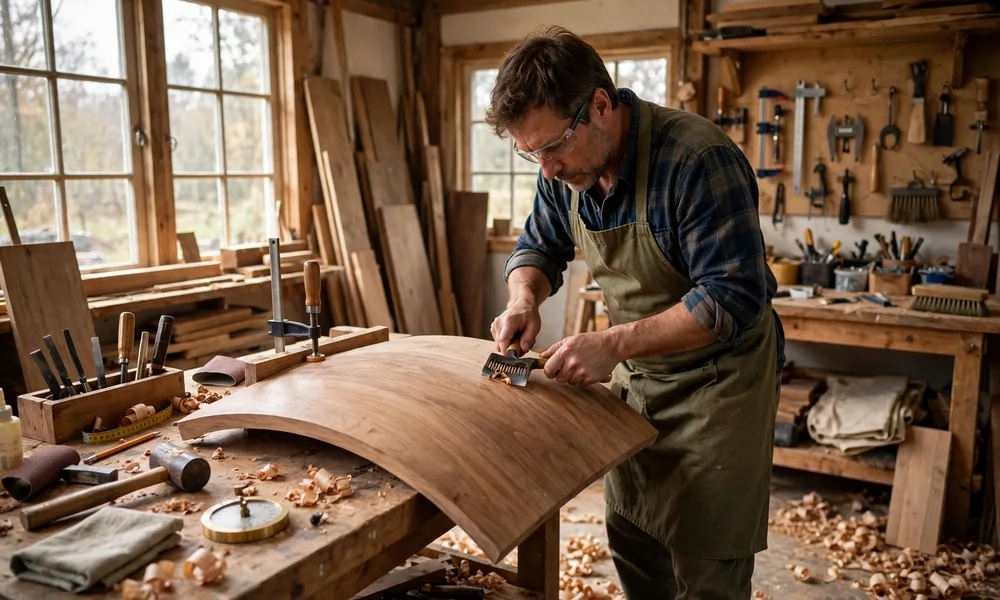
A single superyacht salon can absorb a thousand hours of joinery work, and a full yacht can absorb tens of thousands. The people doing it trained for years, and there are not many of them: the world’s great yacht yards employ small teams of master joiners whose waiting lists run for months. The work cannot be rushed or automated, because each yacht is a one-off and each panel is fitted by hand. The interior of a 50-metre yacht can cost several million dollars in joinery alone — not because the wood is magic, but because the hands that shaped it are rare.
Superyacht Interior Joinery Costs at a Glance
| Part of the cost | What drives it |
|---|---|
| Timber | Single-tree veneers, rare woods, book-matching |
| Fitting | Curved hulls, full-size templates, no standard sizes |
| Finishes | Many coats of marine varnish, dust-free work |
| Hardware | Marine-grade hinges, latches, and soft-close runners |
| Rules | Sound deadening, fire ratings, weight limits |
| Labour | Thousands of hours by a small pool of master joiners |
What Does Superyacht Interior Joinery Cost?
Interior joinery for a superyacht is estimated at $2,000 to $5,000 per square metre of finished interior, with a full 50-metre yacht’s joinery estimated at $2 million to $8 million or more, depending on the woods, the complexity, and the yard. Prices are estimates only and vary enormously with size and specification. A single fitted cabin can cost more than a family house — and unlike a house, it must float, flex, and survive the sea while looking like it never moves at all.
A Rare Fact
Yacht joiners sometimes sign their work in a place no owner will ever see — a pencil mark or a small carved initial hidden behind a panel. It is an old shipwright’s tradition, a quiet claim on work that is meant to outlast its maker. On some famous yachts, restorers have found the marks of joiners who fitted the interior decades earlier, their names still legible in the dark behind the panelling they built by hand.
Superyacht joinery is the most expensive carpentry in the world because it is asked to do the most impossible thing in carpentry: to look effortless on a machine that never stops moving. The silence of a yacht’s interior is not an accident. It is the sound of thousands of hours of work, done right.


