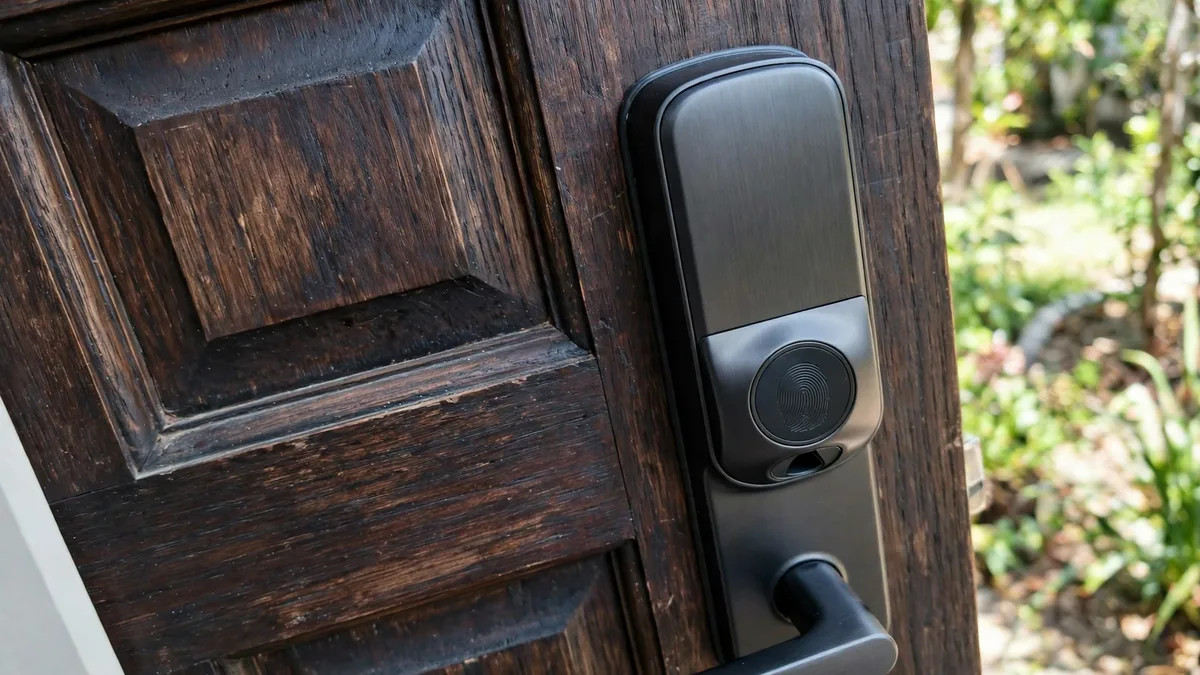
The front door of a luxury home no longer has a keyhole worth picking, because there is often no key at all. In its place is a smooth panel of metal and glass that wakes when a hand comes near, reads a fingerprint in less than a second, and throws a heavy bolt with a quiet mechanical sigh.
A luxury smart lock is trusted with the one job a home cannot get wrong, which is keeping the wrong people out and letting the right people in. That trust is earned in the factory, where the lock is machined, assembled, sealed against weather, and tested thousands of times before it is ever fitted to a door. The price is high because the failure rate has to be almost zero, and a lock that fails once has already failed completely. This is how it is made.
How It’s Made
Step 1: The body is machined from a solid block of metal
Everything starts with the body, because a smart lock is only as strong as the metal around its electronics. A block of brass, stainless steel or zinc alloy is cut on a computer-controlled mill into the lock’s outer housing, with pockets and channels for the circuit board, the motor, the battery and the bolt mechanism. The machining is precise to a fraction of a millimetre, since a board that rattles or a bolt that binds will wear out in months.
Step 2: The fingerprint sensor is fitted and calibrated
The most delicate part of the lock is its fingerprint sensor, a small glass window that reads the ridges of a fingertip. The sensor is set into the housing on a cushioned mount, so a hard press or a knock does not crack it, and connected to the processor with a short, shielded cable that cannot be reached from outside the door. Each sensor is calibrated with test prints, including wet, cold and dusty fingers, because a lock that only works on clean, dry hands in a warm room is useless at a real front door.
Step 3: The motor and bolts are assembled by hand
Behind the electronics sits the part that actually holds the door shut, and it is built like a watch. A small but powerful motor drives a set of gears that throw one or more hardened steel bolts into the door frame, and the gears are assembled by hand, lubricated, and tested for smooth, silent travel. Luxury locks often use two or three bolts instead of one, spreading the force of an attempted break-in across the whole frame, and the bolt ends are bevelled so they slide home cleanly even if the door has swollen in damp weather.

Step 4: The electronics and battery are sealed inside
With the mechanics proven, the circuit board, the wireless radio and the battery are fitted into the housing and sealed against the weather. Gaskets and silicone seals guard every joint, because rain driven against a front door will find any gap, and the lock must keep working through storms and freezing nights. The battery is chosen to last a year or more on a charge, and the lock is designed to warn its owner weeks before it runs low, then keep working on a small reserve so nobody is ever locked out by a dead battery. The lock is tested against driving rain before it leaves the factory, because a seal that fails in winter will fail when it matters most.
Step 5: Software is loaded and every fingerprint is tested
The lock’s software is loaded next, and it is tested harder than any other part. Engineers try to fool it with printed fingerprints, silicone copies, photographs and worn-out fingers, and the lock must reject them all while still opening instantly for its real owners. Access codes, temporary guest codes and the wireless connection to the home are all checked, and the lock is made to fail safely, so that if its electronics ever die, the door can still be opened from inside and the bolt can still be thrown by hand.
Step 6: The lock is weather-tested and fitted to a test door
The finished lock is bolted to a test door and put through the life it will actually live. It is sprayed with water, chilled to well below freezing, baked in heat, and opened and closed tens of thousands of times by a machine that never gets tired. Only when the lock has survived the whole programme without a single failure does it get its packaging, its instructions and its place in a box, ready for a door it may guard for a decade.
| Specification | Typical figure |
|---|---|
| Body | Machined brass, stainless steel or zinc alloy housing |
| Unlocking | Fingerprint, code, phone, key card or a hidden mechanical key |
| Bolts | One to three hardened steel bolts driven by a geared motor |
| Battery | Around 12 months, with weeks of low-battery warning and an emergency contact |
| Weather rating | Sealed against rain and dust, rated for freezing winters and hot summers |
| Testing | Tens of thousands of open and close cycles on a test door |
The most important part of a smart lock is not the fingerprint reader or the motor, but the refusal to fail. A phone can crash and a fridge can warm up, and both are annoyances, but a lock that fails either locks a family out in the rain or lets a stranger in, and neither is acceptable.
What One Costs
A luxury smart lock typically costs an estimated $400 to $1,500 fitted, and the price is set mostly by the machining, the sensor and the testing rather than the size of the lock. A simple model with a fingerprint reader and a single bolt sits at the low end, while a heavy, multi-bolt lock with a hardened body and a full set of backup entry methods costs far more. The price is in the reliability, not the shine, and how a luxury smart lock works explains the electronics inside a lock already on a door, while why luxury smart glasses cost so much shows what happens when the same kind of sensor is shrunk to fit on a face.
A Rare Fact
Some luxury smart locks keep a log of every single opening, and they can tell the owner exactly whose fingerprint opened the door and at what minute, for months back. Parents use it to know when teenagers came home, hotels use it to know when cleaners arrived, and a few owners have used the log to prove to an insurer that a door was locked when a burglary was attempted through a window instead. The log lives inside the lock itself, not only in the cloud, so it survives a dead internet connection, and it is one of the few records a house keeps about its own front door.
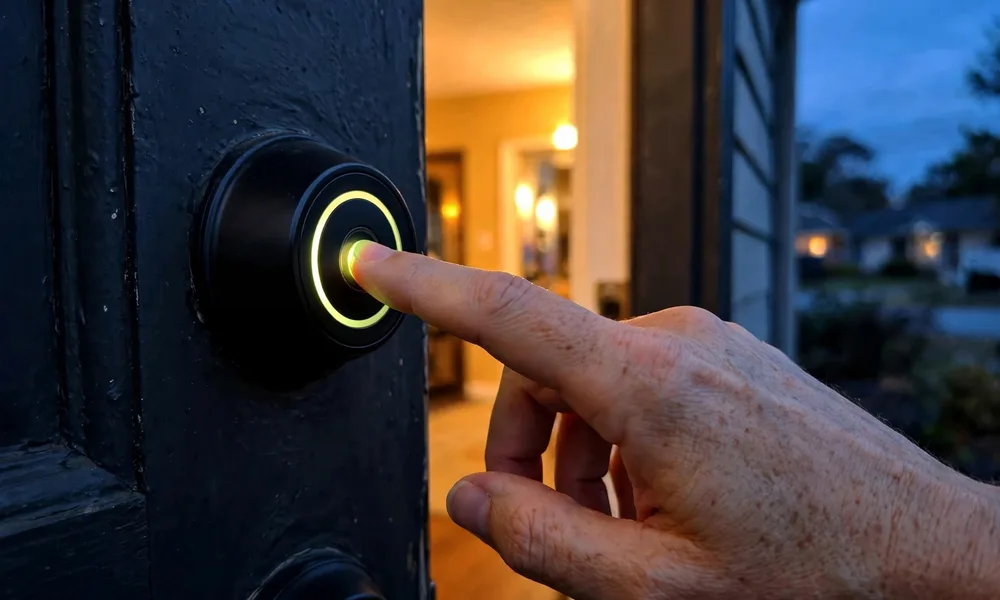
A luxury smart lock is a machined metal body, a fingerprint sensor, a geared motor and a set of hardened bolts, built and tested until it almost cannot fail. It replaces a key with a fingertip, keeps a record of every opening, and works in rain and frost for a year on a single battery. For the precision engineering inside a very different small machine, how a luxury mechanical watch is made shows what hand assembly looks like when the parts are smaller still.