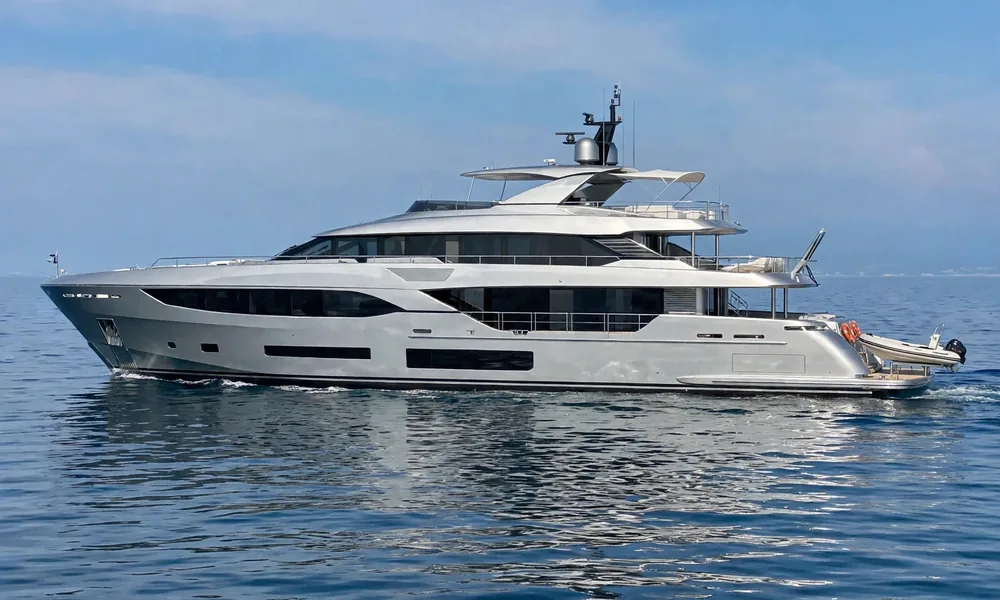
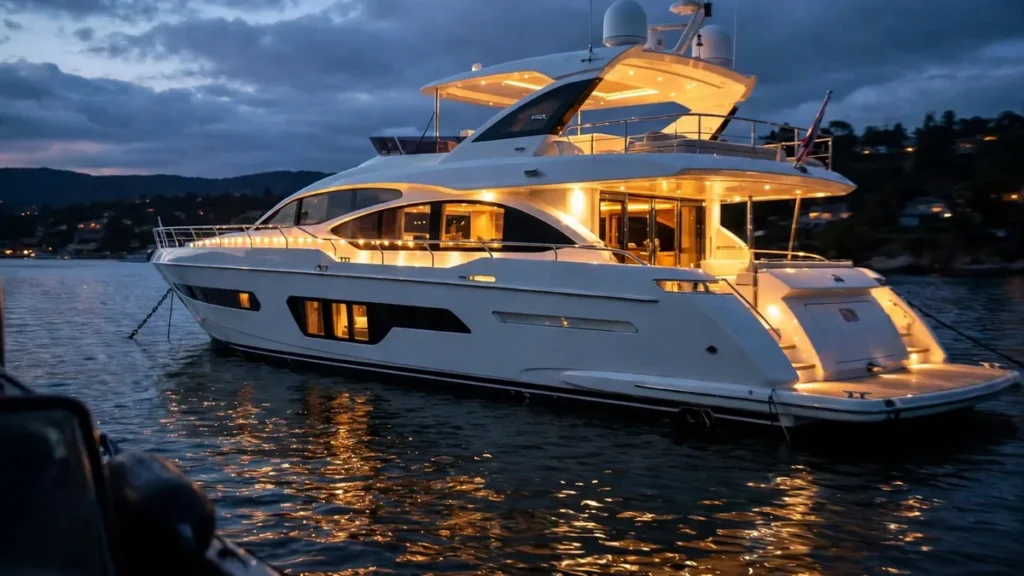
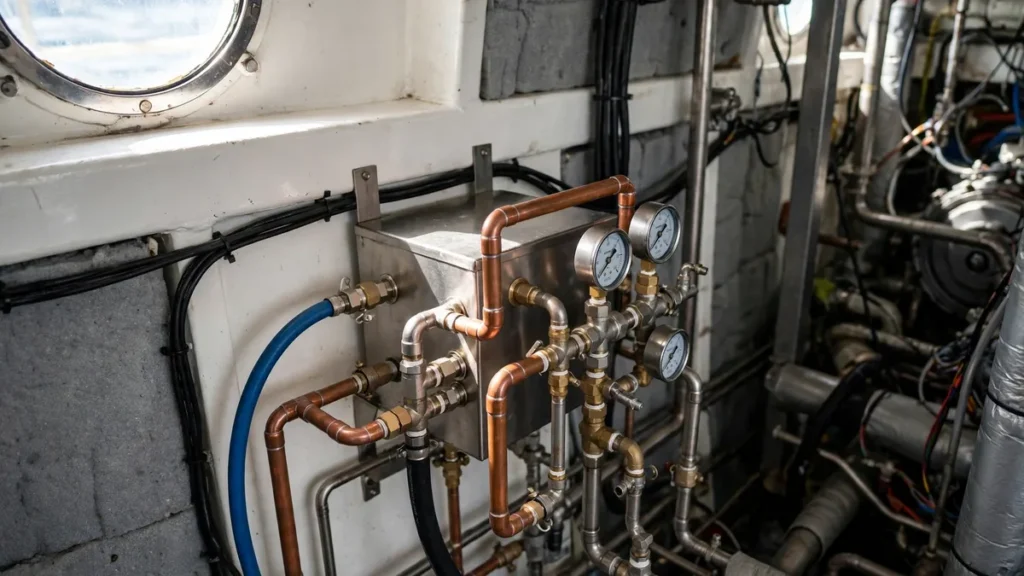
An aluminium hull looks like a sensible choice. Aluminium is light, it does not rust the way steel does, and it is far cheaper than titanium or carbon fibre, so a buyer could be forgiven for expecting an aluminium yacht to cost little more than a steel one. Then the yard sends its quote, and the hull alone costs far more than the steel hull it replaces, for a metal that is sold by the tonne in every builders’ merchant in the country.
The reason is not the price of the metal on the open market. It is what the metal demands once it reaches the yard: a special alloy, welding that must be done by specialists, a structure that must be designed from scratch, and a finish that must protect the hull from the very sea it floats in. An aluminium hull is a bargain in material and a luxury in labour, and the labour is where the money goes.
The Alloy Is Not the Aluminium You Know
The aluminium in a yacht hull is not the soft metal of a window frame or a drinks can. It is a marine-grade alloy, usually the 5000 or 6000 series, mixed with magnesium and silicon to make it strong, weldable and resistant to seawater, and that alloy costs far more than ordinary aluminium. The plate must be rolled to exact thicknesses, tested for flaws and certified for marine use, and a plate that fails its test is rejected before it ever reaches the yard.
The plate is also bought in sizes that waste money. Hull plates are cut to curved shapes, and the offcuts from a curved hull are large, because a yacht’s curves do not fit neatly into rectangles. The yacht keel specs show how the keel takes the thickest plate on the vessel, and the hull around it is cut from the same expensive stock, with every offcut a piece of certified marine alloy that cannot be used for anything else on the yacht.
Supply is steady but not cheap. Marine aluminium is made by a small number of mills, and the alloy must be kept separate from other grades, stored dry and handled without scratching, because a scratch in aluminium is a place where corrosion can start. The yard pays for the alloy, the certification and the care, and the price of the plate is only the beginning of the bill.
Welding Aluminium Is a Specialist Trade
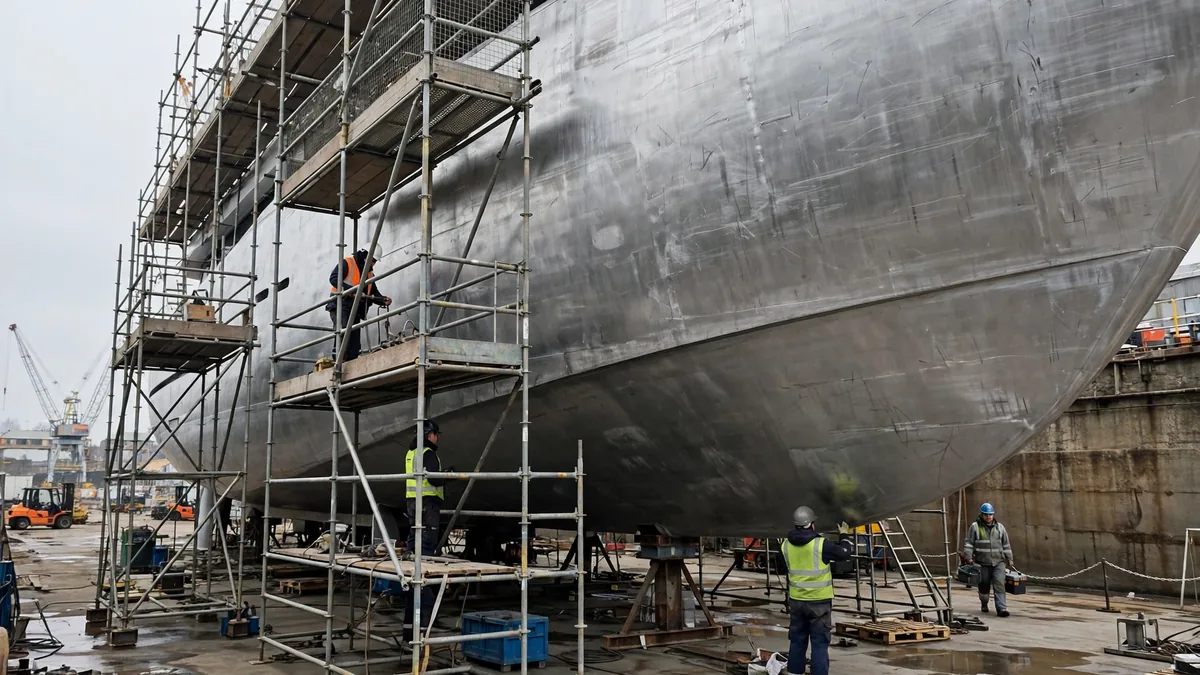
Welding is where the price grows fastest. Aluminium conducts heat far better than steel, so the heat of a weld spreads away from the joint, and the welder must put in far more heat to make the weld at all, then control the distortion that heat causes. A hull welded without care buckles and twists, and straightening it takes days of skilled work, so the welding is done slowly, in a set order, by welders who have spent years learning how aluminium moves.
The welders are rarer than steel welders, and they are paid accordingly. Aluminium welding needs a clean surface, a steady hand and an eye for the puddle of molten metal, and the work is done with argon shielding, because hot aluminium grabs oxygen from the air and turns weak. The how the luxury ship propeller works story shows the same precision in the propeller, where the metal must be shaped and balanced by hand, and the hull is that idea on a far larger scale, with kilometres of weld running through it.
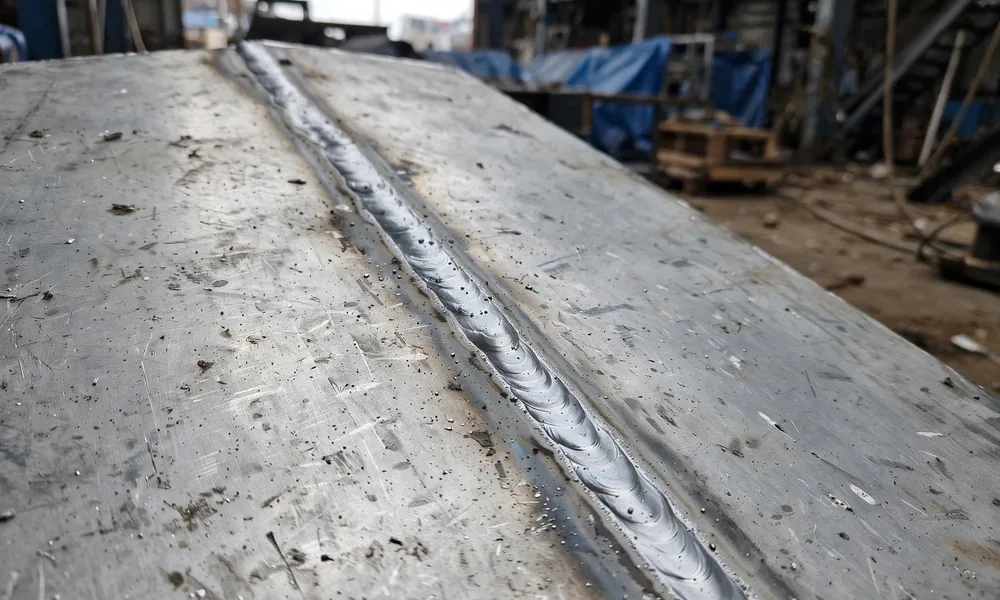
Inspection follows every weld. The seams are checked by eye, by dye and by ultrasound, and a weld that fails is ground out and done again, with the whole area cleaned before the repair begins. The heat of welding also softens the alloy around the joint, so the designer must allow for weaker metal at every seam, adding extra plate where the welds run. The hull is not finished when the last plate is welded, it is finished when the last weld has passed its test and the hull has been checked for fairness.
Design, Corrosion and the Finish
Design is slower for aluminium than for steel. Aluminium is lighter than steel but less stiff, so the hull needs more framing, more stiffeners and more careful engineering to stop it flexing in waves, and the naval architect must design the whole structure for aluminium from the start. A steel design copied in aluminium would be too weak and too flexible, so the yard pays for a design that exists only for that one hull.
Corrosion is the enemy that never sleeps. Aluminium does not rust like steel, but it corrodes in salt water, especially where it touches a different metal, and the hull must be protected with coatings, anodes and careful isolation of every fitting. The how the luxury ship engine works story shows how much of a ship’s engineering is about keeping metal alive in salt water, and the aluminium hull is that problem in its purest form, with the whole vessel made from a metal the sea is always trying to eat.
As an estimate, a luxury aluminium hull costs about $1 million to $8 million, the marine alloy plate about $400,000 to $2.5 million of that, the welding and inspection about $400,000 to $3 million more, and the design, framing and corrosion protection about $200,000 to $1.5 million on top. These are estimated ranges, not quotes, and the final figure depends on the size of the hull, the yard and the finish. What never changes is that the hull is built by specialists, one at a time, and a hull built by specialists can never be cheap.
A Rare Fact From the World of Aluminium Hulls
Here is a detail few owners ever learn: an aluminium hull can be dented by a floating log that would bounce off a steel hull, yet it will still be the safer hull in a grounding. Aluminium bends instead of cracking, so a hull that hits a rock will dent and deform, absorbing the blow, while a stiffer hull might crack and let water in. Owners who have grounded an aluminium yacht often find the damage looks alarming and the repair is simple, a dent pressed out and a plate replaced, where a cracked hull would have meant a far longer stay in the yard.
What the Price Means for You
If you are wondering why a luxury aluminium hull costs so much, look at four things: the alloy, the welding, the design and the protection. An alloy made for the sea, welding done by rare hands, a structure designed from scratch and a finish that fights corrosion every day are the marks of a hull worth its price. The metal matters less than the brochures suggest, and the labour matters more than anyone admits, because a hull welded slowly and checked thoroughly is the one that stays fair and dry. The best aluminium hull is the one you never have to think about, light, strong, and quietly carrying the yacht through every sea it meets. Ask how the yard protects every fitting from galvanic corrosion, because that quiet detail decides whether the hull stays sound for decades or starts to fail within a few seasons.