A luxury electric locomotive does not look like the freight engines that haul coal through the night. It is quieter, smoother and far more carefully finished, built to pull a handful of sleeping cars and lounges across a continent while the passengers inside barely notice the miles passing.
Yet underneath the polished paint it is still a working machine, and its specification sheet is the honest record of what it can do. Power, weight, traction, braking and cabin comfort all sit side by side in the numbers, and learning to read them is the difference between admiring the train and understanding it.
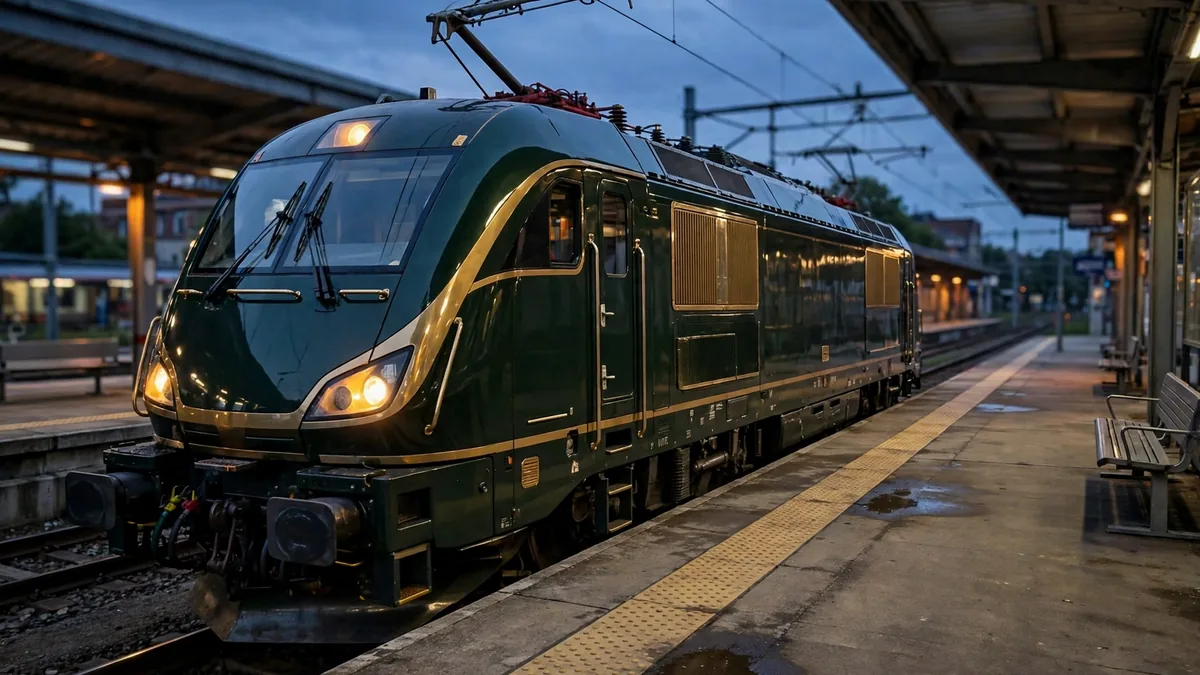
Specs at a Glance
| Spec | Detail |
|---|---|
| Power output | Around 4,000 to 6,000 kW from electric traction motors |
| Top speed | Typically 140 to 200 km/h in passenger service |
| Tractive effort | Roughly 300 to 400 kN at starting, for heavy trains on gradients |
| Power supply | Overhead line at 25 kV AC, with onboard batteries for short gaps |
| Weight | About 80 to 90 tonnes, spread across four or six axles |
| Braking | Regenerative braking plus disc brakes, returning energy to the line |
| Cab comfort | Air suspension, sound insulation and climate control for the crew |
Power and Traction: What the Kilowatts Actually Do
The headline number on any electric locomotive is its power output, usually quoted in kilowatts, and for a luxury passenger locomotive that figure sits somewhere between 4,000 and 6,000 kW. That is roughly the power of fifty family cars working together, and it is needed because the locomotive is not just moving itself. It is pulling several heavy sleeping cars, dining cars and lounges, each one loaded with beds, kitchens, water tanks and luggage, up gradients and through tunnels at speeds a freight train would never attempt.
Power alone does not move a train, though. What matters at the rail is tractive effort, the pushing force the wheels can apply without slipping, measured in kilonewtons. A luxury electric locomotive delivers around 300 to 400 kN when starting, which is what lets a long train pull away smoothly from a station instead of jerking forward. The motors are controlled electronically so the force rises gradually, and sensors on each axle watch for the first hint of a wheel slipping on a wet rail, cutting power to that axle for a fraction of a second before grip returns.
Batteries and the Overhead Line
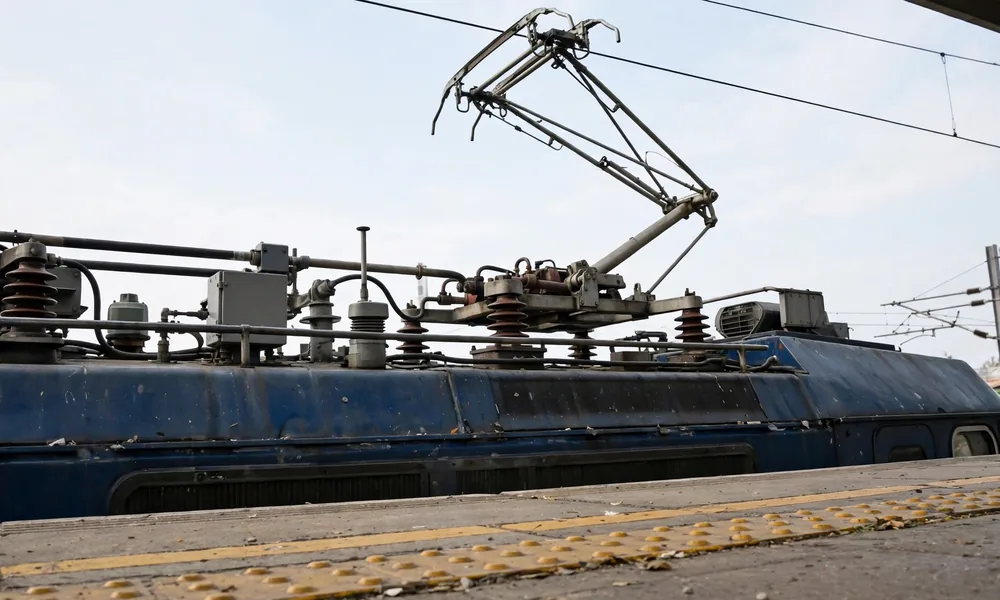
Most of the locomotive’s energy comes from the overhead wire, drawn down through a pantograph on the roof at 25,000 volts. The transformer inside the locomotive steps that voltage down, and the traction motors turn it into motion. On the newest luxury locomotives a battery pack sits alongside the main system, not to drive the train for hours but to bridge the gaps: station throats without wires, short unelectrified sidings, and the moments when the pantograph has to come down.
The battery also changes how the locomotive brakes. When the driver eases off, the motors run in reverse as generators, feeding electricity back into the overhead line or into the battery instead of wasting it as heat. This regenerative braking does most of the slowing on long descents, which keeps the disc brakes cool and ready for the moment they are really needed. For the passengers it means something simpler: the train slows without the shudder and smell of hot brakes that older trains carried into every station.
The Cabin, the Ride and the Noise
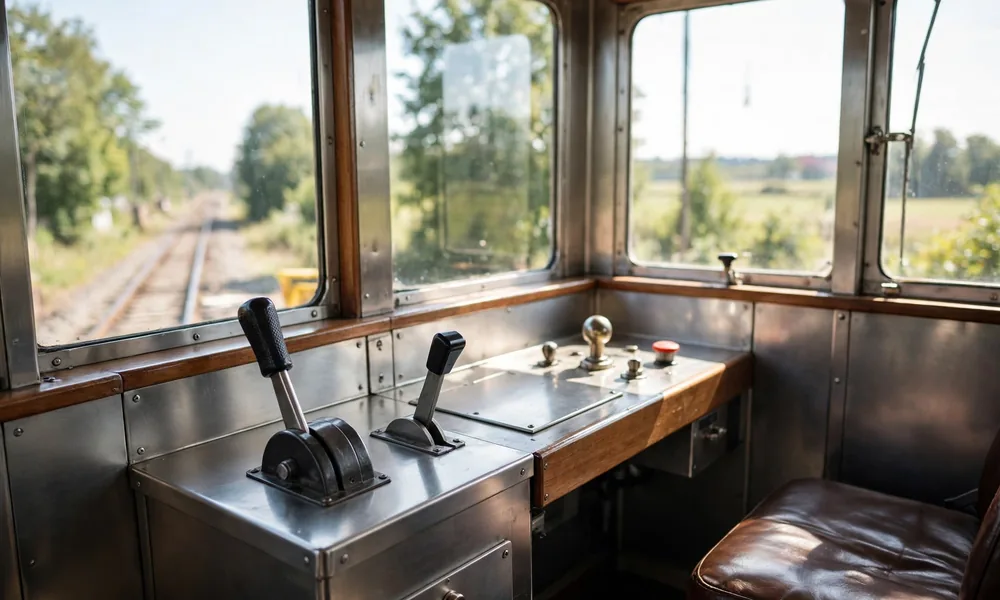
A locomotive cab is a workplace, and on a luxury service the crew may be in it for eight hours at a stretch, so the specification sheet pays close attention to it. Air suspension under the cab floor takes the edge off the track, double glazed windows and thick insulation keep the noise down, and the driving desk is arranged so every control falls under the driver’s hands without reaching. The difference between a good cab and a bad one is measured in driver fatigue, and a tired driver is a safety problem, not just a comfort problem.
The same care extends backwards through the train. The locomotive’s suspension and the way its power is applied decide how much vibration reaches the sleeping cars, and a luxury operator tunes both for smoothness rather than raw acceleration. A passenger asleep in a bed should feel the train as a gentle rocking, not a series of jolts, and that is an engineering target written into the specification long before the first passenger boards. The quiet electric motors help enormously here: there is no diesel engine shaking the frame at idle, and at cruising speed the loudest sound is often the air moving past the windows.
Weight, Braking and the Track Beneath
At eighty to ninety tonnes, a luxury electric locomotive is heavy, and that weight is both a help and a problem. Weight presses the wheels onto the rails, which gives grip, but it also wears the track, so the weight is spread across four or six axles and the suspension is tuned to keep the load even as the train crosses points and curves. Engineers call this axle load, and keeping it within the limit for the route is what lets a heavy locomotive run on lines built a century ago.
Braking is where the numbers turn into safety. A luxury passenger train must be able to stop from full speed within the distance the signalling allows, and the specification demands that it can do so even with one braking system out of action. Regenerative braking, disc brakes and a separate emergency system overlap deliberately, so no single failure leaves the train without a way to stop. It is the least glamorous part of the specification sheet and the one the engineers argue about longest.
A Rare Fact
Some luxury electric locomotives are built so their traction motors can be swapped between routes that use different voltages, letting the same engine cross a border and keep running where the overhead wire changes. The transformer inside is effectively two machines in one, and the changeover happens while the train waits at the frontier, with the driver simply selecting the new voltage from the cab.
What the Specs Mean for You
For a passenger, the specification sheet translates into three things: a smooth start, a quiet ride and a train that keeps to its timetable. The high power output means the train recovers quickly after a slow section, the regenerative braking means it slows gently, and the cab and suspension tuning mean the crew stays sharp and the beds stay still. A locomotive like this typically costs an estimated $8 million to $15 million, set mostly by the traction equipment and the custom cab, and that price is why only a handful of operators in the world run them. For the wider family of electric machines, how a luxury electric train works explains the carriages this locomotive pulls, and how a luxury electric bus works shows the same electric ideas at road scale.
A luxury electric locomotive is a study in restraint: enormous power, used gently. Its numbers describe a machine that could pull a freight train but is instead tuned to carry sleeping passengers in silence, and every figure on the sheet, from tractive effort to axle load, is there to protect that quiet. For the road going equivalent, how a luxury electric car works explains how the same motors and batteries shrink down to fit a single vehicle.


