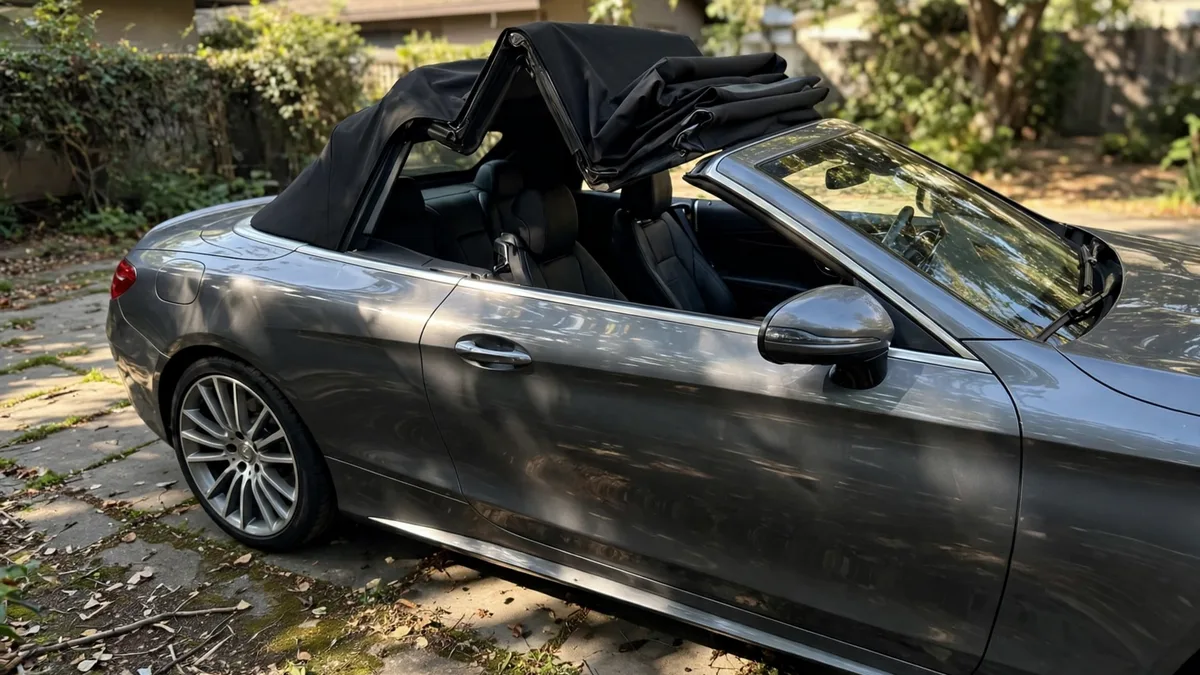
A convertible roof has an impossible job. It must seal the cabin against rain and wind as tightly as a steel roof, hush the cabin at motorway speed, and then, at the touch of a button, fold itself away into a space barely bigger than a suitcase, all in under twenty seconds, without snagging, creaking or leaking.
On a luxury convertible the roof is not an accessory but a machine in its own right, with a frame, motors, sensors and a skin that must flex thousands of times without wearing out. This is how a luxury car convertible roof is made.
How It’s Made
Step 1: The folding frame is built
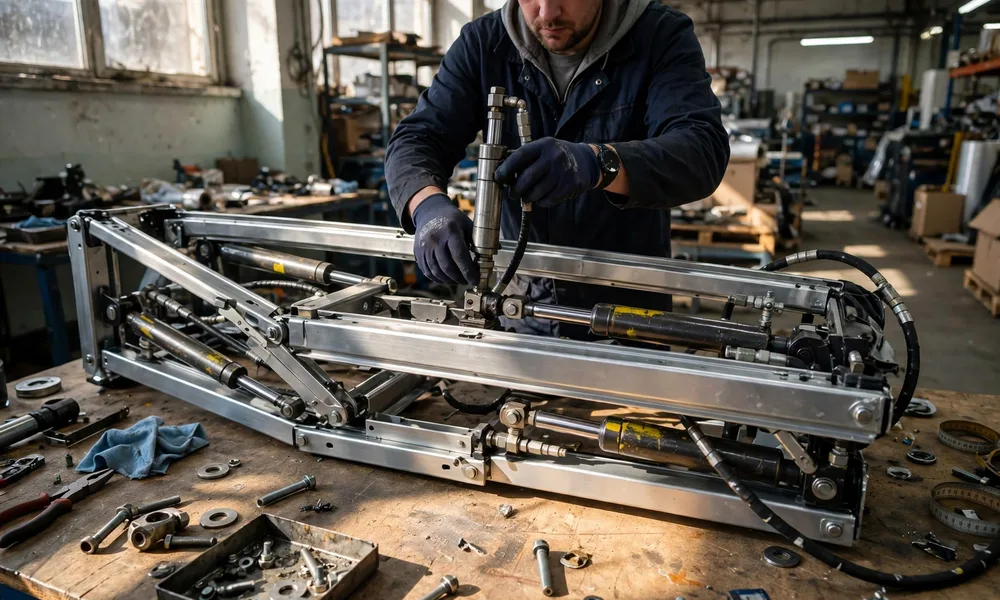
Every convertible roof begins with its frame, a skeleton of aluminium arms and hinges that folds like a complicated piece of origami. The arms are cast and machined, then joined with pins and bushes that must move freely for years without developing play, because a hinge with even a millimetre of slack will let the roof rattle at speed.
The frame is assembled on a jig that holds every arm in exactly the right place, and a worker moves it through its full fold by hand, feeling for any stiffness or catching. The geometry is checked with measuring arms, because the roof must fold into a shallow well behind the seats, and a frame that is a few millimetres out will not fit in its own stowage space. Only a frame that folds smoothly, every time, moves on to the next bench.
Step 2: The motors and hydraulics are fitted
The frame is driven by small electric motors and hydraulic rams, fitted to the arms at points worked out to give the most leverage with the least force. The hydraulics are filled with fluid and bled of air, because a single bubble in a line would make the roof hesitate halfway through its fold, and a hesitating roof is a roof that can jam.
Step 3: The fabric skin is cut and sewn
The skin of a soft-top roof is a layered fabric, an outer cloth that sheds rain, a rubber layer that seals it, and an inner lining that gives the cabin a finished look and hushes the wind. The cloth is cut from large rolls, with the pattern laid out so the weave runs the same way across every panel, because a panel cut against the grain would stretch unevenly and sag.
Step 4: The skin is stretched over the frame
Fitting the skin is the most delicate step in the whole build. The fabric is warmed so it stretches, then pulled over the frame and clipped into place, tensioned evenly so that it lies smooth when the roof is up and folds without creasing when it is down. Too tight and the motors will strain; too loose and the roof will flap and drum at speed.
A worker walks around the finished roof with a straight edge and a keen eye, looking for wrinkles, sags and uneven tension, and the roof is raised and lowered several times so the fabric can settle into its folds. The tension is adjusted by moving small straps inside the skin, a fiddly job that is done by feel as much as by measurement, and it is repeated until the roof looks as taut as a drum when it is up.
Step 5: The seals and drainage are fitted
A convertible roof lives or dies by its seals. Rubber seals run around every edge where the roof meets the windscreen frame, the doors and the body, and each one is cut, glued and fitted by hand, then checked with a thin feeler gauge to make sure it presses evenly all the way along. A seal that presses too hard will squeak; one that presses too lightly will let in wind and rain.
Behind the seals sits a drainage system, small channels and tubes that catch any water that does get past and carry it down through the body to the road. The tubes are blown through with air to prove they are clear, and the finished roof is tested under a rain rig that pours water over the car for an hour while an inspector sits inside with a torch, looking for a single drop. A car that leaks on the rig goes back for new seals, however small the drip.
Step 6: The roof is tested and fitted to the car
Only then is the roof fitted to the car, bolted to the body and connected to its wiring and hydraulics. On the line the roof is cycled once more with the car running, the windows are checked against the seals, and the car is driven through a water test before it is signed off. The roof that folded away so neatly in the factory must do the same for the owner, in the rain, at a traffic light, for years.
| Part | Detail |
|---|---|
| Frame | Aluminium arms and hinges on a jig, folded by hand, geometry checked to the millimetre |
| Motors | Electric motors and hydraulic rams, bled of air, anti-trap sensing tested with a soft block |
| Fabric skin | Layered cloth, rubber seal and inner lining, sealed seams, glass rear window bonded in |
| Tensioning | Skin warmed, stretched and strapped, adjusted until taut as a drum when raised |
| Seals | Hand fitted rubber seals, drainage channels blown clear, one hour rain rig test |
| Testing | Hundreds of cycles in heat and cold, then fitted to the car and water tested again |
The hardest part of making a convertible roof is the folding itself. The frame, the fabric and the seals all have to move together through the same arc, hundreds of times, without the fabric creasing, the seals shifting or a hinge wearing loose, and the whole mechanism has to disappear into a space barely bigger than the roof itself. It is a machine that must be invisible when it works and unforgettable when it does not.
What One Costs
A luxury convertible roof typically costs an estimated $4,000 to $15,000 as a replacement assembly, set mostly by the frame, the motors and whether the skin is cloth or a folding hard top. A simple soft top sits near the bottom, while a fully lined, heated-glass, insulated roof costs far more. The car underneath is built for open air too, and how a luxury convertible works explains the body and chassis that make it possible, while how a luxury convertible is made follows the whole car from its first panels to the finished roadster.
A Rare Fact
The first folding car roofs were not powered at all. Early convertible owners raised and lowered the roof by hand, unclipping it, folding it back and stowing it themselves, and a rainstorm meant pulling over and wrestling with wet canvas at the side of the road. The first powered roofs arrived decades later, and the luxury of pressing a button while the car is still moving is a surprisingly recent one.
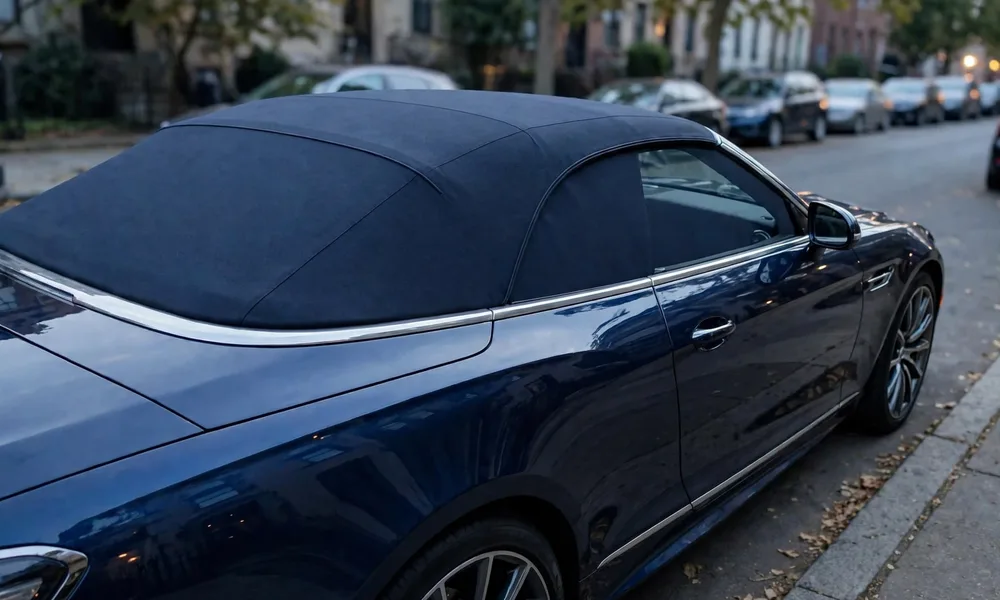
A luxury convertible roof is an aluminium folding frame, motors and hydraulics that sense resistance, a layered fabric skin stretched drum tight, hand fitted seals and a drainage system proven under an hour of rain. It seals like a coupe and vanishes like a magic trick, and when the sun comes out it is gone in twenty seconds. The numbers behind the whole car are just as carefully worked out, and luxury convertible specs explained breaks them down.