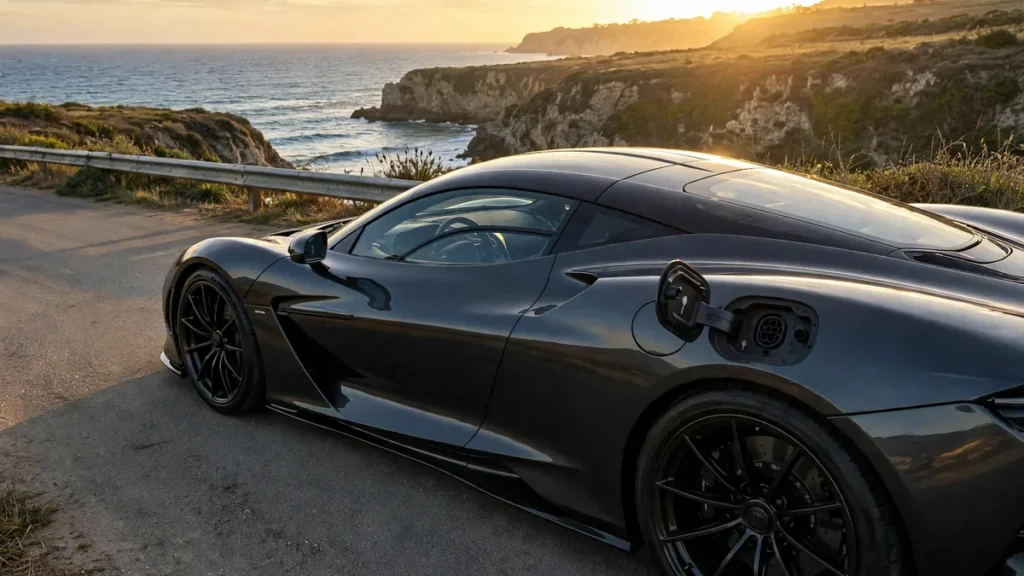
A buyer standing beside a luxury convertible on a spring morning usually does the same thing first: he looks at the roof, folds it away in his mind, and then asks for the spec sheet. The car in front of him might be a low grand tourer with tan leather and a fabric top that disappears in seconds, and it looks simple enough. Then he opens the sheet and finds a wall of figures for roof time, boot space with the roof down, wind buffeting, chassis stiffness, weight, power, and noise with the top up, and the simple car suddenly looks like a puzzle. Every number matters, but not every number matters in the same way, and knowing which ones to read first is what separates a good purchase from an expensive lesson.
A dealer in the south of France once told a story that still circulates among convertible buyers. A client had fallen in love with a grand tourer because its top speed was listed at 190 miles per hour, the fastest in its class. He bought it, took it along the coast with the roof down, and discovered that the speed figure had been recorded with the roof up, on a smooth track, in cool air. With the roof down on a warm day, the same car was a different machine: louder, thirstier, and happier at a relaxed cruise than at a flat-out run. He still loved the car, but he had bought it for a number that described a day he would never have. The lesson was not that the sheet lied. It was that a convertible has two cars inside it, and the sheet describes both.
The roof numbers come first
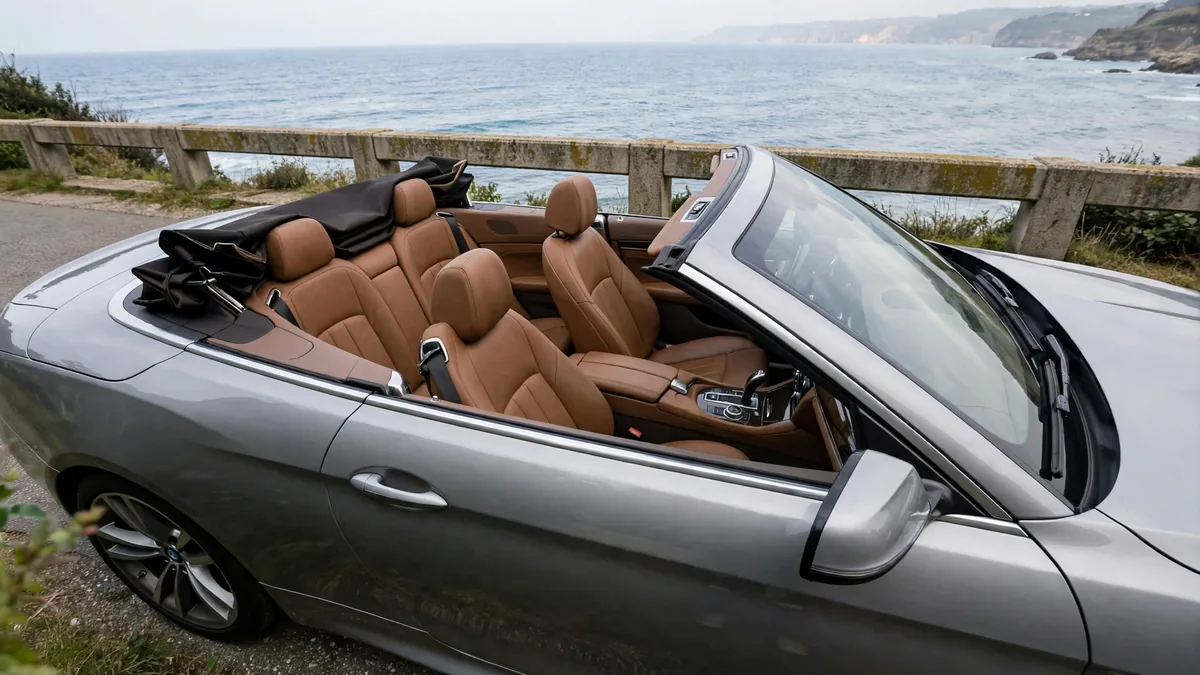
Every convertible spec sheet starts with the roof, and the first figure is the opening time, usually between 12 and 25 seconds for a luxury model. That sounds trivial until the buyer imagines a sudden shower at a traffic light. A roof that folds in 14 seconds is a roof that saves the leather; a roof that takes 25 seconds and needs the car to be stationary is a roof that asks for planning. The sheet lists both the time and the speed limit, and together they describe how the car behaves in real weather, not just on a sunny showroom floor.
Chassis stiffness is the number that separates a good convertible from a car that merely looks like one. Removing the roof removes a structural member, so engineers add bracing under the floor and around the windscreen, and the sheet sometimes quotes torsional rigidity, often in the region of 15,000 to 25,000 newton-metres per degree for a luxury model. A higher figure means the car does not flex over bumps, the doors close cleanly after years of use, and the steering stays precise on a rough road. The buyer who reads the stiffness figure, or at least drives over a rough road with the roof down, learns more than any power figure can say.
Power, weight and the open-air ride
The power line on a luxury convertible spec sheet is usually the loudest number on the page, and it deserves a calmer reading than it gets. Luxury models are commonly rated at 400 to 650 horsepower, delivered by a turbocharged engine or a hybrid system, and a few performance versions pass 700. The sheet lists both the power and the weight, and those two together matter more than either alone. A convertible typically weighs 200 to 400 pounds more than its coupe sibling, because of the roof mechanism and the extra bracing, so a convertible needs more power simply to feel as quick.
Acceleration is the figure buyers quote to their friends, usually 0 to 60 miles per hour in 3.5 to 5 seconds for a luxury convertible. It is a thrilling number, and it is also a narrow one. Wind buffeting tells more about daily driving: how the air behaves in the cabin at motorway speed, and whether a conversation is possible without shouting. The buyer who tests the car at speed with the roof down, not just on a launch, learns more about it than the acceleration figure ever says.
The build and the price
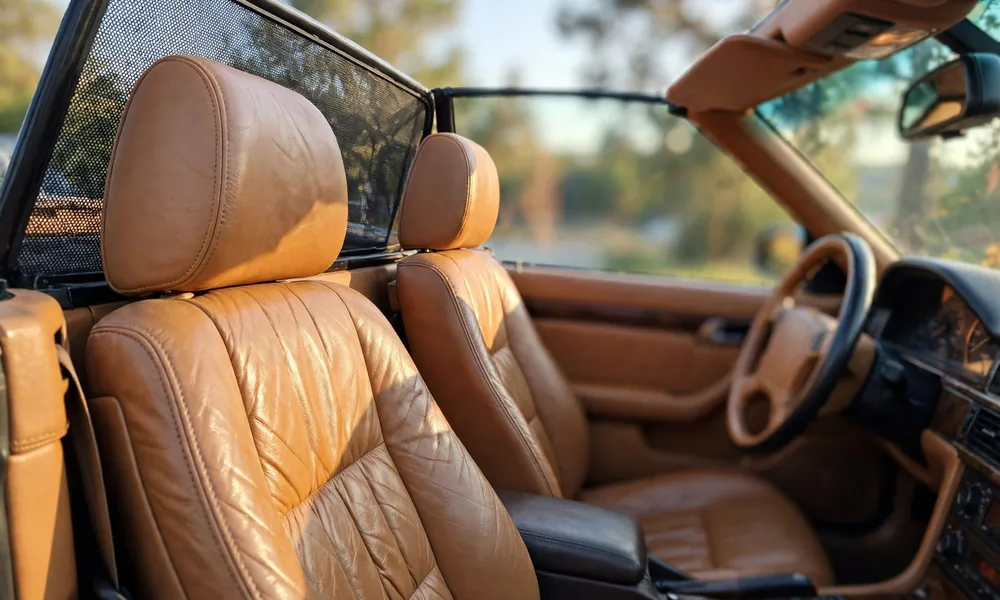
Price is the one figure the spec sheet rarely prints in full, because a luxury convertible is sold as a base car plus options, and the options list is long. As an estimate, a well-equipped luxury convertible typically sells for roughly $110,000 to $220,000, with flagship grand tourers passing $250,000 once the premium interior, upgraded roof, and driver assistance package are added. The roof mechanism alone can account for a large share of the premium over the coupe, and its maintenance after many years is a real question that buyers should ask about early. The body, often built from aluminium to keep weight down, is expensive to repair after even a minor incident, and insurance reflects that. None of this is on the spec sheet, but every number on the sheet points at it: more stiffness, more power, and a better roof all cost money, and the sheet is honest about what the buyer is paying for, even when it never prints the price.
A rare fact worth knowing
Here is a detail that rarely appears on any spec sheet and that engineers love to share. On some of the finest luxury convertibles, the fabric roof is deliberately stitched with a slight curve, so that rain runs off the sides instead of pooling in the middle. The result is a roof that stays quiet in heavy rain, and the giveaway is what the driver does not hear: there is no drumming above his head, only a soft patter. Engineers call it crowned tensioning, and it is one of those invisible luxuries that costs real design work and real testing time. The sheet lists a single roof time, but the stitching is why two cars with the same time can feel completely different in a storm. The numbers tell the buyer what the car is. The rain tells him how it was engineered.
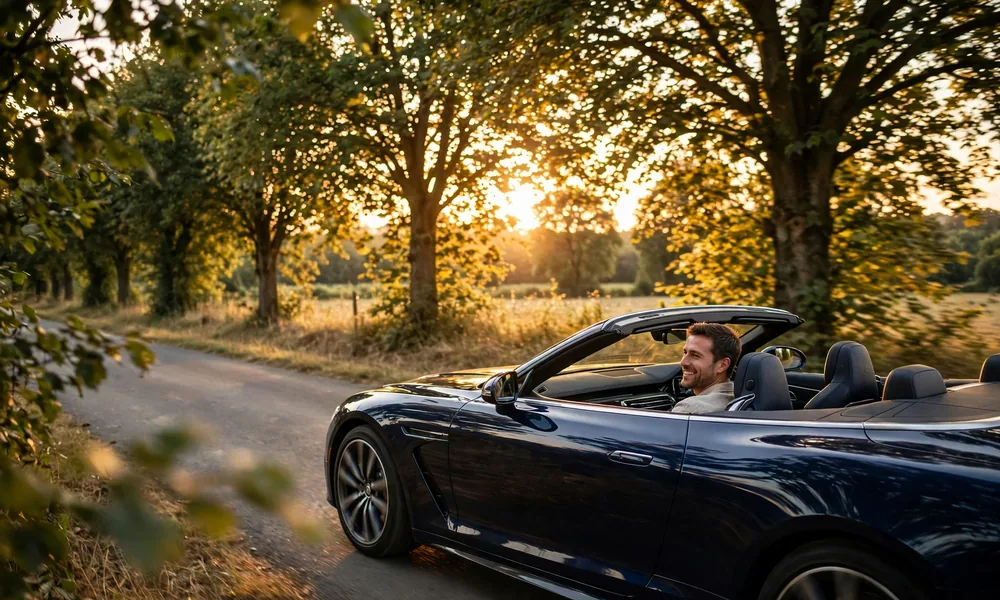
The best way to read a luxury convertible spec sheet is to read it twice, once with the roof up and once with the roof down, starting with the roof time and the boot, then the stiffness and the wind, then the power and the price. The car that fits both versions of the day is the right car, even if another car has a bigger top speed. For a closer look at how these cars run, see how a luxury convertible works, and for how they are built, see how a luxury convertible is made. For the money side, see why a luxury convertible is so expensive.
| Specification | Typical luxury range | What it decides |
|---|---|---|
| Roof opening time | 12–25 seconds | Weather readiness |
| Boot, roof down | 7–10 cu ft | Weekend luggage |
| Torsional rigidity | 15,000–25,000 Nm/deg | Shake and precision |
| Power | 400–650 hp | Performance with added weight |
| 0–60 mph | 3.5–5 seconds | Launch and overtaking |
| Noise, roof down | 65–72 dB | Conversation at speed |
| Weight penalty vs coupe | 200–400 lb | Handling and economy |
| Price (estimate) | $110,000–$250,000+ | Roof, stiffness and trim |