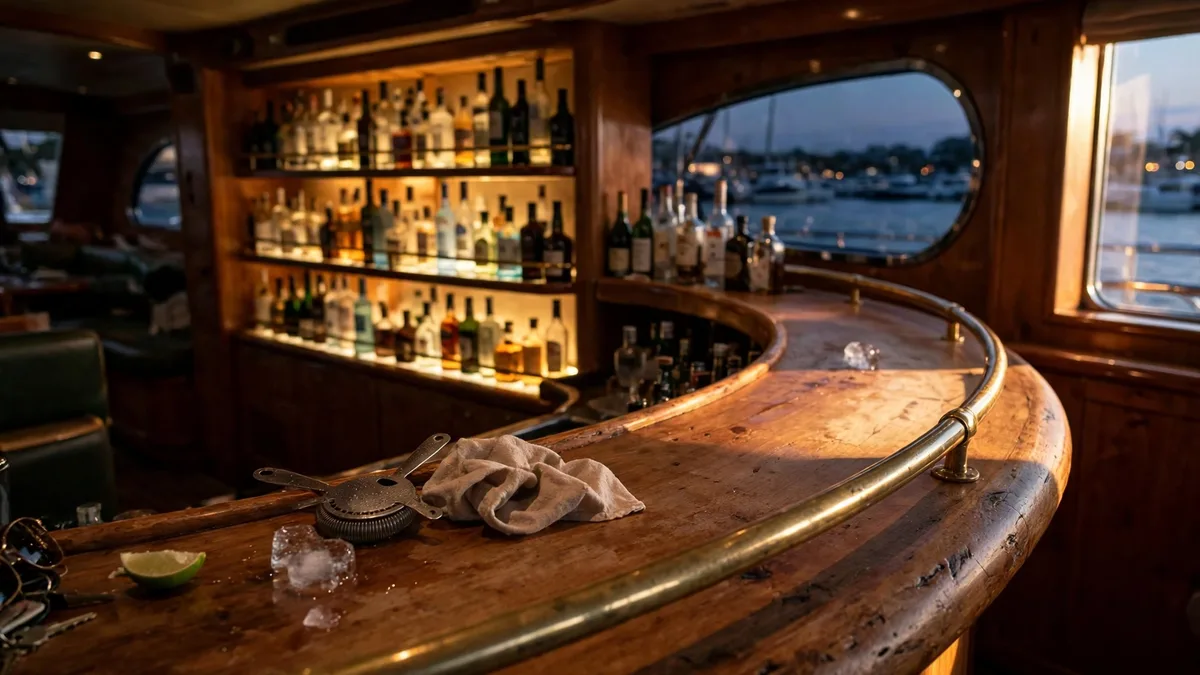
At sunset on a yacht at anchor, a guest leans on the bar and asks the steward a simple question: how many bottles does this bar hold, and how cold does it keep them? The answers are on a specification sheet the guest will never see, listing fridge volumes in litres, counter lengths in metres, and ice output in kilograms per day. Behind the polished wood, the bar is a small, hard-working machine.
A luxury yacht bar is the drinks counter and its hidden equipment, built into a room that rolls with the sea and must keep glasses, bottles, and ice exactly where they belong. Every figure decides whether the bar serves a dozen guests smoothly or runs dry halfway through the evening. This guide reads the specification sheet line by line, in plain words.
Luxury Yacht Bar Specs at a Glance
| Specification | Small Bar | Mid-Size Bar | Grand Bar |
|---|---|---|---|
| Counter length | 2–3 m | 3–4.5 m | 4.5–6 m |
| Seating | 4 stools | 6 stools | 8–10 stools |
| Bottle capacity | 80–120 bottles | 120–200 bottles | 200–350 bottles |
| Wine fridge | 60–90 litres | 90–150 litres | 150–250 litres |
| Drinks fridge | 80–120 litres | 120–200 litres | 200–300 litres |
| Ice output | 15–25 kg per day | 25–40 kg per day | 40–70 kg per day |
| Glass storage | 40–60 glasses | 60–100 glasses | 100–160 glasses |
| Counter top | Timber | Stone or timber | Rare stone |
| Bar lighting | Warm downlights | Dimmable LEDs | Scene lighting |
| Power draw | 1–1.5 kW | 1.5–2.5 kW | 2.5–4 kW |
1. Counter length and seating: how many guests the bar holds
Counter length is measured along the front of the bar, and it decides how many guests can sit or stand along it without crowding. Small bars run two to three metres with four stools, mid-size bars three to four and a half metres with six stools, and grand bars four and a half to six metres with eight to ten stools. Each guest needs about sixty centimetres of counter, and the bartender needs a full metre behind it.
2. Bottle capacity and glass storage: the stock behind the counter
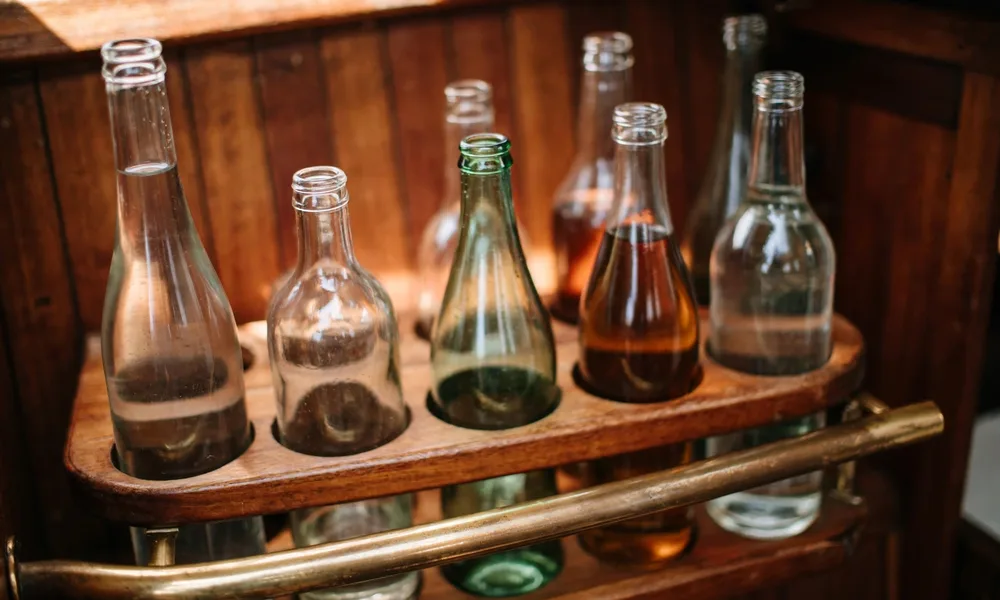
Bottle capacity is the number of bottles the racks behind the bar can hold, and glass storage is the number of glasses racked above or below the counter. Small bars hold eighty to a hundred and twenty bottles and forty to sixty glasses, mid-size bars a hundred and twenty to two hundred bottles and sixty to a hundred glasses, and grand bars two hundred to three hundred and fifty bottles and a hundred to a hundred and sixty glasses. The figure that matters is the working stock: only the bottles for the evening are kept on the shelves, and the rest stay in a cool locker below deck. Racks grip each bottle, as described in how a luxury yacht bar is made, so a bottle that tips in a swell is caught before it falls.
3. Wine fridge and drinks fridge: cold, measured in litres
Fridge volume is measured in litres, and a yacht bar usually has two fridges: a wine fridge held at serving temperature and a drinks fridge for beer, mixers, and soft drinks. Small bars carry sixty to ninety litres of wine and eighty to a hundred and twenty litres of drinks, mid-size bars ninety to a hundred and fifty litres of wine and a hundred and twenty to two hundred litres of drinks, and grand bars a hundred and fifty to two hundred and fifty litres of wine and two hundred to three hundred litres of drinks. Wine fridges often have two zones, one for red and one for white, and marine fridges hold their temperature when the yacht rolls, with latches that keep the doors shut in a swell. A fridge too small means warm drinks by midnight, and one too large wastes power and space.
4. Ice output: kilograms per day, and why it matters
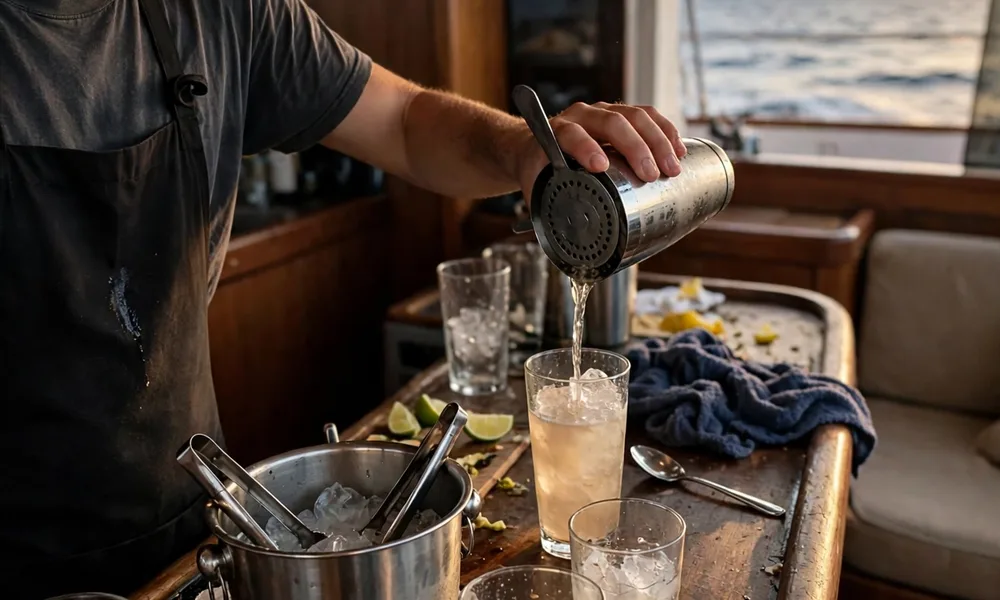
Ice output is the weight of ice the bar’s machine makes in twenty-four hours, and it is the figure most owners underestimate. Small bars make fifteen to twenty-five kilograms a day, mid-size bars twenty-five to forty, and grand bars forty to seventy. A single evening with ten guests can use twenty kilograms or more. The machine makes ice all day and stores it in an insulated bin, checked before sunset, because once the bin is empty the bar cannot catch up. How the ice, fridges, and stock are managed is explained in how a luxury yacht bar works, from the morning count to the last glass washed.
5. Counter top and bar lighting: the surfaces guests touch
The counter top is the surface guests lean on, and its specification is a material and a thickness, not a colour. Small bars use timber, mid-size bars use stone or timber, and grand bars use a rare stone, often a single slab chosen for its grain. Stone tops are heavy, so they are bolted to a steel frame under the counter, and every top is sealed against salt, sun, and spilled drinks with marine lacquer. Lighting runs from warm downlights on small bars to dimmable LEDs on mid-size bars and full scene lighting on grand bars, where the crew can set the room for cocktails or dinner.
6. What the numbers mean in practice
Read as a set, the figures describe the evenings the bar can handle. A small bar suits a family yacht where four guests drink at sunset. A mid-size bar suits a charter yacht where six guests arrive for cocktails and the stock must last the evening. A grand bar suits a superyacht where ten guests and a full cocktail list are part of the night. The test is a real evening: the ice lasting until midnight, the wine at the right temperature, and no guest waiting while the bartender searches below deck. The price is explained in why a luxury yacht bar is so expensive, where a single stone counter can cost more than a family car.
What Does a Luxury Yacht Bar Cost?
A luxury yacht bar typically costs about $80,000 to $400,000, depending on size, materials, and equipment. A small bar with a timber counter and two fridges sits near the lower end, a mid-size bar with a stone counter and twin wine zones sits in the middle, and a grand bar with a rare stone slab reaches the top. The counter is usually the single most expensive object in the room, and the fridges and ice machine the most expensive equipment, because both must be marine grade.
A Rare Fact
The first bars at sea were not bars at all: they were the captain’s cabin, where a bottle was kept in a locked box and served only on special occasions. The first proper yacht bars appeared when owners began to entertain guests aboard, and builders had to solve a problem no land bar faces: how to keep a hundred bottles from falling over. Their answer, the shaped rack and the low rail, is still used today.
A spec sheet will never tell you whether a yacht bar feels like a private club. It will tell you whether it holds enough bottles, keeps them cold enough, and makes enough ice for your guests. Those three answers separate a luxury yacht bar from a counter with a few bottles on it.