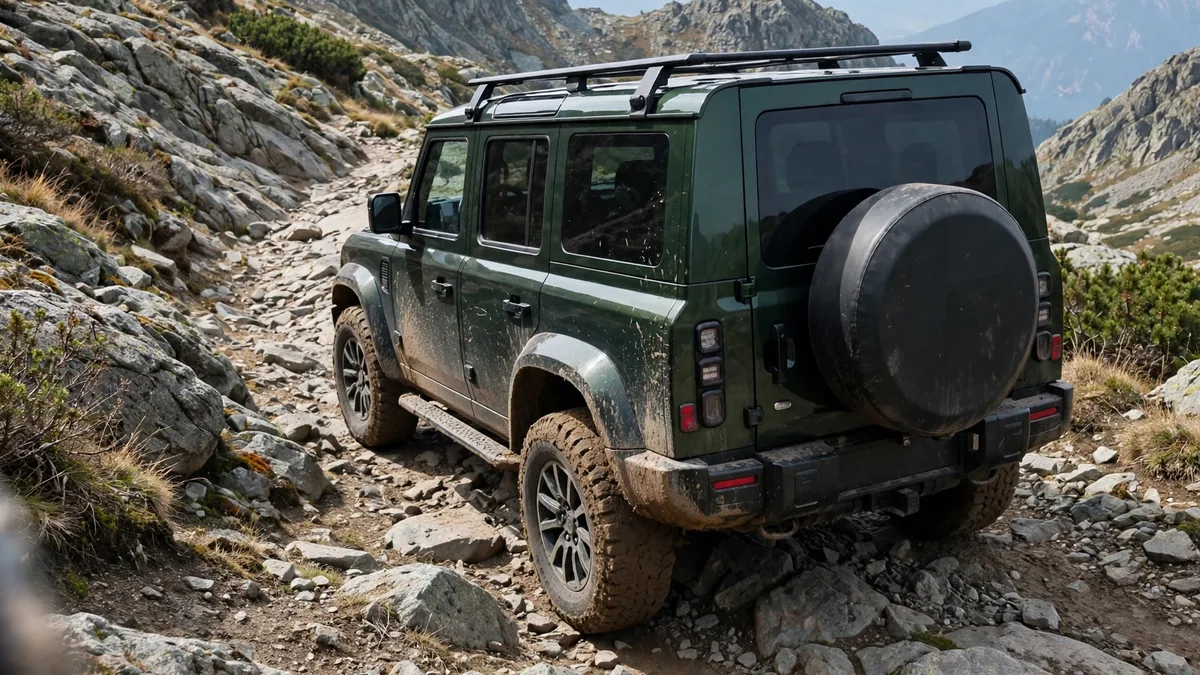
At the end of the tarmac, where the road gives up and becomes a track of mud, rock, and river crossings, most cars turn back. A luxury off-roader keeps going. It climbs slopes that look like walls, wades through water up to its headlights, and crawls over boulders at walking pace, all while its passengers sit in leather seats with the heating on and a playlist playing.
An off-roader is not a rugged car with nice seats bolted in. It is a serious piece of engineering that happens to be comfortable, built around a frame, a four-wheel-drive system, and a set of tricks that let it grip surfaces where other cars would simply spin their wheels. This is how a luxury off-roader works, from its low-range gearbox to the cameras that watch the ground beneath it.
How a Luxury Off-Roader Works
Step 1: The ladder frame and tough foundations
Underneath a luxury off-roader is a ladder-frame chassis, two long steel rails joined by cross members, like a ladder laid flat. Unlike the single-piece body of a normal car, a ladder frame can twist as the wheels climb over uneven ground, letting each wheel stay in contact with the earth while the body stays level. That flex is what keeps the tyres gripping when one wheel is on a rock and the opposite wheel is in a ditch. The frame is also what lets the car carry heavy loads, tow a trailer, and survive years of rough use without the body cracking.
Step 2: Four-wheel drive and the low-range gearbox
The heart of the off-roader is its four-wheel-drive system, and its most important part is the low-range gearbox. In normal driving, the car uses high range, with all four wheels driven and the gears spaced for the road. When the ground gets difficult, the driver selects low range, which multiplies the engine torque several times over and lets the car crawl forward at walking pace with enormous pulling power. That crawling ability is what gets the car up a steep, slippery slope or out of deep mud without spinning the wheels. The whole system is engaged with a dial or a lever, and on modern cars it is backed by electronics that decide how much power each wheel needs before the driver even notices a loss of grip.
Step 3: Differentials, lockers, and finding grip
An ordinary differential lets the two wheels on an axle turn at different speeds, which is essential for cornering, but it has a weakness off-road: if one wheel loses grip, the differential sends all the power to that spinning wheel and none to the one with grip. An off-roader solves this with locking differentials, which can be engaged to force both wheels on an axle to turn together, so the wheel with grip keeps pulling even while its partner spins in the air. The result is a car that can keep moving with only one wheel gripping, and that is often the difference between driving out of a problem and waiting for a tow.
Step 4: Suspension, clearance, and wading depth
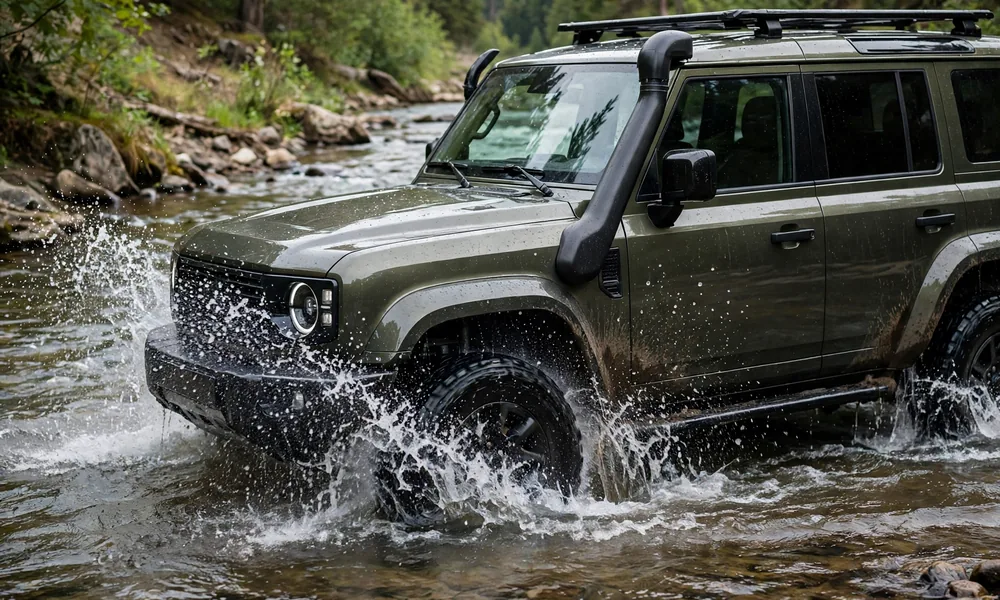
Ground clearance is the simplest measure of an off-roader, and a luxury model carries its body 25 to 30 centimetres above the ground, with air suspension that can raise it further when the terrain demands it. Long-travel suspension lets the wheels move up and down a long way without lifting the body, so the car stays composed over rocks and ruts. The approach and departure angles, the steepest slopes the car can climb onto and off without scraping its bumpers, are designed into the body shape from the start, which is why off-roaders have short overhangs and upright noses.
Step 5: Terrain modes and the electronic brain
Modern luxury off-roaders add an electronic layer on top of the mechanical one: terrain modes that re-tune the whole car for mud, sand, rock, or snow at the turn of a dial. In sand mode, the car holds gears longer and lets the wheels spin slightly to stay on top of the soft surface; in rock mode, it locks the differentials, raises the suspension, and delivers power with the delicacy of a surgeon’s hand; in mud mode, it spins the wheels just enough to clear the tread. The electronics never replace the mechanical systems, but they make them easier to use, so that a driver who has never been off-road can still get the car through country that would stop an ordinary SUV. The taller road-going cousin of this machine is built very differently, as described in how a luxury SUV is made, and its snow-going relatives work on the same grip-first principles, from how a luxury snowmobile works to why a luxury snowcat is so expensive.
Step 6: The cabin and comfort after the climb
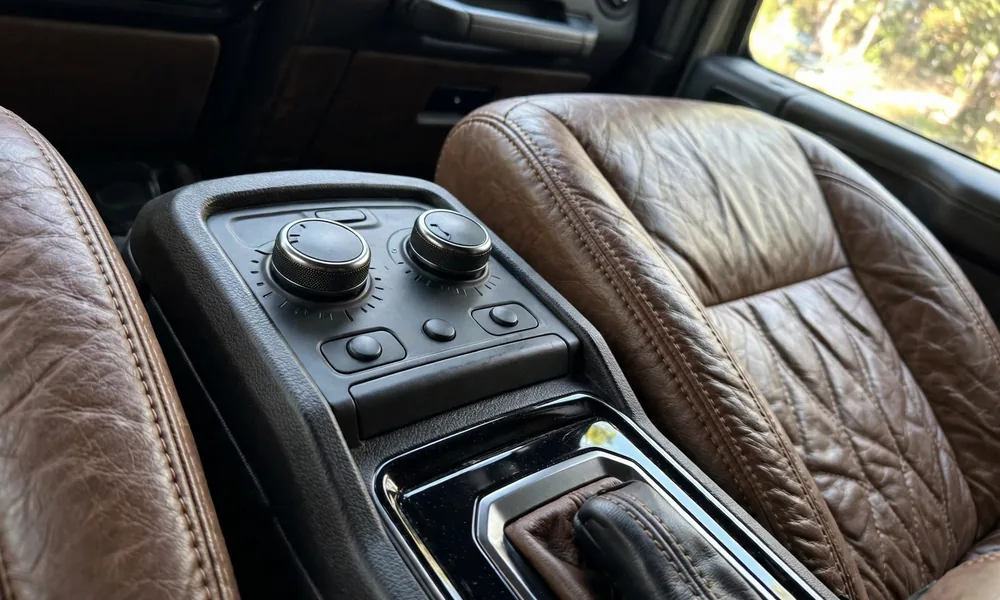
After the mud and the rocks, the cabin is where the luxury shows. The seats are wide and supportive, trimmed in leather that is treated to resist water and mud, and the floor is covered in rubber mats that can be hosed out rather than carpet that would stain. The dashboard is simple and clear, with physical dials and buttons that can be operated with gloves on, because touchscreens are useless with muddy hands. Heating, ventilation, and a powerful sound system are all standard, and some models add a fridge, a fold-out table, and power sockets for camping equipment.
Specifications
| Feature | Typical luxury off-roader |
|---|---|
| Engine | Turbo diesel or petrol V6/V8, 250 to 450 hp |
| Drive | Permanent four-wheel drive, low range, locking diffs |
| Ground clearance | 25 to 30 cm, more with air suspension raised |
| Wading depth | 70 to 90 cm |
| Towing capacity | 3,000 to 3,500 kg |
| Weight | 2,400 to 2,800 kg |
| Approach angle | 30 to 38 degrees |
How Much Does a Luxury Off-Roader Cost?
A luxury off-roader typically costs an estimated $100,000 to $220,000, depending on the maker, the engine, and the equipment. A well-specified model from a mainstream luxury maker sits near the lower end, while a flagship with a powerful engine, three locking differentials, air suspension, and a full expedition pack can reach the top of the range. The estimate is for the car alone, and owners should budget for all-terrain tyres, underbody protection, and servicing that reflects hard use. It is a large sum, but these cars hold their value unusually well, because there are few machines that can do what they do, and the people who want one tend to want it for a very long time.
A Rare Fact
The original off-roader was not built for adventure at all. It was built for farmers, soldiers, and surveyors who needed a vehicle that could go anywhere a horse could go, and the first ones had no roof, no doors, and no comfort to speak of. The luxury off-roader is a recent invention, barely a few decades old, and it exists because owners discovered that a vehicle which can cross a continent without a road is also rather good at crossing a city in comfort. The machine that once carried soldiers now carries families to ski lodges and desert camps, and it has never forgotten how it started: every luxury off-roader still has a low-range gearbox, a ladder frame, and a wading depth, because the day it loses those, it stops being an off-roader at all.


