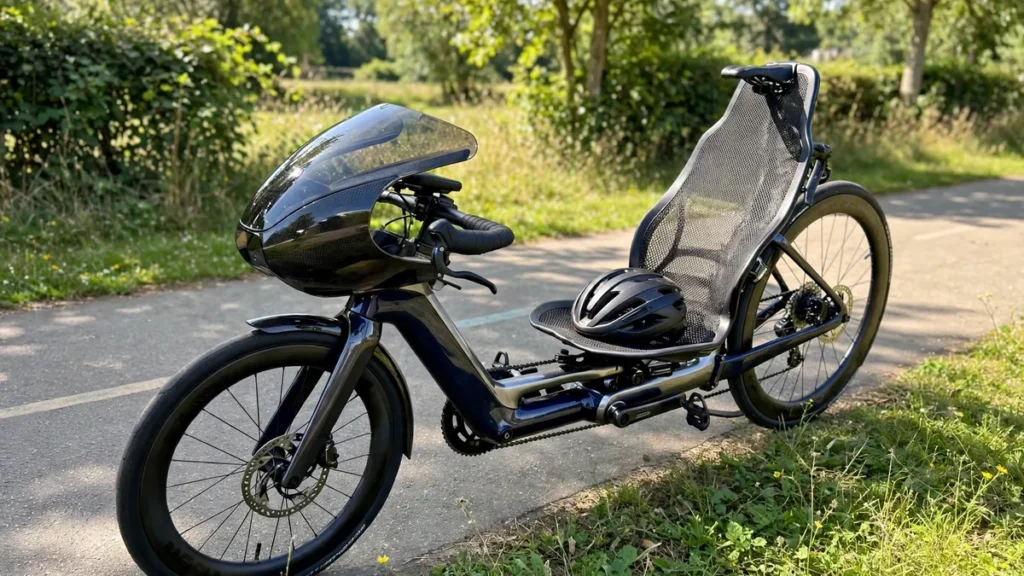
The first time you see a luxury trike properly, it stops you in the street. It is low and wide and gleaming, with two fat wheels at the front and a single wheel at the back, or sometimes the other way round, and it looks less like a motorcycle than like a piece of jewellery that happens to have an engine. Then you hear the price, and the confidence starts to make sense, because a top luxury trike can cost as much as a sports car, and some cost more.
It is a fair question to ask why three wheels should cost so much, and the answer is that a luxury trike is not a motorcycle with a wheel missing or added, but a different machine altogether. Everything about it, from the steering to the suspension to the way it is sold, is a specialist job done in small numbers by people who do it by hand. Here is where the money goes, and why the people who buy these machines almost never regret it.

1. Hand-built in tiny numbers
The first reason is volume, or rather the lack of it. A big motorcycle factory builds hundreds of thousands of bikes a year, and the cost of designing each one is spread so thin that it barely registers. A luxury trike builder might build a few hundred machines a year, and some build fewer than fifty. The frame is welded by hand, the bodywork is fitted by hand, and the final machine is assembled by a small team who know it by name rather than by number.
That hand-building is also the point. Buyers of luxury trikes are not shopping for transport, they are shopping for something made for them, and the builders know it. The paint is applied in many coats and polished between each one, the leather is cut and stitched to the buyer’s measurements, and the chrome is polished until it looks like liquid metal. For a sense of what the mainstream two-wheeled world offers at the other end of the market, the best electric motorcycles of 2027 list shows how much machine a normal budget buys, and how different the luxury trike world is.
2. An engine that belongs in a car
The second reason is the engine. Luxury trikes do not use small motorcycle engines. They use big ones, often 1,600 to 2,300 cubic centimetres, and some use car engines outright, with six cylinders and more torque than most family cars. That engine has to be tuned for a machine that weighs half a tonne and carries two people plus luggage, which means it needs low-down pulling power rather than high-revving speed.
3. Steering and suspension that have to be invented
The third reason is the hardest engineering on the machine, and it is invisible. A two-wheeled motorcycle leans into corners, and the rider’s body does half the work. A trike does not lean, or leans only a little, so the front suspension has to do everything: keep two wheels on the road, soak up bumps, and let the rider steer a machine that weighs as much as a small car through a corner at speed.
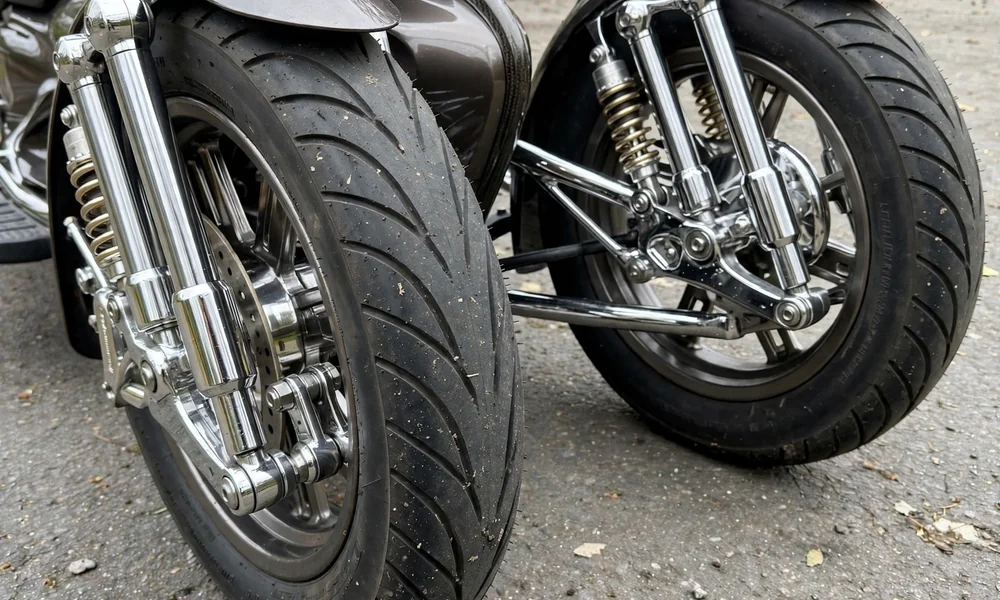
The rear end is no simpler. A single wide rear wheel has to put all that torque onto the road without spinning, and the suspension has to cope with a passenger and luggage without the ride turning harsh. The brakes are equally serious: three large discs, often with anti-lock systems and linked braking, because stopping half a tonne from motorway speed is not a job for ordinary motorcycle brakes. The best electric motorcycle brands ranking shows how the big manufacturers approach two wheels, and the trike builders have to solve problems those factories never face.
4. Chrome, paint and bespoke everything
The fourth reason is the finish. A luxury trike is a showpiece, and the finish is where the show happens. The chrome is real chrome, applied in thick layers and polished by hand, and there is more of it on one trike than on a dozen ordinary motorcycles. The seat is leather, the grips are leather, and even the small details, the mirrors, the lights, the badges, are made to a standard that would embarrass a car costing twice as much.
5. Comfort, electronics and the safety net
The fifth reason is comfort and electronics. A luxury trike is built for long days in the saddle, and it shows: a wide, low seat, a backrest for the passenger, floorboards instead of footpegs, a fairing that keeps the wind off, and an audio system that can be heard at speed. The electronics include cruise control, traction control, ride modes, a reverse gear for parking a machine too heavy to push, and a dashboard that would not look out of place in a car.
The sixth reason is the safety net that comes with the badge. Luxury trike buyers get a dealer network that knows their machine by name, a warranty that covers a machine built by hand, and a community of owners who ride together and trade stories. The why a vintage motorcycle is so expensive story shows the same logic at work in the classic world, where scarcity and craftsmanship keep prices high for decades.
| Specification | Typical luxury figure |
|---|---|
| Layout | Two wheels front, one rear, or one front, two rear |
| Engine | 1,600 to 2,300 cc, two or three cylinders, some car engines |
| Power output | 100 to 200 horsepower |
| Torque | 150 to 250 newton metres |
| Weight | 450 to 600 kilograms |
| Top speed | 160 to 200 kilometres per hour |
| Fuel capacity | 20 to 30 litres |
| Range | 250 to 400 kilometres |
| Brakes | Three discs, anti-lock, linked braking |
| Suspension | Double wishbone or leaning front, car-style rear |
| Seats | Two, with backrest and floorboards |
| Extras | Reverse gear, cruise control, heated grips, audio |

The price, and a rare fact
A new luxury trike costs an estimated $30,000 to $100,000, with the most exclusive hand-built machines passing that range once the options are added. Those are estimates, because almost every machine is built to order, but they put the trike firmly in sports-car territory, and that is the point. You are not buying three wheels. You are buying a machine that was designed from scratch, built by hand in tiny numbers, finished like jewellery, and engineered to do something no ordinary motorcycle can do: carry two people in comfort, at speed, with the stability of a car and the soul of a bike.
Here is the rare fact that explains the appeal. A trike does not need to be balanced at a standstill, which means riders who could never hold up a heavy motorcycle, or who simply do not want to, can ride a machine with more power than most sports bikes. The next time one rumbles past you, low and wide and gleaming, you will know what you are looking at: not a compromise, but a machine that was expensive because it had to be, built for people who wanted the wind in their faces without the worry of keeping it upright.