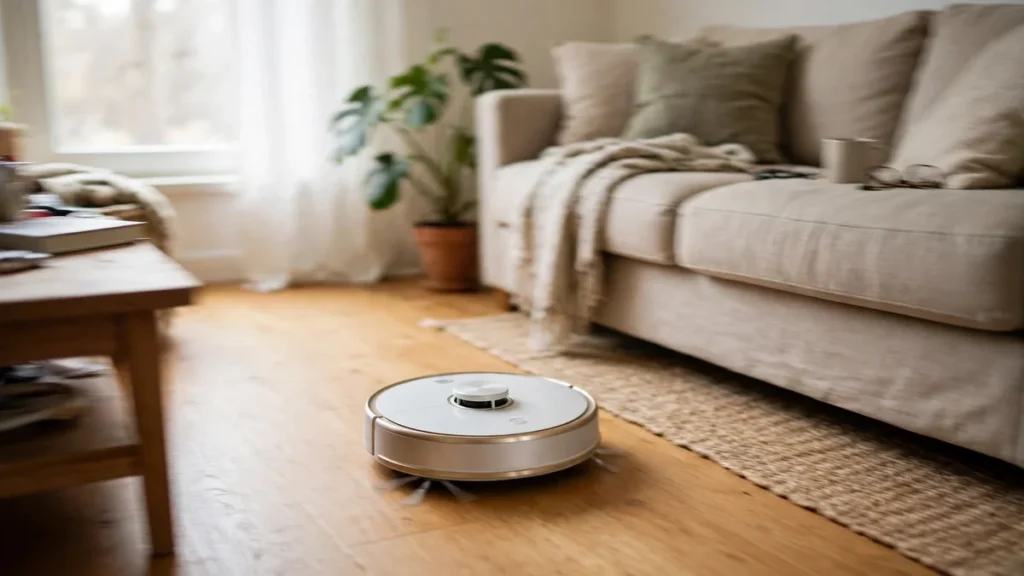
It is three in the morning, the house is dark, and a small white disc glides out from under the sofa. It pauses, turns, and sweeps under the dining table with the patience of a creature that has all night. Nobody is watching it work, and that is the whole idea.
A luxury robot vacuum is not a toy with a brush. It is a small self-driving machine that maps your home, learns where the furniture lives, and cleans while you sleep. This is how a luxury robot vacuum is made, from a bare chassis to the first quiet run across a living room floor.
Step 1: The chassis and shell are moulded
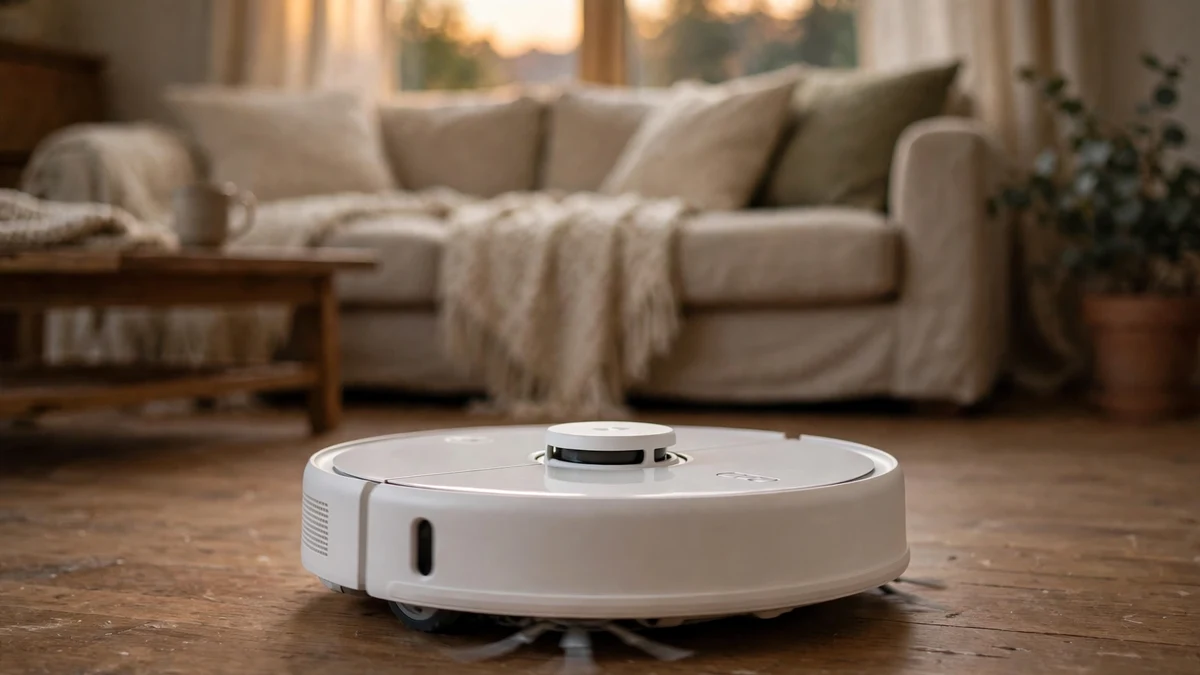
Everything starts with the body, and with a decision about its shape. A luxury robot vacuum is almost always a low disc, because a disc turns in its own footprint and slips under sofas and beds. The shell is injection-moulded from tough plastic, in two halves, top and bottom, with the top often finished in a glossy or matte coat that hides fingerprints.
Inside the shell, the chassis is a rigid frame that holds the motors, the battery and the sensors in exact positions. The bumper at the front is mounted on springs, so a gentle bump tells the machine it has met a wall or a chair leg.
Step 2: The navigation brain is built and fitted
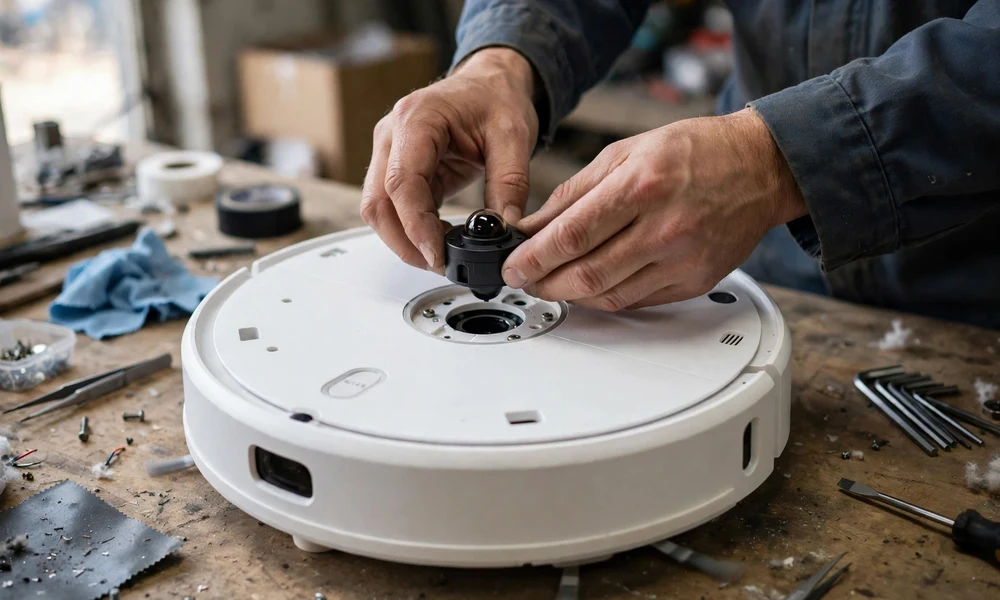
The most expensive part of a luxury robot vacuum is not the motor or the brush. It is the navigation system, and it starts with a small spinning tower on top of the machine. Inside the tower, a laser spins many times a second, measuring the distance to every wall and chair, and building a map of the room as it goes.
The map is held in a small computer board, fitted to the chassis with the same care as a phone. Cameras and cliff sensors are added around the body, so the machine can see a staircase edge and stop before it falls. The way this laser sees the world is described in the guide to how robot vacuum lidar works, and it is the reason a luxury machine cleans in neat rows instead of wandering at random.
Step 3: Motors, brushes and suction are assembled
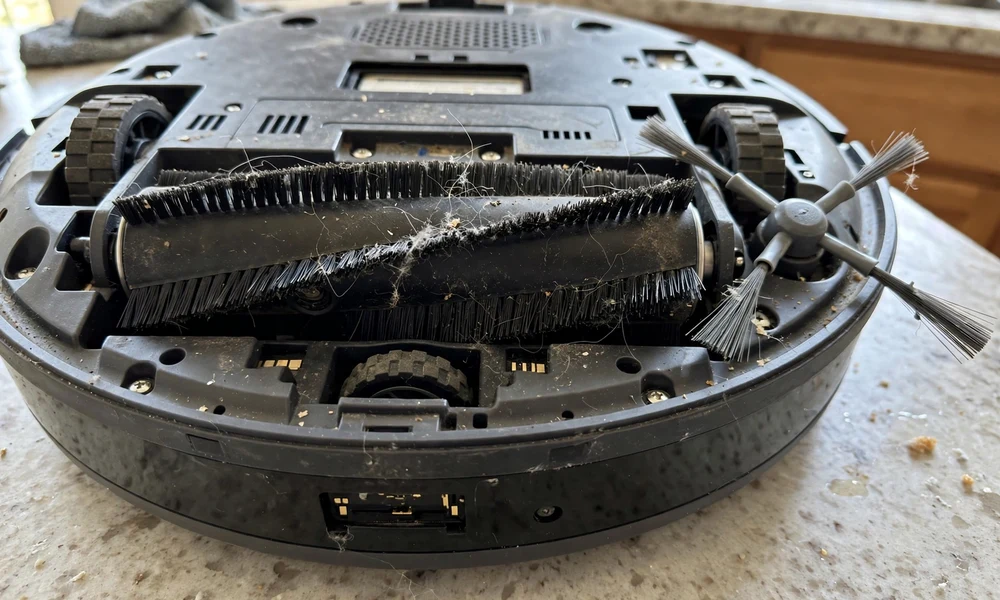
With the brain in place, the cleaning hardware goes in. A main brush roller sits underneath, spinning against the floor to lift dust and hair, and a small side brush sweeps dirt out of corners and along skirting boards. Both are driven by small motors, and both are designed to be pulled out and cleaned by hand.
The suction motor sits above the dustbin, pulling air through a filter that traps fine dust. The dustbin itself is a simple plastic box, but it is shaped so it slides out with one hand and empties without spilling.
Step 4: The battery and charging dock are paired
The battery is a flat lithium pack, fitted low in the chassis to keep the machine stable. It is tested and charged before it ever meets the vacuum, and its management system watches every cell, cutting power if anything gets too hot. A luxury robot vacuum will clean for about two hours on one charge, then drive itself home.
Home is a small dock, plugged into the wall, with two metal contacts that meet matching contacts on the machine. When the battery runs low, the vacuum follows its map back to the dock, parks itself, and charges. Some docks empty the dustbin too, sucking the dirt into a larger bag, so the owner only has to think about the machine once a month. The full range of power and runtime is set out in the guide to luxury robot vacuum specifications explained.
Step 5: Software, mapping and the first test run
Hardware alone does not make a luxury robot vacuum. The software is loaded onto the board, and the machine is set loose in a test apartment, a room full of chairs, rugs, cables and door thresholds, built to catch every mistake. Engineers watch it map the room, and they watch where it gets stuck, because a machine that needs rescuing every day is a machine that will end up in a cupboard.
The app is part of the product too. It shows the map, lets the owner draw no-go zones around a pet bowl or a pile of cables, and schedules cleaning for times when the house is empty. That learning is the luxury, and it is why two machines with the same motor can feel like entirely different products.
Step 6: Final assembly, testing and packing
Before packing, every machine is run through a final test. It is driven over a test floor scattered with dust, rice and pet hair, and the dustbin is weighed afterwards to prove the suction works. The cliff sensors are tested over a drop, the bumper is pressed, and the dock is tested to make sure the machine can find it from another room.
The shell is wiped, the brushes are checked, and the machine is packed with its dock, a spare filter and a quick-start card. The price of all this care is covered in the guide to why a luxury robot vacuum is so expensive, and the answer is mostly in the sensors and the software, not in the plastic. Only after the test does the machine get its box.
Specifications at a glance
| Feature | Typical luxury figure |
|---|---|
| Height | Under 10 centimetres |
| Suction | About 5,000 to 8,000 pascals |
| Runtime | About 120 to 180 minutes |
| Navigation | Laser mapping with cameras |
| Dustbin | About 400 millilitres, self-emptying dock |
| Noise | About 55 to 65 decibels |
| App control | Maps, no-go zones and schedules |
What it costs
A luxury robot vacuum typically costs between about $800 and $1,500, and these are estimates, not fixed prices. The price rises with suction power, with a self-emptying dock, and with smarter mapping, while the cheapest models in the range skip the dock and use simpler navigation. Running costs are small: replacement filters, brushes and dust bags, usually a modest sum each year. Buyers pay for the mapping and the reliability, and for a machine that cleans while they are out and is back on its dock before they return.
A rare fact
The first robot vacuums were almost blind. They bounced off walls at random, changed direction when they hit something, and hoped to cover the whole floor by luck. Some of them did, eventually, but they took hours and missed corners. The laser tower on a modern luxury machine changed that completely, and the same spinning laser idea is used in self-driving cars, which also need to map a world they cannot see with eyes alone. A vacuum that maps your living room is, in a small way, driving itself.
From mould to midnight cleaning run, a luxury robot vacuum is a study in patience. A disc that maps, learns and cleans on its own adds up to a machine you barely notice, and that is exactly the feeling its builders are chasing.