The little machine leaves its dock without a sound, glides across the wooden floor, and disappears under the sofa. The owner, watching from the kitchen with a coffee, does not get up. She has not touched a vacuum in months, and the floors have never looked better. A visitor asks the obvious question, and it starts with the same word as always: why does it cost so much?
A luxury robot vacuum can cost as much as a good washing machine, and the answer is not one thing but many small expensive things, packed into a disc the size of a dinner plate. The navigation is a laser system, the motors are precision instruments, the dock washes and dries the mop by itself, and the software learns the house the way a person does. This article takes the price apart, reason by reason, so you can see exactly where the money goes.

1. A laser navigation system that maps the whole house
The heart of a luxury robot vacuum is a spinning laser that maps the house in real time, and it is the single most expensive sensor in the machine. The laser fires thousands of times a second, measures the distance to every wall and piece of furniture, and builds a map accurate to a few millimetres, all while the vacuum moves. That sensor alone costs many times what a simple bump sensor costs, and it needs a motor to spin it, a processor to read it and software to turn the readings into a map.
The map is what makes the vacuum smart. It knows where the rooms are, where the rug ends and the wood begins, and where the stairs are, and it cleans in straight lines rather than wandering at random. The system that does that work is covered in how robot vacuum lidar is made, from the laser assembly to the calibration on the production line.
2. Motors, brushes and suction built to last years
The suction motor in a luxury robot vacuum is a precision instrument, not a cheap fan. It must spin fast enough to lift dust from a deep rug, run quietly enough to hold a conversation over, and survive thousands of hours without wearing out, all in a space the size of a fist. The main brush is designed to resist tangled hair, the side brush reaches into corners, and the whole cleaning head lifts and lowers itself to suit the floor, which needs sensors, actuators and software working together.
The battery matters too. The numbers behind the machine are decoded in the luxury robot vacuum spec sheet explained, where suction, battery and navigation figures tell the real story.
3. A dock that empties, washes and dries by itself
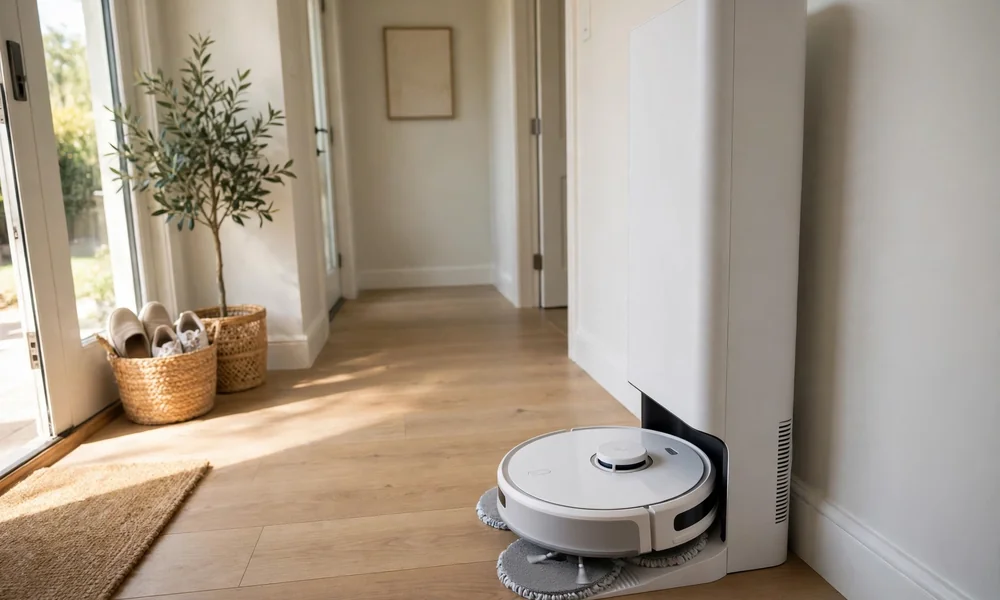
The dock is where a luxury robot vacuum earns much of its price. A premium dock empties the dustbin into a sealed bag, washes the mop pads with clean water, dries them with warm air so they do not smell, and refills the water tank, all without the owner touching anything. Each of those jobs needs pumps, heaters, tanks and sensors, and the dock itself is a small appliance that costs almost as much to build as the vacuum.
4. Cameras, sensors and software that learn the house
A luxury robot vacuum carries a set of cameras and sensors that would have belonged in a small robot a generation ago: a front camera that recognises cables, socks and pet waste, a cliff sensor that stops it falling down stairs, a carpet sensor that lifts the mop, and a processor that runs a map, a cleaning plan and an obstacle list at the same time. Each sensor needs calibration, and each one must be tested on real floors, not just on a bench.
The software is the hidden cost. The vacuum learns the house over weeks: which rooms get dirty fastest, where the dog sleeps, which rug the mop should avoid, and the best route through a cluttered room. That learning is developed by engineers and tested in thousands of real homes, and the development bill is spread over the buyers of one model. The laser that makes the map possible is also one of the most expensive parts to build, and its cost is explained in why robot vacuum lidar is so expensive, where a tiny spinning sensor carries a surprisingly large price.
5. Tiny production runs and a long development bill
A luxury robot vacuum is built in far smaller numbers than a budget model, and small numbers are expensive. The tooling for a compact body, a precision brush housing or a dock with internal plumbing costs the same whether the factory makes ten thousand units or a million, so the cost per unit is far higher when the run is short. The same applies to testing: drop tests, dust tests, battery safety certification and software testing cost the same for a flagship model as for a mass-market one, and the bill is divided among far fewer buyers.
6. Mopping, not just vacuuming, done properly
The mopping system on a luxury robot vacuum is a second machine hiding inside the first. The best models carry rotating mop pads that press down on the floor, a water tank that wets them evenly, a lift that raises them over rugs, and a dock that washes them after every room. Each of those features needs its own motor, sensor and software, and together they add a large share of the price.
7. The brand, the app and the support behind it
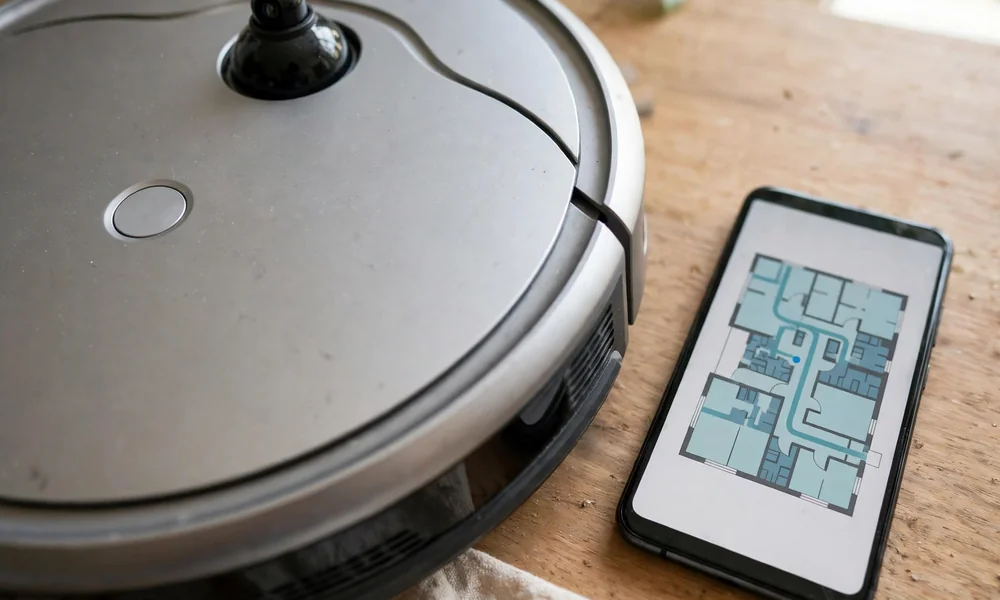
Part of the price is the name on the vacuum, and part of it is what comes with that name. A luxury robot vacuum is sold with an app that maps the house, schedules cleaning by room, updates the software over the air and reports when a part needs replacing. The app is maintained by a team of developers, the maps are stored securely, and the software gets better over time, which means the buyer is paying for a service as well as a machine.
Price: what the money buys in context
A luxury robot vacuum typically costs an estimated 1,000 to 1,800 dollars, with fully loaded models going beyond that. Against that figure, a good budget robot vacuum costs a tenth as much and does the same basic job of moving dust around the floor. The difference is not the job but the way it is done: the laser navigation, the precision motors, the self-washing dock, the cameras and learning software, the small production run, the proper mopping system and the support behind it together explain the gap, and none of them is cheap to fake.
A rare fact worth knowing
Some luxury robot vacuums can recognise and avoid pet waste, a feature almost no other home appliance has. A front camera and a trained vision model spot the hazard, steer around it and mark the spot on the map, so the vacuum never smears it across the floor. It is a small line on the spec sheet, listed as a single feature, but for a pet owner who has ever come home to a vacuum that did not avoid the mess, it is the most useful feature on the whole machine, and one of the clearest signs that the price bought real thought.