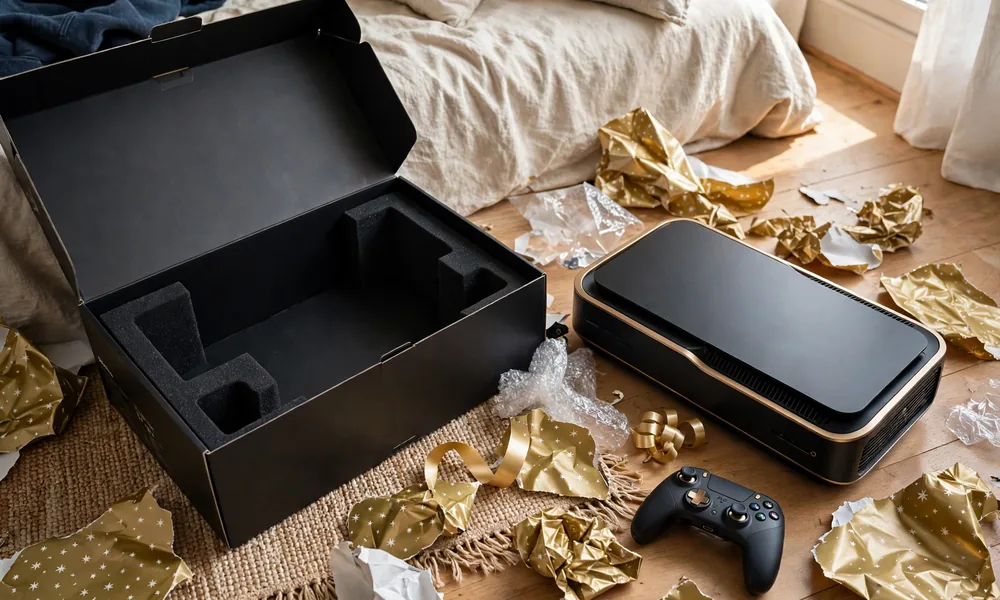
The queue outside the shop had started before dawn, and by the time the doors opened the line stretched around the block. Inside, on a small table with a velvet cloth, sat the console everyone had come for: black metal, gold trim, a controller that looked more like a piece of jewellery than a gamepad. The price tag next to it was three times the cost of the ordinary console on the shelf behind it, and it played exactly the same games.
Nobody in the queue seemed to mind. A luxury gaming console is not sold on what it does differently, but on how it does it: quieter, cooler, heavier, rarer, and finished like something that belongs in a living room rather than under a television. The price is the story of a standard machine rebuilt by hand with better parts and a smaller production run.
This is where the extra money goes, and why the ordinary version costs so much less.

Why a Luxury Gaming Console Is So Expensive
The custom chip: power, hand-picked
At the heart of every console is a single chip that combines the processor and the graphics, and in a luxury edition that chip is often hand-picked from the production line. Chips vary slightly when they are made, and the best ones run faster and cooler than the average, so makers test thousands and keep the few that perform best for the premium model. That sorting process, called binning, means most chips are sold as ordinary, and only a small fraction earn the luxury badge. The chosen chips are then paired with faster memory and a more generous cooling system, so they can hold their top speed for hours instead of slowing down as they heat up. The guide to luxury gaming console specs explained shows how those clock speeds and memory figures translate into the frame rates you actually see on screen.
Cooling: silence is expensive
A standard console has a fan you can hear when a game gets busy. A luxury console is built to be silent, and silence costs money. The cooling system uses a large vapour chamber, a flat sealed plate filled with liquid that spreads heat evenly, plus a bigger heatsink and a slower, larger fan that moves the same air with less noise. Some editions use liquid metal instead of ordinary thermal paste between the chip and the cooler, which transfers heat better but must be applied by hand and sealed carefully, because it conducts electricity as well as heat.
Materials: metal, leather and glass
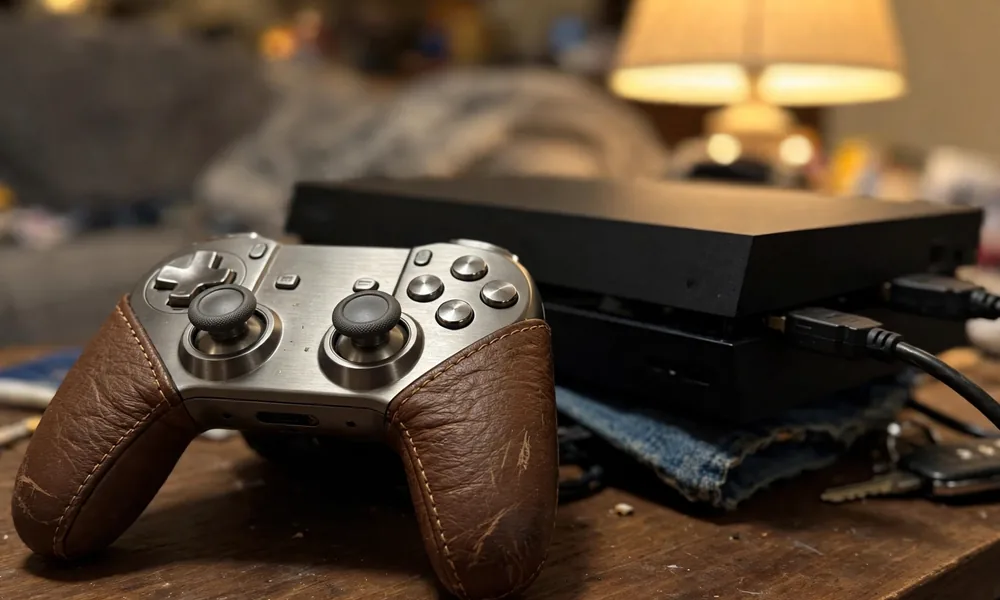
An ordinary console is mostly plastic. A luxury edition replaces the shell with brushed aluminium or magnesium, adds metal trim, and finishes the controller with leather grips and metal buttons. Metal is heavier, harder to shape and more expensive to finish: each panel must be machined, anodised and inspected, and a single scratch can scrap a part that took hours to make. The extra weight is deliberate, because a heavy console feels substantial on a shelf and does not slide around when you plug in a cable.
Hand assembly and testing: built in small numbers
A standard console rolls off a line that makes thousands a day. A luxury edition is built in batches of hundreds, often with hand assembly and individual testing that a mass-market line cannot afford. Each machine is powered on, run through its paces, checked for noise and heat, and inspected for cosmetic flaws before it is packed, and the ones that fail are rebuilt rather than shipped. Low volume means no economies of scale: the factory tooling, the packaging and the testing all cost the same whether you make five hundred machines or five million, so each luxury unit carries a far larger share of those fixed costs. Our guide to how a luxury gaming console works follows the standard machine through its components, and the luxury edition differs from it mostly in how carefully each of those parts is chosen and fitted.
Limited numbers: rarity has a price
Many luxury consoles are limited editions, numbered and produced in a fixed run, and the number on the box is part of what you are buying. A run of a few thousand machines worldwide means the console is scarce from the day it launches, and scarcity does what it always does to a price. Some editions are tied to a game, a film or an anniversary, with artwork and colours that will never be made again, and collectors pay for the certainty that their machine is one of a known few.
Accessories and the bundle: the full set
A luxury console rarely arrives alone. The box usually includes a premium controller, a charging dock, a headset or a stand, each of which would cost a substantial amount on its own, and each finished to the same standard as the console. The controller alone can be worth a large share of the premium, with its metal parts, custom triggers and longer battery life, and the dock is machined metal rather than moulded plastic. Buying the same accessories separately for a standard console would close much of the price gap, which is worth remembering when you compare the two: the luxury price is partly a bundle price, and the bundle is genuinely better made. A gaming PC built to the same standard costs more still, as the guide to luxury gaming PC specs explained shows, because a PC has no fixed design to start from.
Where the Money Goes
| What you pay for | Estimated share of the price | Why it costs so much |
|---|---|---|
| Hand-picked chip and memory | About 20 to 25 percent | Binning, faster memory, sustained clock speeds |
| Silent cooling system | About 15 percent | Vapour chamber, large heatsink, liquid metal |
| Metal body and materials | About 15 to 20 percent | Machined aluminium, anodised finish, leather grips |
| Premium controller | About 10 to 15 percent | Hall effect sticks, metal buttons, longer battery |
| Hand assembly and testing | About 10 percent | Small batches, individual noise and heat checks |
| Limited run and bundle | About 15 to 20 percent | Numbered scarcity, dock, headset and stand included |
What Does a Luxury Gaming Console Cost?
A luxury gaming console typically costs an estimated 1,000 to 2,500 dollars, compared with an estimated 400 to 600 dollars for the standard version of the same machine. The most exclusive limited editions, especially those with precious metals or a famous designer’s name, can reach an estimated 5,000 to 10,000 dollars, and some of those have sold for more on the resale market.
A Rare Fact
The most expensive gaming console ever sold was not a luxury edition at all, but a standard console covered in gold by a jeweller: a famous gold-plated console sold for an estimated 500,000 dollars, and it played games no better than the ordinary machine it started life as. It is the extreme end of the same idea behind every luxury console, which is that a game machine can also be a piece of craft, and that some buyers will pay for the craft as happily as for the games.