There is a moment, the first time you drive a luxury electric sedan, when you notice the silence. You press the accelerator, the car gathers speed, and nothing happens that you can hear. No engine note, no gear change, no vibration through the pedals. That silence is not an accident. It is the result of a hundred small engineering decisions, all working together.
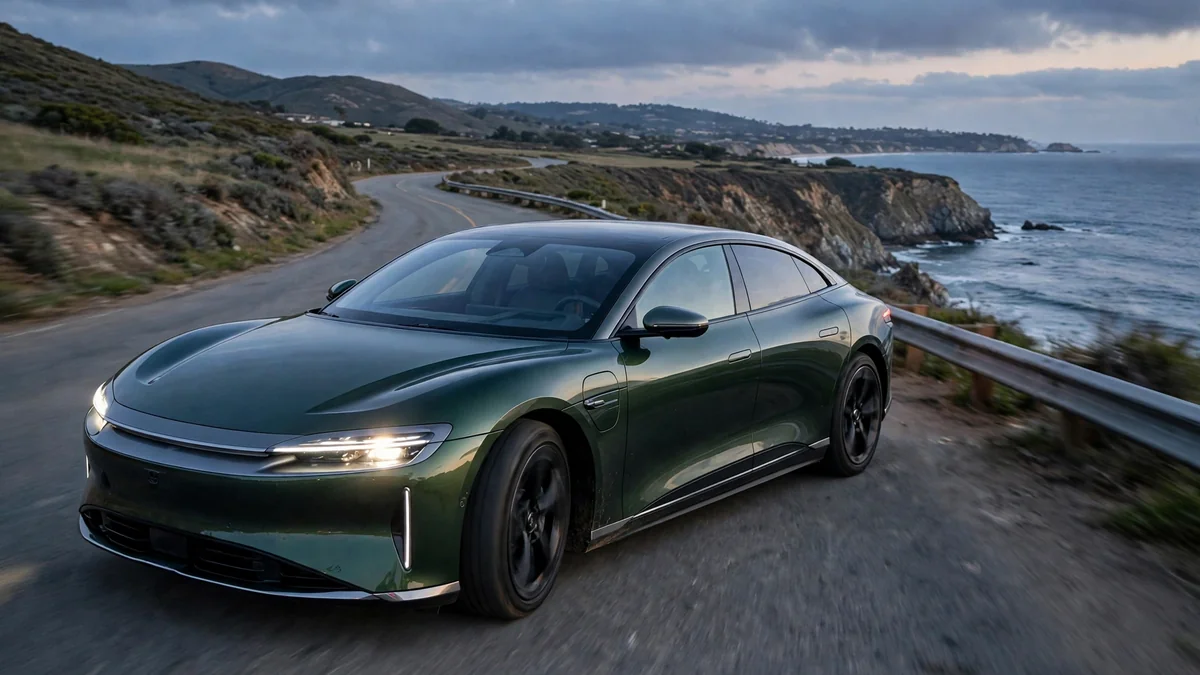
The sedan is the classic luxury car, and the electric version is the most refined one yet. Its long, low body hides a flat battery, its motors are smaller than a suitcase, and its brain is a computer that updates itself overnight. This guide explains how a luxury electric sedan works, from the battery under the floor to the software that keeps improving it long after you buy it.
How It Works
Step 1: The flat battery under the floor
Under the floor of the sedan sits a flat battery pack, made of hundreds of cells grouped into modules and sealed in a strong metal case. Because the pack is flat, the cabin floor is flat too, and the car sits low, which helps it cut through the air. Cooling channels run between the modules to keep the cells at the right temperature, and the case is part of the structure of the car, protecting the cells in a crash. A typical luxury sedan carries a battery of 80 to 100 kWh, enough for 500 kilometres or more on a single charge.
Step 2: Motors that deliver torque instantly
Most luxury electric sedans use one motor on the rear axle, and more powerful versions add a second motor at the front for all-wheel drive. There is no gearbox to shift and no clutch to wear out. The motor delivers its full torque the moment you press the accelerator, so the car pulls away instantly and silently, and overtaking on a motorway takes a gentle squeeze of the pedal rather than a downshift and a roar. At cruising speed, they spin fast and efficiently, and the car settles into a calm, effortless glide.
Step 3: Regenerative braking
One of the cleverest parts of the sedan is the way it slows down. Lift off the accelerator and the motor reverses its role, becoming a generator that turns the car’s motion back into electricity and feeds it into the battery. In city driving, this recovers a useful share of the energy that a petrol car would waste as heat in the brakes. Many drivers learn to drive with one pedal, using the accelerator to speed up and slow down, and touching the brake pedal only for a full stop.
Step 4: Charging at home and on the road
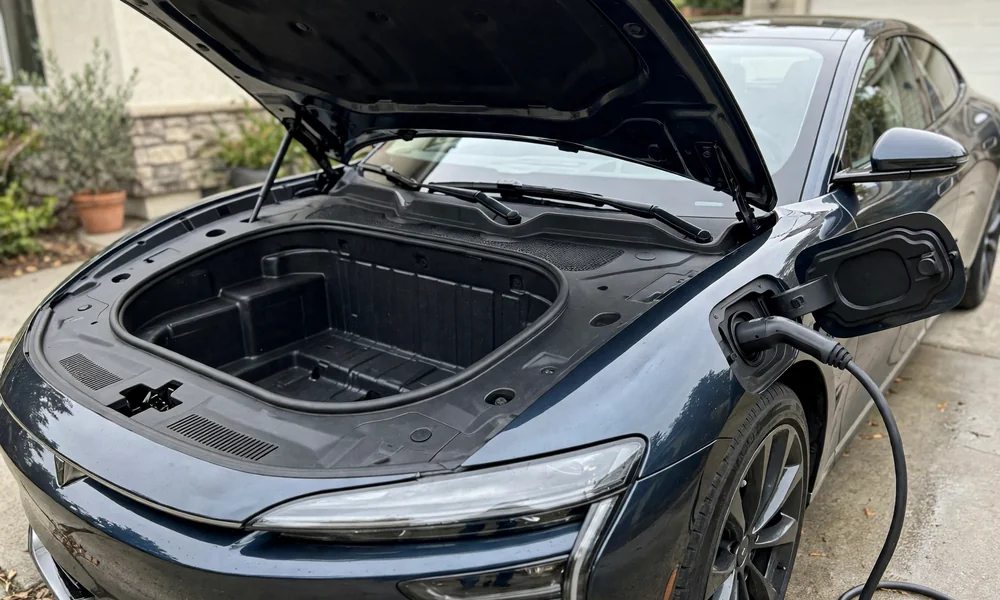
Charging a sedan is designed to fit into ordinary life. Plugged into a home wall box overnight, the battery fills while the owner sleeps, and the car is ready every morning with a full charge. On a long journey, a fast charger can take the battery from 10 to 80 percent in about twenty minutes, roughly the length of a coffee stop. The charging port is usually at the front or the rear of the car, and the dashboard shows the charging speed and the time remaining.
Step 5: The cabin, the screens, and the silence
Inside, the sedan is built around quiet. The dashboard is slim, the screens are wide, and the seats are set low, giving a relaxed, lounge-like feeling. Because there is no engine, no exhaust, and no transmission tunnel, the cabin feels airy, and the rear seats have proper legroom. Acoustic glass, extra insulation, and foam-filled tyres keep road and wind noise out, and the heating and cooling run from a heat pump, which uses far less battery than a simple electric heater.
Step 6: Driver assistance that watches everything
A luxury sedan carries the same driver assistance systems as a much larger car, and often more. Cameras and radar watch the road ahead, the blind spots, and the lanes around the car. Adaptive cruise control keeps a safe distance in traffic, lane keeping gently steers the car back to the centre of its lane, and automatic emergency braking can stop the car if the driver does not react in time. Parking is helped by cameras that show the car from above and sensors that warn of obstacles. The strong battery case and the rigid body structure protect the passengers in a crash, and the low centre of gravity makes the car hard to roll.
Step 7: Software that keeps improving
The last piece of the puzzle is software. The sedan receives updates over the air, like a phone, so new features, better range estimates, and improved charging speeds can arrive without a visit to a dealer. The owner can pre-heat the cabin from an app on a cold morning, check the charge level from the kitchen, and find the nearest charger before leaving the house. The car learns the owner’s routine and suggests charging times when electricity is cheapest. It is a car that gets better with age, which is a strange and welcome idea for anyone used to cars that only wear out.
Key Specifications
The figures below describe a typical current luxury electric sedan; individual models vary.
| Specification | Typical figure |
|---|---|
| Battery capacity | 80 to 100 kWh |
| Power output | 250 to 500 horsepower |
| Range | 500 to 650 kilometres |
| 0 to 100 km/h | 4 to 6 seconds |
| Top speed | Around 180 to 210 km/h |
| Charging | 10 to 80 percent in about 20 to 30 minutes on a fast charger |
| Boot space | 450 to 550 litres, plus a front boot |
| Seating | Five seats |
How Much Does It Cost?
A luxury electric sedan typically costs from around $70,000 to $110,000, depending on the maker, the battery size, and the trim level. That is an estimate based on current premium models, and the price can rise with a larger battery, all-wheel drive, air suspension, or a higher specification interior. The running costs are far lower than a petrol sedan of the same size: home charging is cheap, servicing is minimal, and the brakes last for years. For the build story, how a luxury electric sedan is made shows how the car is put together. For the numbers in detail, the luxury electric sedan specs explained breaks down what each figure means. And for a longer, grander cousin, how a luxury electric grand tourer is made follows a similar car built for speed.

A Rare Fact
Here is a detail that owners discover by accident: a luxury electric sedan can be quieter inside at motorway speed than a recording studio. The reason is not just the lack of an engine. Engineers fit foam inside the tyres to absorb road noise, use acoustic glass with a thin plastic layer to block wind noise, and tune the suspension so that bumps are absorbed before they reach the cabin. The result is a car so quiet that the designers had to add a gentle artificial sound at low speed, so pedestrians can hear it coming. It is the only car that is too quiet for its own good, and the engineers had to make it louder on purpose.
The luxury electric sedan proves that the classic luxury car has a future, and that the future is quieter, smoother, and cleverer than the past. It packs a flat battery, instant torque, one-pedal driving, fast charging, and a cabin like a lounge into a car that looks like it always has. It is the sedan, perfected, and it does its work in silence.