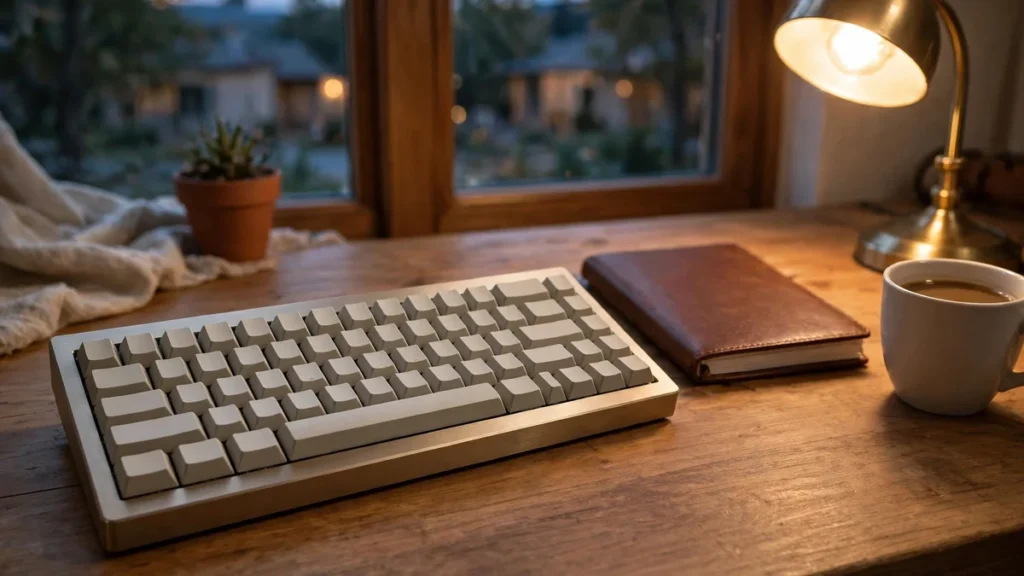
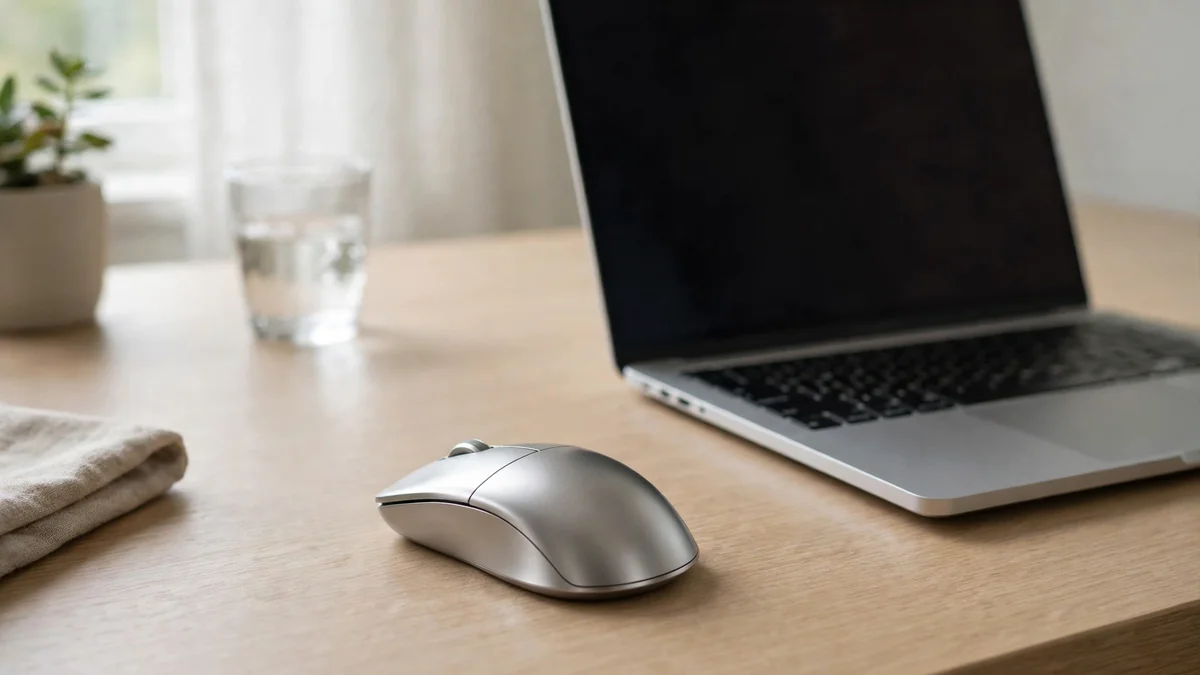
On a desk in a design studio in Copenhagen sits a mouse that costs more than the laptop next to it. It is milled from a single block of aluminium, it weighs about as much as a small apple, and its owner, a product designer who spends ten hours a day moving a cursor, describes it the way other people describe a favourite chair. Visitors pick it up, feel the cool metal and the perfect balance, and ask the same question every time: how can a mouse possibly cost this much?
It is a fair question. A basic mouse costs less than a lunch, and it moves a cursor perfectly well. A luxury mouse does the same job, yet it can cost fifty or a hundred times as much. The difference is not in what it does but in how it is made, what it is made from, and how long it is meant to last.
Why a Luxury Mouse Costs So Much
Reason 1: It is machined, not moulded
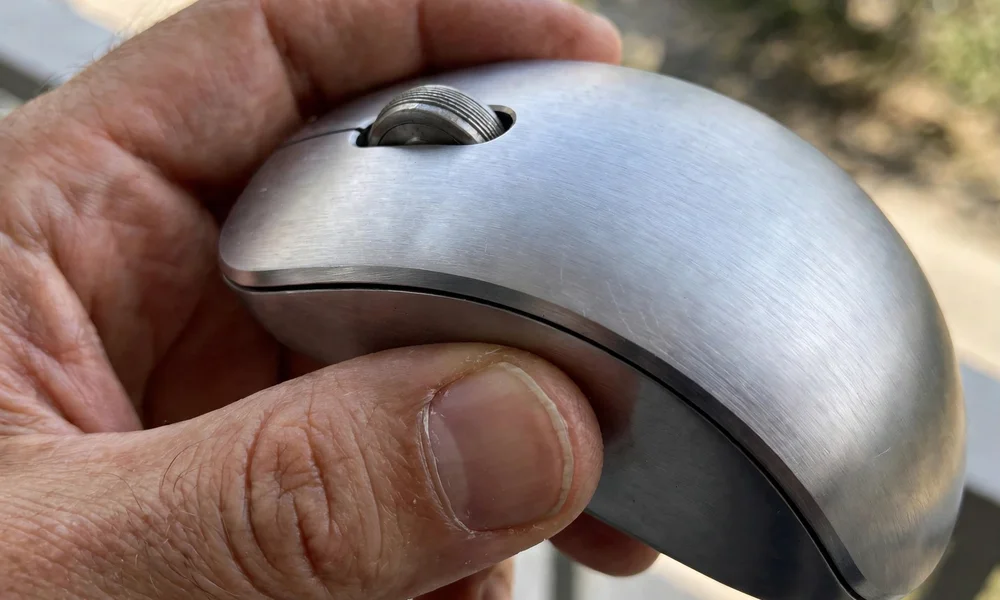
Most mice are born in a mould. Hot plastic is injected into a steel cavity, cooled, popped out and assembled, a process that takes seconds and costs pennies per unit. A luxury mouse is usually machined instead. A block of aluminium, brass or even titanium is clamped into a computer-controlled mill, and cutting tools carve away everything that is not the mouse, a process that can take an hour or more for a single shell. Machining leaves no mould lines, no flex and no hollow feeling, and it allows curves and tolerances that moulding cannot match. The waste is enormous, most of the block ends up as shavings, and the machines, the tooling and the skilled operators all cost money.
Reason 2: The sensor is a precision instrument
Inside every luxury mouse is an optical sensor that photographs the desk surface thousands of times a second and calculates movement from the differences between frames. The best sensors track at up to 30,000 dots per inch, follow movement at speeds over 650 inches per second, and keep working flawlessly when lifted and replaced, a trick called lift-off distance control. These sensors are developed over years, tested against every surface from glass to cloth, and tuned so the cursor goes exactly where the hand intends, with no acceleration, no smoothing and no jitter.
Reason 3: The switches and scroll wheel are built to outlast the computer
The click of a mouse is a small mechanical event, and on a luxury mouse it is engineered like a watch. Optical switches, which use a beam of light instead of a metal contact, register a click in a fraction of a millisecond and are rated for 90 million clicks or more, roughly three times the life of an ordinary switch. They also eliminate the double-click fault that kills most cheap mice, where a worn contact registers two clicks for one press. The scroll wheel gets the same treatment: a metal wheel on precision bearings, sometimes with a magnetic ratchet that can switch between stepped scrolling and free spinning. The obsession with small mechanisms is shared across the desk, as our guide to luxury mechanical keyboard specs shows in the switches under each key.
Reason 4: The shape is sculpted for one hand, for years
A luxury mouse is shaped the way a good shoe is shaped: around the human body, over many iterations, with comfort as the specification. Designers study how hands rest, where the thumb falls, how the wrist angles during a long day, and they sculpt the shell to support that posture. Some shapes are symmetrical, some are sculpted for right hands only, and the best are tested with hundreds of users before the mould or the mill program is finalised. Weight matters too. Many luxury mice are deliberately light, 50 to 70 grams, so the hand moves less mass thousands of times a day, while others are weighted and balanced so the mouse feels planted and stable.
Reason 5: Tiny production runs and honest materials
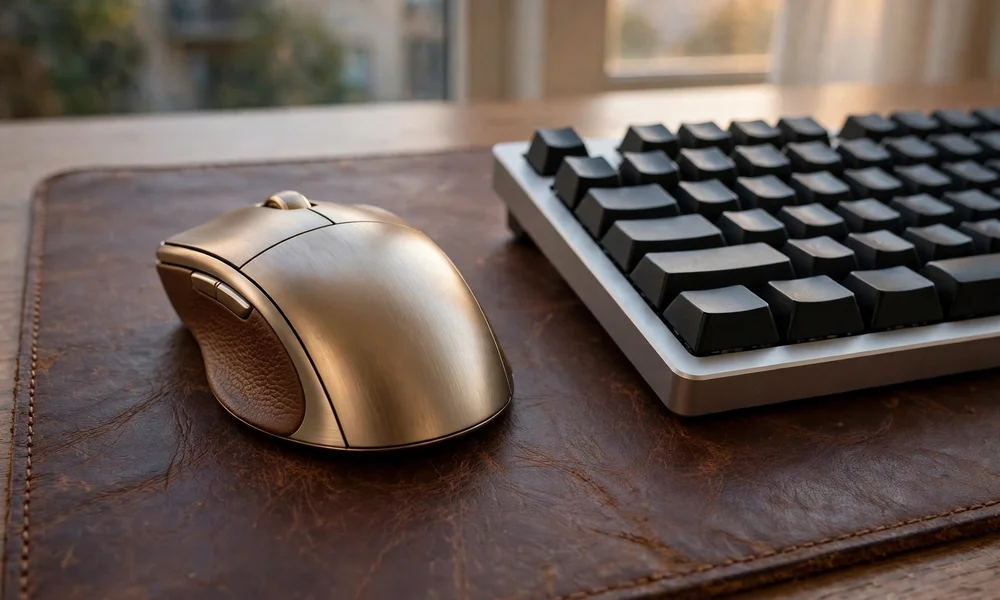
Luxury mice are not made by the million. A flagship model might sell a few thousand units a year, and a boutique maker might produce a few hundred, which means the cost of design, tooling and testing is spread across a tiny number of buyers. Materials add to the bill: aircraft-grade aluminium, brass, carbon fibre and even ceramic coatings are all far more expensive than plastic, and they demand slower, more careful finishing, anodising, polishing and inspection. Many luxury mice are assembled by hand and individually tested before they are boxed. The same economics of small runs and premium materials shape other flagship gadgets, including the phone in your pocket, as explained in our guide to luxury smartphone specs.
Reason 6: Wireless that feels wired
A luxury wireless mouse must do something that sounds simple and is technically hard: feel exactly like a wired mouse. That means a polling rate of 1,000 hertz or more over a dedicated 2.4 gigahertz connection, a battery that lasts weeks rather than days, and a charging system that never leaves the user stranded. Some models charge on a magnetic dock, others through a cable that doubles as a wired connection. It is the same invisible engineering that keeps a laptop fast and cool, described in our guide to how a luxury laptop is made.
Luxury Mouse Specs at a Glance
| Specification | Typical range |
|---|---|
| Sensor resolution | Up to 30,000 DPI optical sensor |
| Polling rate | 1,000 Hz, up to 8,000 Hz on flagship models |
| Switch life | About 90 million clicks, optical switches |
| Weight | About 50 to 90 grams |
| Body material | Machined aluminium, brass or titanium |
| Battery life | About 2 to 8 weeks per charge |
| Connection | 2.4 GHz wireless, Bluetooth and wired USB |
What Does a Luxury Mouse Cost?
A luxury mouse is estimated to cost roughly $150 to $400 for a flagship model from a major maker, with boutique machined-metal mice estimated at $500 to $1,500 or more. Limited editions in titanium or with hand finishing are estimated at $2,000 and above. Prices are estimates only and vary by maker, materials and availability. For a professional who moves a mouse for eight hours a day, the maths is not absurd: a mouse that prevents wrist strain and lasts a decade costs less per day than a coffee.
A Rare Fact
The most expensive mouse ever sold was not made for a computer at all in the usual sense. A jewelled and gold-plated mouse, created as a showpiece by a luxury goods house, was priced at tens of thousands of dollars and displayed like a piece of jewellery. It worked perfectly well as a mouse, but nobody who bought one ever plugged it in. It was a reminder that at the very top of the market, a mouse stops being a tool and becomes a statement, which is exactly the point its owner was paying for.
So why is a luxury mouse so expensive? Because it is machined instead of moulded, because its sensor and switches are built to a standard most users will never test, because its shape was sculpted around a human hand, and because it is made in small numbers from honest materials. Whether that is worth the price depends on how many hours a day your hand rests on one. If the answer is most of them, the most expensive mouse you will ever buy might also be the cheapest per hour you will ever own.