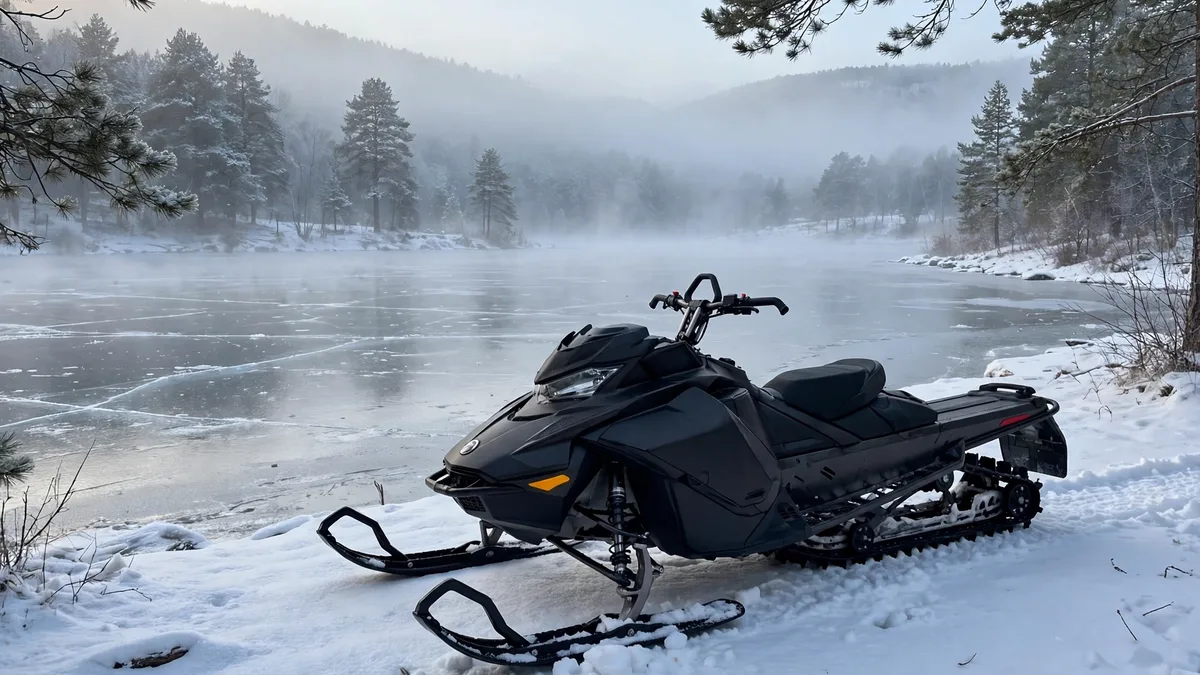
Stand at the edge of a frozen lake on a still winter morning and a luxury electric snowmobile is easy to miss. There is no engine bark, no blue exhaust haze hanging in the cold air, just a wide track pressing a clean line through fresh powder and a rider gliding past in near silence. It looks simple from the outside, almost too simple, and that is the point. Every part of the machine has been shaped around quiet power, from the battery tucked low in the chassis to the skis that steer it through deep snow.
A luxury electric snowmobile is made by building a lightweight aluminium chassis, fitting a sealed battery pack and a compact electric motor, and then assembling the track, skis, and bodywork around them. Here is how it happens, from the first cut of metal to the first run across the snow.
How It Is Made
Step 1: The chassis is cut and welded
Every luxury electric snowmobile starts as flat sheets and tubes of aluminium, cut by machine to exact patterns and then welded by hand into a frame. The chassis has to be light, because a heavy snowmobile sinks into powder, but it also has to be stiff, because the track and skis pull at it from opposite ends every time the rider accelerates or turns. Welders join the tunnel that holds the track, the bulkhead that carries the steering, and the rails that support the seat, checking each joint as they go. Once the frame is welded it is measured against a jig, and any frame that is even slightly out of true is straightened or scrapped, because a crooked chassis would wear the track unevenly all winter.
Step 2: The battery pack is built and sealed
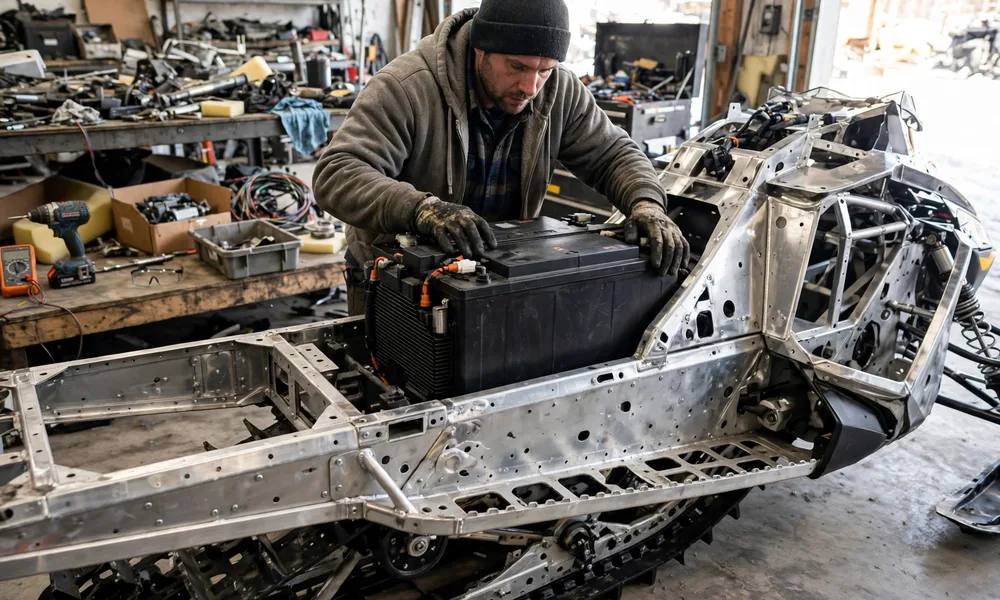
While the chassis takes shape, a second team builds the battery pack, and this is the most careful work in the whole factory. Hundreds of lithium cells are tested one by one, matched for capacity, and packed into a sealed aluminium case with cooling channels and a heating pad. The case is then closed with gaskets and bolts and pressure tested, because snow, meltwater, and road salt must never reach the cells inside. A battery management system is fitted on top, a small computer that watches every cell and balances the charge, and the finished pack is lowered into the centre of the chassis, low down, where its weight keeps the snowmobile stable instead of top heavy.
Step 3: The motor and drivetrain go in
With the battery in place, the electric motor is bolted to the chassis just ahead of the track. A luxury snowmobile motor is small for its power, often no bigger than a dinner plate, yet it can deliver its full torque the instant the rider touches the throttle, which is what makes an electric snowmobile feel so quick off the line. The motor drives the track through a belt and a set of gears, and the whole drivetrain has only a handful of moving parts, far fewer than a petrol engine with its pistons, exhaust, and clutch. Cables run from the motor controller to the battery and the throttle, and every connector is sealed against water, because the drivetrain will spend its life in snow and slush.
Step 4: The track and suspension are fitted
The track is the part that does the real work, and fitting it takes patience. A wide rubber track, studded with deep lugs, is looped around the drive wheels and the rear suspension, then tensioned until it runs true without slipping or binding. The suspension itself is a set of arms and shock absorbers that let the track follow the bumps of the snow while keeping the rider steady, and on a luxury machine those shocks are adjustable, so the rider can soften the ride for fresh powder or firm it up for a packed trail. Workers spin the track by hand and then under power, listening for any rub or wobble, because a track that runs crooked will wear out in weeks instead of seasons.
Step 5: Skis, steering and bodywork are added
Next come the skis, two wide plastic and steel runners that steer the snowmobile and carry the front of its weight. They are mounted on spindles connected to the handlebars, with a small shock absorber on each side, and their width matters: a ski that is too narrow dives into soft snow, while a ski that is too wide makes the steering heavy. Over the top goes the bodywork, moulded panels of composite that give the snowmobile its shape and protect the battery and motor from flying snow. The seat is fitted last, heated on most luxury models, along with the windscreen, the hand warmers, and the small display that shows speed, range, and battery temperature.
Step 6: Cold testing and the first run
No luxury electric snowmobile leaves the factory without a cold test. The finished machine is rolled into a chilled room, left overnight at well below freezing, and then started the next morning to prove the battery can still deliver power when it is cold. Technicians check the brakes, the lights, the throttle response, and the battery heater, and then the snowmobile is taken outside for a real run across snow, where the track, the skis, and the suspension are tested together for the first time. Only when that run is clean is the machine washed, polished, and crated for delivery, ready for a winter of silent miles.

Luxury Electric Snowmobile Specifications
The figures below describe a typical luxury electric snowmobile. Smaller and larger machines differ in power and range, but the way they are built is the same.
| Specification | Typical value | What it means |
|---|---|---|
| Motor power | 15 to 30 kilowatts | Enough for strong acceleration with no gears to shift. |
| Battery capacity | 8 to 15 kilowatt hours | The energy on board, kept warm by its own heater. |
| Range in snow | 80 to 160 kilometres | Shorter in deep powder, longer on a packed trail. |
| Top speed | 100 to 130 kilometres per hour | Fast on a lake, slower in fresh snow. |
| Track width | 38 to 51 centimetres | A wider track floats better over soft snow. |
| Weight | 220 to 280 kilograms | Light for a snowmobile, with the battery low down. |
What It Costs
A luxury electric snowmobile costs an estimated $18,000 to $35,000, depending on the battery size, the motor, and the trim, with the most exclusive models costing more. Those are estimates, not quotes, and they reflect a hand built machine with a sealed battery, a heated seat, and almost no maintenance beyond the track and skis. The full figures are laid out in luxury electric snowmobile specs explained, and the way the finished machine behaves on the snow is another story, as how a luxury electric snowmobile works explains.
A Rare Fact
Here is a detail most people never guess. A luxury electric snowmobile has no gearbox, no clutch, and no exhaust, yet it can out accelerate many petrol snowmobiles from a standstill, because an electric motor delivers its full twisting force the instant the throttle moves, while a petrol engine has to climb to high revs first. That instant push is also gentler on the track, since there is no clutch grabbing and slipping, so the track lasts longer and the ride feels smoother. The same idea, in a smaller package, is what makes a snow bike so quick in powder, as how a luxury electric snow bike works shows.


