Electric outboard motors have stopped being a curiosity and started being a serious choice. The newest generation runs further, weighs less, and costs less than the early models, and for tenders, fishing boats, and lake cruisers, electric is now the quieter, cleaner, and often cheaper option over the life of the motor. The catch is that the market is confusing: makers quote power in different ways, range figures depend entirely on speed, and a motor perfect for a dinghy will not push a pontoon. This ranking sorts the current motors by real capability.
The first thing to understand is that an electric outboard’s headline number is usually its electrical input, not the power that reaches the water. A 1-kilowatt motor is roughly 1.3 horsepower at the shaft, and makers often quote a higher petrol-equivalent figure based on thrust, which is not the same thing. Range is simpler once you know the rule: a 1-kilowatt-hour battery gives about one hour at full power and many hours at a crawl.
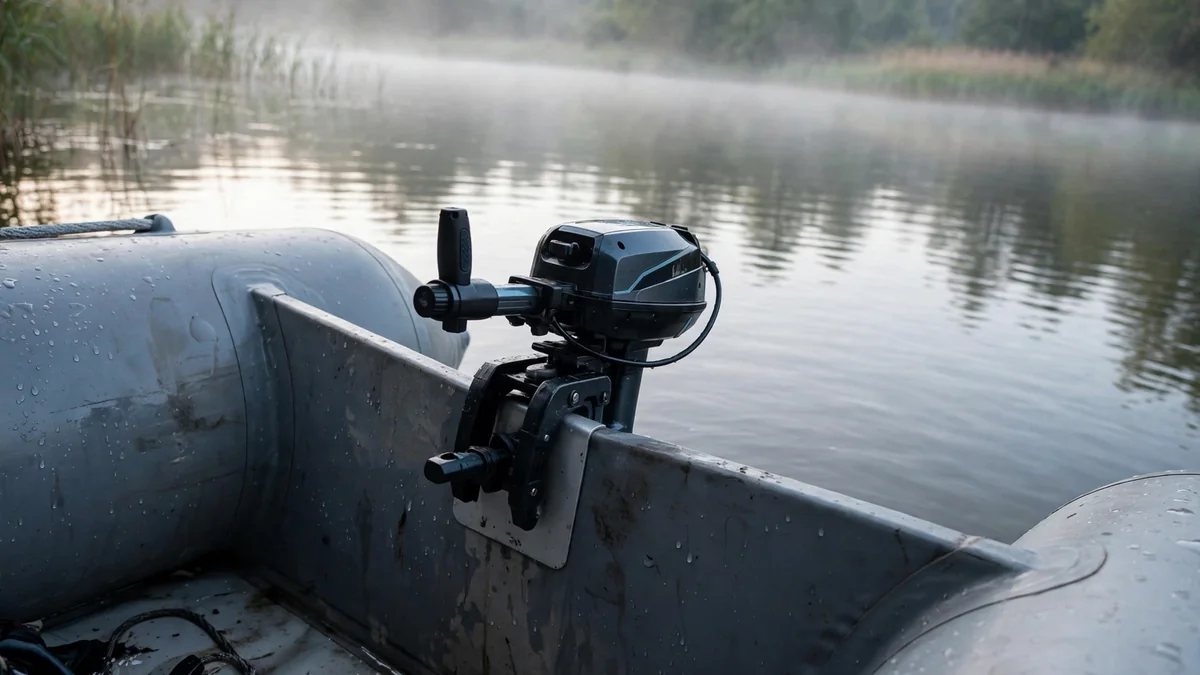
The 8 Best Electric Outboard Motors, Ranked
1. Mercury Avator 20e
The Avator 20e is the most capable small electric outboard you can buy, and the one that best answers the range question. Its 2,300-watt-hour battery is a portable pack that sits in the boat and connects by cable, and you can link up to four for serious range. Mercury claims up to 16 hours at a quarter throttle, and independent testing recorded 4.6 hours at 500 watts on a small boat. The motor makes 2,200 watts at the prop shaft, roughly a 5-horsepower equivalent, and weighs 47 pounds without the battery. What wins it first place is the dealer network: Mercury is the world’s largest outboard maker.
2. ePropulsion Spirit 1.0 Plus
The Spirit 1.0 Plus is the default choice for sailors and tender owners, and the best-selling electric outboard in its class. Its 1,276-watt-hour battery is integrated into the motor, it makes 1 kilowatt, sold as a 3-horsepower equivalent, and the whole unit weighs about 24 pounds. The battery floats if it goes overboard, a genuinely useful piece of design on a small boat. Range is honest: about six hours at a slow troll, two and a half hours at half throttle, and roughly an hour at full power, where it pushes a 12-foot aluminium boat to 6.2 miles per hour.
3. Torqeedo Travel 1103
Torqeedo built the modern electric outboard market, and the next-generation Travel remains the smartest motor in its class. It takes 1,100 watts of input, carries a 1,080-watt-hour click-on battery, and weighs about 26 pounds in total. The onboard computer shows speed, remaining range, and battery state, and calculates range from GPS speed, so the number it shows is the range you will actually get. At a slow troll it runs for about four hours, at half throttle for about two, and at full throttle for under an hour. It costs more than the ePropulsion, but the range calculation and build quality justify the premium.
4. ePropulsion Navy 6.0 Evo
The Navy 6.0 Evo is the first electric outboard here that can genuinely replace a petrol motor on a larger boat. It makes 6 kilowatts, sold as a 9.9-horsepower equivalent, and runs on an external 48-volt battery bank, so range is whatever bank you are willing to carry and pay for. The maker publishes a top speed of 15 miles per hour, enough to plane a light hull, and the motor itself weighs about 65 pounds. It is the pick for owners of daysailers, fishing skiffs, and small workboats who need real power but want the silence and low maintenance of electric.
5. Mercury Avator 7.5e
The Avator 7.5e is the smallest motor in Mercury’s electric range, and the one with the most surprising range figure. Its 1,030-watt-hour integrated battery delivers 750 watts at the prop shaft, and Mercury claims up to 34 nautical miles at low speed, the longest slow-speed range of any motor here. Maker testing recorded 60 minutes and 5 miles at full throttle, and up to 19 hours and 34 miles at a quarter throttle on a 13-foot boat. The motor weighs 37 pounds without its 17-pound battery, and it is the simplest way into the Avator system.

6. Torqeedo Cruise 3.0
The Cruise 3.0 is Torqeedo’s workhorse for bigger boats, a 3-kilowatt motor that runs on an external 24-volt battery bank. Because the battery is separate, you choose the range: a small bank gives a couple of hours at half throttle, a large bank gives a full day. Torqeedo’s figures work out to roughly two to three hours per kilowatt-hour at half throttle, and about 45 minutes per kilowatt-hour at full power. The motor is heavier and more expensive than the portable models, and needs proper installation, but it is the most flexible motor on this list.
7. ePropulsion Navy 3.0 Evo
The Navy 3.0 Evo is the smaller sibling of the Navy 6.0, making 3 kilowatts, sold as a 6-horsepower equivalent, on the same external 48-volt battery system. It weighs about 54 pounds and is the sweet spot for daysailers and tenders too big for a portable motor but not needing 6 kilowatts. Runtime runs to about two and a half to three and a half hours per kilowatt-hour at half throttle, and about 50 minutes per kilowatt-hour at full power. It is quieter and smoother than any petrol motor in its class, and the external battery means you can size the bank to your sailing area. It ranks below the Cruise 3.0 only because Torqeedo’s dealer network is larger.
8. Newport NT300
The NT300 is the budget pick, and the proof that electric outboards no longer need a premium price. It costs $1,299.99, makes 1,300 watts at peak, sold as a 3-horsepower equivalent, and runs on an external 36-volt lithium battery. It weighs about 24 pounds and is aimed at jon boats, kayaks, and small fishing skiffs. It has no integrated battery and no GPS range computer, so you supply your own battery and watch the voltage yourself, but for the price it delivers the core electric experience: silent running, instant torque, and no petrol, oil, or pull cord.

How to Choose the Right One
Start with the boat, not the motor. A 1-kilowatt portable motor suits a dinghy or a tender up to about 12 feet, a 3-kilowatt motor suits a daysailer or a fishing skiff, and a 6-kilowatt motor suits a larger boat that needs to plane. Then check the battery: an integrated battery is simpler and lighter, while an external bank gives more range and lets you add capacity later. Weight matters more than most buyers expect, because you will be carrying the motor and the battery to and from the boat.
Finally, remember that range figures are speed figures in disguise. Every electric outboard goes much further slowly than quickly, because water resistance rises sharply with speed. The makers’ own tests show the same pattern: a motor that runs for six hours at a crawl may last barely an hour at full throttle. Plan your trips at the slow speed, and treat full throttle as a short burst for getting home against the tide. Our guide to electric boat motor specs explains the numbers in detail, and the wider ranking of electric boat propulsion systems puts these outboards in context. The price is still the hardest part, which is why electric outboards cost as much as they do.


