A hypercar mirror is a contradiction on a stalk. It has to be big enough to show the driver what is behind them at 350 kilometres per hour, small enough not to ruin the airflow, and light enough not to matter. Most cars solve this with a plastic box on a door. At hypercar speeds, a badly shaped mirror costs real drag and real visibility.
This ranking judges hypercar mirrors on four things: aerodynamics, visibility, weight, and design. Aero matters most, because a mirror sits in clean air and anything in clean air either helps the car or hurts it. Visibility comes next, because a beautiful mirror that shows nothing is a decoration. The best hypercar headlights get the glory, but the mirrors do the quiet work of keeping the driver alive.

How the ranking works
Every mirror system here is judged on the same four things. First, aero: how little drag the mirror adds, and whether its shape manages the air. Second, visibility: how much of the road behind the car the driver can actually see, in daylight, at night, and in rain. Third, weight: the mirror, its stalk, its motors, and its glass. Fourth, design: whether the mirror looks like it was drawn with the car or bolted on afterwards. Camera systems that replace glass mirrors are judged the same way, plus the quality of the screen the driver looks at instead. The best hypercar wheels face the same trade-offs, and the best mirrors solve them with the same discipline.
The 10 Best Hypercar Mirrors, Ranked
1. McLaren Speedtail camera mirrors
The Speedtail is the best mirror system on any hypercar because it barely has mirrors at all. Two tiny cameras retract into the front wings and feed screens inside the doors, replacing the glass entirely. The aero gain is real: no mirror housing means no drag and no turbulence thrown at the rear bodywork, which matters on a car built to reach 403 kilometres per hour. The screens sit where a driver naturally glances.
2. Aston Martin Valkyrie camera mirrors
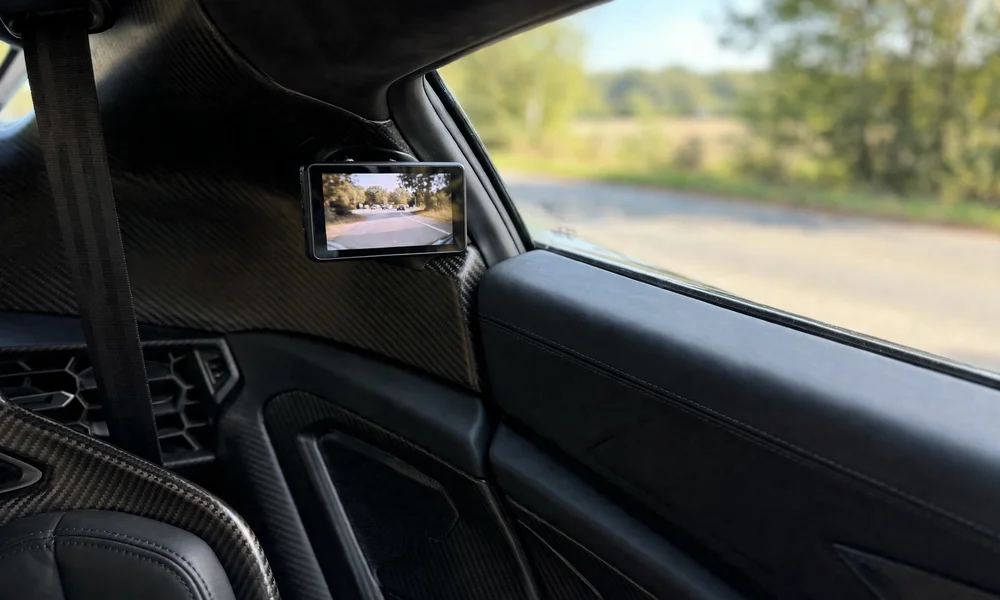
The Valkyrie takes the same camera idea and fits it to the most extreme road car ever built. The camera pods are smaller than a thumb, mounted on thin stalks that barely disturb the air, and the screens are tucked into the cabin where the A-pillars meet the dashboard. Visibility is excellent because the cameras see wider than glass ever could, with no blind spot at the edge of the mirror.
3. Bugatti Tourbillon carbon mirrors
Bugatti’s Tourbillon keeps glass mirrors and makes them the best glass mirrors in the class. The housings are carbon fibre, shaped in the wind tunnel to guide air cleanly around the car rather than tumbling it into the doors. The glass is large for a hypercar, giving a wide, stable view at speed, and the mirror folds electrically for tight spaces. It is the strongest argument that a conventional mirror, done properly, can still compete with a camera.
4. Koenigsegg Jesko aero mirrors
Koenigsegg treats the mirror as an aerodynamic device first and a mirror second. The Jesko’s housings are tiny, mounted on long thin stalks that lift the glass into clean air above the turbulence of the front wheel. The shape is tuned to feed air smoothly down the side of the car, and the whole assembly weighs almost nothing. Visibility is good rather than great, because the glass is small, but the trade is deliberate.
5. Ferrari F80 slim mirrors
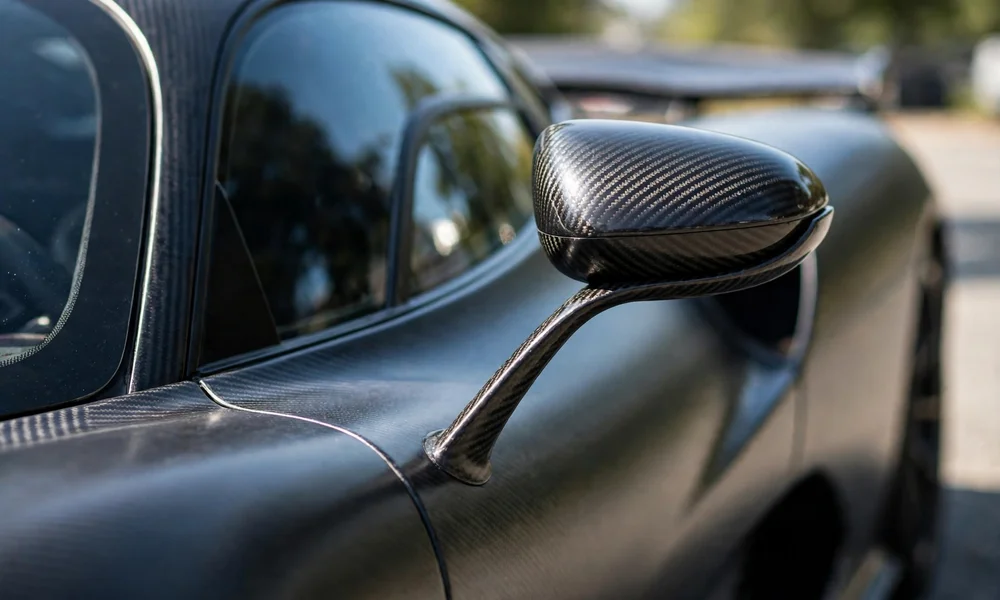
Ferrari’s F80 mirrors are the slimmest glass mirrors on this list. The housings are narrow blades, shaped to cut the air rather than push it, and the stalks are thin enough to disappear at a glance. The glass is heated and auto-dimming, so the view stays clear in rain and at night, and the mirror folds automatically when the car is locked. They lose points only because the glass is small enough that parking takes practice.
6. Rimac Nevera camera mirrors
The Nevera replaces its mirrors with cameras and does it with the confidence of a company that builds its own electronics. The camera pods are compact and the door screens are bright, sharp, and quick to adapt when the light changes. Visibility is wide and the system adds features glass cannot, like a wider field of view when reversing. It ranks sixth rather than higher because the screens sit slightly further from the driver’s natural eyeline than the best systems here.
7. Pagani Utopia sculpted mirrors
Pagani makes mirrors the way it makes everything else: as jewellery that happens to work. The Utopia’s mirrors are milled and sculpted, with exposed metalwork and a shape that echoes the car’s flowing body. They are heavier than the carbon blades on this list, and Pagani knows it, but the trade is deliberate. The glass is generous and the view is excellent.
8. Lamborghini Revuelto aero mirrors
Lamborghini’s Revuelto mirrors are shaped to work with the car’s dramatic aerodynamics rather than against them. The housings are angular and sharp, matching the bodywork, and the stalks are sculpted to guide air toward the rear intakes. The glass is a good size and the view is stable at speed, with minimal vibration even on rough roads. They are not the lightest or the slipperiest mirrors here, but they look like they belong to a Lamborghini, and they work as well as they look.
9. Gordon Murray T.50 featherweight mirrors
The T.50 is the lightest car on this list by a wide margin, and its mirrors are part of that story. They are small, simple, and extremely light, with thin stalks and minimal housings. The glass is small too, which costs visibility, but the car is narrow and the driving position is central, so the driver needs less mirror than in a wide car. It is a mirror system that does exactly what it needs to do and nothing more.
10. Mercedes-AMG One race mirrors
The AMG One brings a Formula One attitude to its mirrors: tiny, functional, and unapologetic. The housings are small carbon shells on thin stalks, shaped for minimum drag above all else. Visibility is the weakest on this list, because the glass is small and the view is narrow, but that is the price of a car that is essentially a road-legal race car. They finish tenth because the view matters, and here the view is the compromise.
What to look for in a hypercar mirror
The first thing to check is the view, not the shape. Sit in the car, adjust the mirror, and look at what you can actually see: the lane beside you, the road behind, and the blind spot at the edge. A mirror that looks fast but shows nothing is a failure. Next, look at the stalk. A thin, sculpted stalk means the engineers cared about aero; a thick, blunt one means they did not. Heated glass, auto-dimming, and folding are worth having in real weather. The best hypercar brakes are the ones that do their job without drama, and the best mirrors are no different.
The verdict
The Speedtail wins because it asked the bravest question: what if the mirror was not a mirror at all. The camera systems from Aston Martin and Rimac prove the idea works, and the glass mirrors from Bugatti and Ferrari prove the old way is not dead yet. On a hypercar, nothing is too small to engineer properly, and the mirror is the proof.


