Headlights used to be an afterthought on a hypercar, a legal requirement bolted onto a shape that wanted to be smooth. That is no longer true. On the fastest road cars in the world, the headlight is part of the aerodynamics, part of the face of the car, and part of the safety case for driving at speeds where a second of darkness covers a hundred metres.
This ranking judges hypercar headlights on beam, technology, and design. Beam matters most, because a hypercar that cannot see at night cannot be driven at night. Technology comes next: adaptive beams, laser high beams, and matrix LEDs that shape the light around other cars. Design counts too, because a headlight that ruins the face of a million-pound car has failed at half its job.

How the ranking works
Every system here is judged on the same four things. First, reach: how far the high beam throws usable light down a dark road. Second, control: whether the beam adapts, corners, and masks oncoming cars automatically. Third, efficiency: how much light the system makes for the power and weight it costs. Fourth, integration: whether the lights look like they belong to the car. A system that scores well on all four is rare, which is why the order below is as tight as it is.
The 10 Best Hypercar Headlights, Ranked
1. Bugatti Tourbillon matrix LED headlights
The Tourbillon’s headlights are the best on any hypercar because they solve the hardest problem in the class: making a light thin enough to disappear into the car’s face and strong enough to light a road at 400 kilometres per hour. The matrix LED units use dozens of individually controlled segments, so the beam can carve a dark tunnel around an oncoming car while keeping full high beam everywhere else.
2. Koenigsegg Jesko laser-assisted headlights
Koenigsegg fits laser-assisted high beams to the Jesko, and the difference is real. Laser light is far more intense than LED light for the same power, so the high beam reaches further down the road while the housing stays small and light. The low beam is a conventional LED unit, which keeps everyday light warm and even, and the laser takes over only when the road is empty and the speed is high.
3. McLaren W1 adaptive LED headlights
McLaren’s W1 headlights are the cleverest adaptive system on this list. The LED units swivel with the steering, so the beam follows the road around a corner instead of pointing straight ahead into the dark. They also read the car’s speed, widening the beam at low speed for junctions and tight turns, then narrowing and lengthening it as speed rises.
4. Ferrari F80 matrix LED headlights
Ferrari’s F80 uses matrix LEDs with a twist: the system is tied into the hybrid powertrain, so the lights can draw on the battery for full brightness without loading the engine. The beam is wide and even, with a sharp cutoff that keeps glare off oncoming windscreens, and the adaptive function masks other cars in milliseconds.
5. Pagani Utopia LED headlights
Pagani builds headlights the way it builds everything else: by hand, in small numbers, and with more care than seems reasonable. The Utopia’s LED units sit in polished housings that look like jewellery, and the beam is tuned for a car driven on real roads rather than test tracks. The light is warm rather than harsh, which makes night driving less tiring, and the spread is wide enough to pick out the edge of a country road.
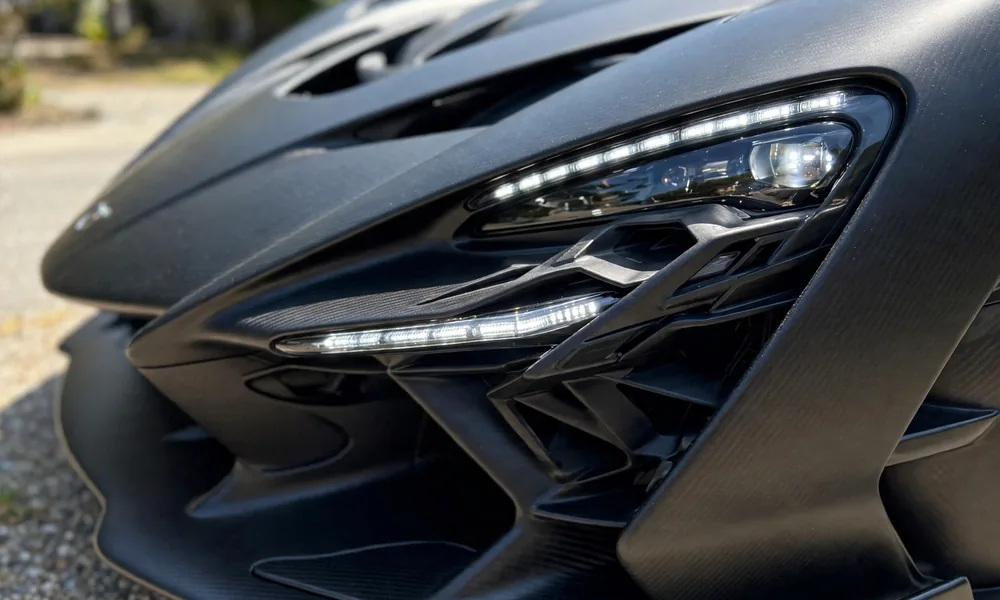
6. Aston Martin Valkyrie LED headlights
The Valkyrie is a Formula 1 car with number plates, and its headlights are an exercise in fitting road-car equipment into a racing shape. The LED units are tiny, tucked into the nose where the aerodynamics allow them, and they produce a surprising amount of light for their size. The packaging compromise costs some spread at low speed, but for a car this extreme, the fact that the lights work this well at all is an achievement.
7. Rimac Nevera adaptive LED headlights
The Nevera is electric, and its headlights show what that makes possible. With a large battery and no engine to work around, Rimac could give the lights all the power they need and place them exactly where the design wanted them. The adaptive LED system dims and shapes the beam for other cars, corners with the steering, and switches to a wide low-speed pattern in town.
8. Lamborghini Revuelto matrix LED headlights
Lamborghini’s Revuelto uses matrix LEDs in the brand’s familiar Y-shaped signature, and the shape is not just for show. The Y puts the brightest part of the beam low and wide, lighting the road surface where a driver needs it, while the upper arm carries the daytime running light. The adaptive system masks oncoming traffic and widens the beam in town, and the units are tough enough to survive the heat of the hybrid V12 behind them.
9. Gordon Murray T.50 LED headlights
The T.50 is the lightest hypercar of its kind, and its headlights follow the same philosophy. Murray’s team chose simple, light LED units with no more hardware than the job needs, and the result is a system that weighs almost nothing and works properly. The beam is clean and even, the cutoff is sharp, and the housings are small enough to disappear into the car’s simple nose.
10. Lotus Evija LED headlights
The Evija’s headlights are the most dramatic on this list, and the least conventional. The LED units sit in housings that double as air intakes, feeding air through the bodywork in a way that only an electric hypercar can afford. The beam itself is good rather than great: bright, wide, and well controlled, with a daytime signature that makes the Evija look like nothing else on the road.
What to look for in a hypercar headlight
If you are judging a hypercar’s lights, start with the beam, not the badge. A long, even high beam with a sharp cutoff is worth more than any number of LED segments, and a system that dazzles oncoming drivers is a bad system no matter how expensive the car. Ask whether the beam adapts, because a fixed beam is a compromise on every road that is not dead straight. Our ranking of the best hypercar wheels shows how the rest of the car’s engineering is judged to the same standard, and the best hypercar brakes shows what stops the car once the lights have shown the driver what is ahead.
Weight matters too, and it is easy to forget. A heavy headlight assembly sits high and forward, exactly where a hypercar least wants mass, and the wiring and cooling that feed a powerful light add more. The best systems here are light because they were designed as part of the car, not added to it. For the cabin side of the same question, our ranking of the best hypercar interiors shows how the inside of the car matches the engineering outside it.
The verdict
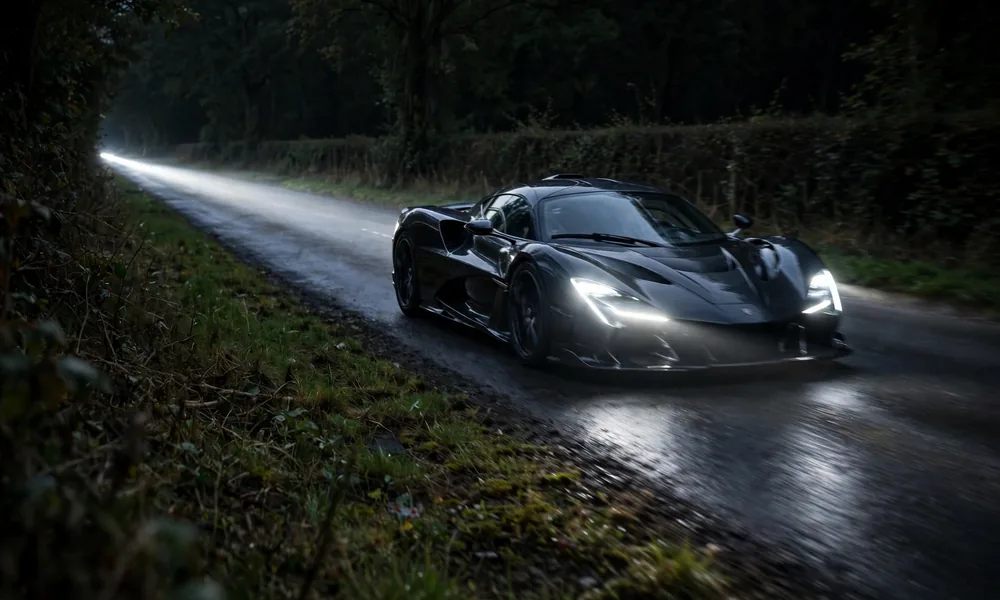
The Bugatti Tourbillon wins because its lights do the hardest job in the class: thin enough to vanish into the car’s face and strong enough to light a road at speeds no other car reaches. Koenigsegg’s lasers and McLaren’s adaptive system follow close behind, because each one solves a real problem rather than adding a feature for its own sake.


