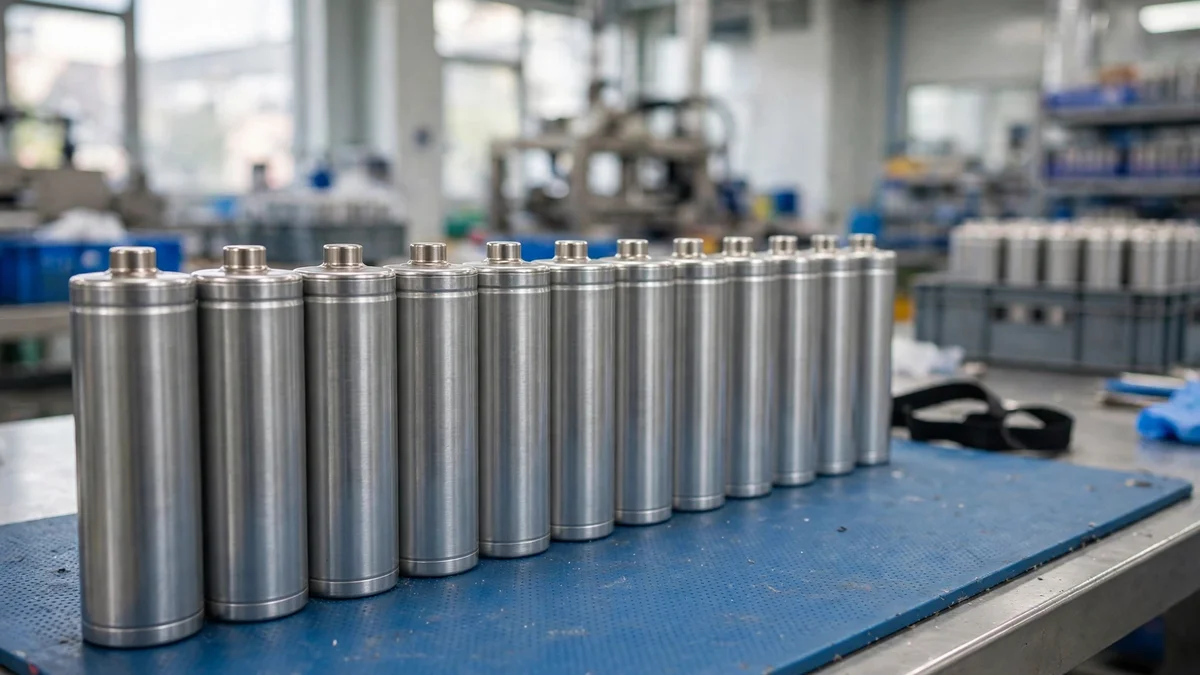
It is 6 a.m. in a battery factory outside Shanghai, and the line is already humming. A conveyor carries row after row of small metal cylinders, each no bigger than a chunky marker pen, gleaming under the white lights. They look unremarkable — smooth steel shells, a cap at one end, a faint seam where the casing was sealed. Yet every one is a tiny chemical power station, and a few thousand together will move a two-tonne car hundreds of kilometres without burning a drop of fuel.
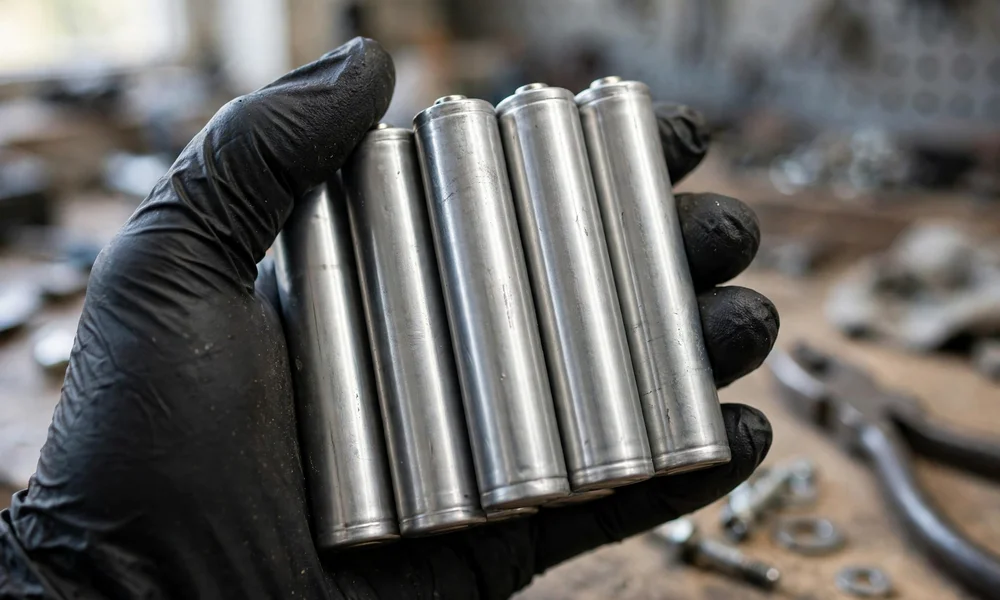
Pick one up and it feels heavier than it looks. Inside that steel tube is a tightly wound roll of foil, coated in layers so thin they would tear if you breathed on them wrong. There is no engine inside, no moving parts at all. The energy is stored as chemistry, waiting. When the driver presses the accelerator, that chemistry wakes in an instant, and the car surges forward in silence.
That cylinder is an EV battery cell, the smallest building block of every electric car on the road. One cell holds only a whisper of energy, but cells group into modules, modules into packs, and packs into cars that can out-accelerate supercars. Understanding the cell means understanding the car — its range, charging speed, lifespan, and price. Here is what the numbers on the spec sheet actually mean.
How It Works
Step 1: The anode and the cathode
Every cell has two electrodes with opposite jobs. The anode, usually graphite, is the negative side, and the cathode, usually a metal oxide containing nickel, manganese, cobalt, or iron phosphate, is the positive side. In a charged cell, lithium ions sit tucked inside the graphite anode, waiting to move. A microscopically thin separator keeps the electrodes from touching, while the rest of the cell connects them. The cathode chemistry shapes almost everything: how much energy the cell holds, how long it lasts, and what it costs.
Step 2: The electrolyte
Between the electrodes sits the electrolyte, a liquid or gel that lets lithium ions travel while blocking electrons — a one-way street for ions only. It is usually a lithium salt dissolved in an organic solvent, soaking into the separator and coating every surface inside the cell. It must stay stable across thousands of charge cycles, from freezing winters to desert summers, without breaking down or catching fire. Engineers spend years tweaking its recipe, because a better electrolyte means a safer cell that lasts longer and charges faster.
Step 3: Lithium ions on the move
The magic of the cell is a commute. When the car is driving, lithium ions travel from the anode, through the electrolyte, to the cathode. Electrons cannot follow them, so they take the long way around — out through the cell terminals, through the car’s wiring, and into the motor, where their flow becomes the electricity that turns the wheels. When the car charges, the process reverses: the charger pushes electrons back in, and the ions migrate home to the anode. The ions are never used up; they simply shuttle back and forth, thousands of times.
Step 4: Discharging — powering the car
Discharge is the cell giving up its stored energy. Press the accelerator and the car’s electronics draw current from the pack, cell by cell, and the chemical reaction inside each one releases energy as electricity. A single cell produces only a few volts, so hundreds or thousands are wired together in series and parallel to reach the hundreds of volts a car needs. The cells must share the load evenly — if one works harder than its neighbours, it ages faster, and the whole pack suffers. That is why the electric motor the pack feeds and the battery management system that watches over it work as one team, constantly balancing the load across every cell.
Step 5: Charging — putting the energy back
Charging reverses the flow. A charger pushes current into the pack, forcing lithium ions back into the anode’s graphite layers. The first part of a charge is fast, while the cells are cool and empty, but as they fill the charger slows to protect them — which is why the last twenty percent always takes longer than the first. Fast charging pushes ions in hard, at a cost in heat and wear, so manufacturers set strict limits on charging speed. How far a charge takes you depends on total pack energy, a subject explored in the guide to e-bike range beyond battery size, where the same cell maths decides the distance on a smaller scale.
Step 6: Thermal management
Heat is the cell’s greatest enemy. Every charge and discharge generates warmth, and a cell that gets too hot degrades faster, loses capacity, and in extreme cases can fail dangerously. Modern packs use liquid cooling plates, heat pumps, and sensors that watch module temperatures in real time. On a cold morning the same system warms the cells, because a freezing cell charges slowly and gives back less energy. Keeping thousands of cells within a few degrees of each other is one of the hardest jobs in EV engineering, sharing the same physics as cooling sustained performance in any machine that works hard for hours on end.
EV Battery Cell Specs
| Specification | Typical range |
|---|---|
| Cell format | 18650, 2170, or 4680 cylindrical; pouch or prismatic |
| Capacity | About 2.5 to 6 amp-hours per cell |
| Nominal voltage | About 3.6 to 3.7 volts per cell |
| Energy density | About 200 to 300 watt-hours per kilogram |
| Charge rate | About 0.5C to 3C, up to 4C on fast-charge cells |
| Cycle life | About 1,000 to 3,000 full charge cycles |
| Operating temperature | About minus 20 to plus 60 degrees Celsius |
| Chemistry | NMC, NCA, or LFP lithium-ion |
What Does an EV Battery Cell Cost?
A single cylindrical cell is surprisingly cheap — estimated at roughly $3 to $10 each in volume — but a car needs thousands of them, plus modules, cooling, wiring, and a battery management system. The full pack is estimated to cost roughly $6,000 to $15,000, usually the most expensive single component in an electric car. Prices are estimates only and vary widely by chemistry, format, and order size. Cell prices have fallen roughly ninety percent over the past decade, the main reason electric cars keep getting cheaper.
A Rare Fact
One of the most famous electric cars on the road is powered by thousands of cells barely bigger than torch batteries. The original Tesla Model S pack contained 7,104 individual 18650 cells — the same cylindrical format used in laptop batteries — wired into sixteen modules. Each cell held only a tiny amount of energy, but together they stored enough to carry the car more than 400 kilometres. It was a radical idea: instead of building a few large custom cells, Tesla bought mass-produced laptop cells by the million and engineered a pack around them. That gamble helped prove an electric car could be fast, long-ranged, and practical, and it set the pattern the industry still follows.
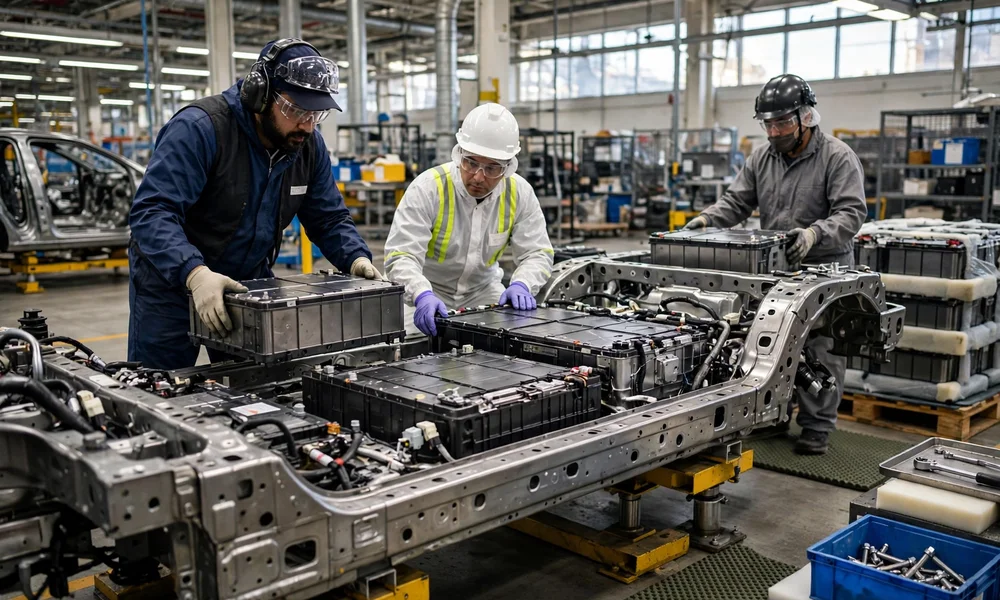
The EV battery cell is small, quiet, and easy to overlook — a steel tube with no moving parts, working in the dark beneath the floor. Yet it is the heart of the electric car: the reason the car can move at all, charge in minutes, and one day cost less than the petrol car it replaces. Everything else in the car is built around it.


