Pick up a fast-charging cable and the first thing you notice is the weight. It is heavier than it looks, stiffer than a garden hose, and warm to the touch after a charging session, even on a cold day. The plug is a chunky handle with thick metal pins, built like industrial equipment. This cable is carrying more power than a whole house uses, through a tube you can hold in one hand, and the materials inside it are the only thing standing between a ten-minute charge and a fire.
An EV fast charging cable is a remarkable piece of engineering precisely because it looks so ordinary. Inside a black jacket barely thicker than your wrist are copper conductors, liquid cooling, and insulation rated for a thousand volts. Every layer has a job, and every layer has to survive being dragged across concrete, run over, left in the rain, and flexed thousands of times a year.
Here is what the cable is made of, and why each material earned its place.
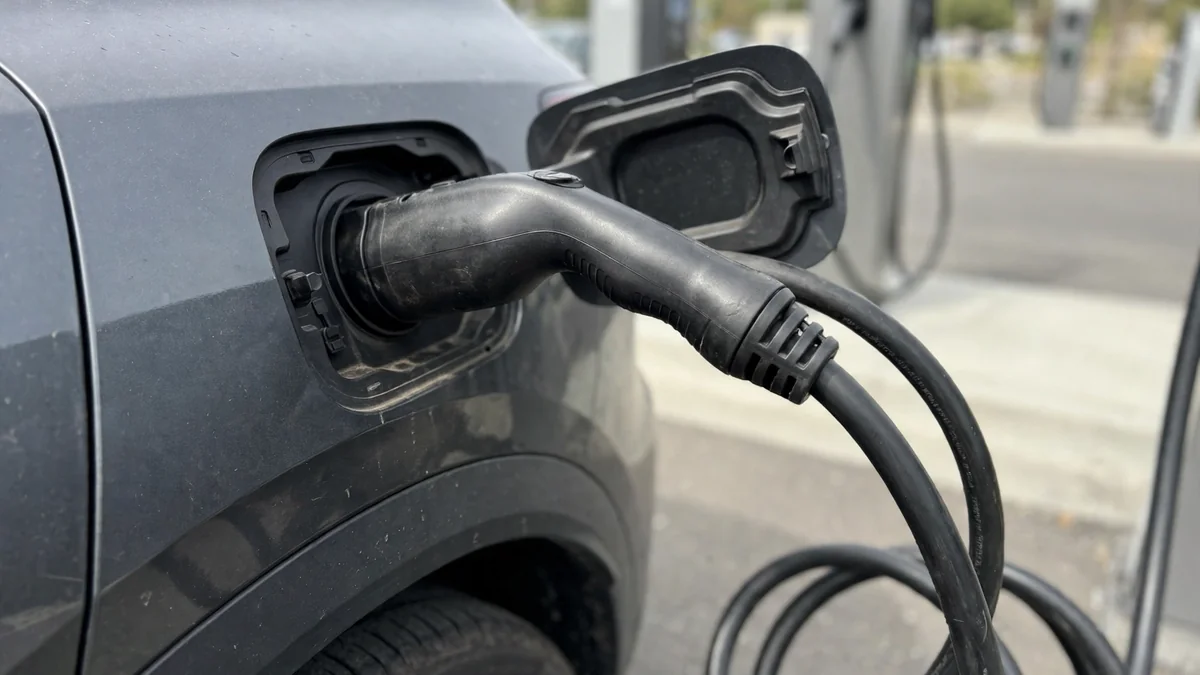
The Materials Behind the EV Fast Charging Cable
1. Copper, the conductor that carries the current
The heart of the cable is copper, and there is a lot of it. Fast charging at 350 kilowatts means currents of up to 500 amps, and only copper can carry that much current in a cable a person can still lift. The copper is finely stranded wire, not a solid bar, so it flexes without breaking as the cable is coiled daily. Copper beats aluminium here: it conducts better and its joints stay tight, while aluminium creeps under pressure and loosens with heat. The strands are often tinned to stop them oxidising at the terminals. The battery the cable feeds is built from the same logic of careful material choice, as the story of the EV battery cell shows, where copper, nickel and graphite each do a job nothing else can.
2. Liquid cooling, the coolant that makes thin cables possible
The cleverest material in a modern fast charging cable is not a solid at all: it is a liquid. High-power cables are liquid-cooled, with a water-glycol coolant pumped through channels that run alongside the copper conductors, carrying heat away to a radiator in the charging station. Without cooling, a 500-amp cable would need copper too thick to lift. With cooling, the same current fits in a one-handed cable. The coolant is water and glycol: it does not freeze, does not boil, and does not conduct electricity, so a leak never becomes a short circuit. If the pump stops, the charger cuts the power.
3. Cross-linked polyethylene, the insulation that holds back a thousand volts
Between the copper and the outside world is insulation, usually cross-linked polyethylene, known as XLPE, sometimes with silicone rubber in the hottest parts. XLPE is chosen because it stays an insulator at high temperatures and high voltages, where ordinary plastic would soften and fail. The insulation on a fast charging cable is rated for 1,000 volts, and it has to hold that voltage while the cable is bent, twisted and crushed underfoot. Cross-linking ties the plastic molecules into a network, so XLPE does not melt: it chars, and keeps insulating.
4. Thermoplastic polyurethane, the jacket that takes the abuse
The outside of the cable is a jacket of thermoplastic polyurethane, or TPU, a tough, flexible plastic that resists abrasion, oil, sunlight and cold. The jacket is the cable’s skin, and it takes the worst of the abuse: dragged across concrete, run over by tyres, left in puddles, baked in the sun. TPU stays flexible in freezing weather, where PVC would crack, and resists tearing. The jacket is also flame-retardant, so if something does go wrong inside, the fire does not travel along the cable. Under the jacket, a braided shield blocks interference from the cable’s high currents. The pack the cable charges is protected with the same care, and the EV battery pack shows how those layers of protection stack up.
5. Silver-plated contacts, the pins that must not spark
Inside the plug are the contacts, the metal pins that mate with the car’s socket, and they are usually copper plated with silver. Silver is the best conductor of any metal, and it does not oxidise the way copper does, so the contact stays clean and low-resistance through thousands of plug-in cycles. At 500 amps, even tiny resistance turns into serious heat at the plug. The contacts are spring-loaded, so they press firmly against the car’s pins every time. The plug handle is glass-filled nylon, stiff, light and insulating, grippable with gloves on.
6. Aluminium and steel, the hardware that holds it together
The fittings at each end of the cable, the strain reliefs, the glands and the connector shells, are aluminium or stainless steel. Aluminium is light and does not rust, and it is used for the plug housing and the cable glands, while stainless steel is used for the springs and the locking latch that holds the plug into the car. The ribbed rubber strain relief spreads the bending load so the copper does not break where it meets the rigid plug. Keeping the cable cool is a job that continues inside the car as well, and EV battery cooling uses the same water-glycol thinking to keep cells alive at high charge rates.
| Material | Where it is used | Why it is chosen |
|---|---|---|
| Stranded copper | Power conductors | Best practical conductor, flexes without breaking, joints stay tight |
| Water-glycol coolant | Cooling channels in the cable | Carries heat away, non-conductive, works from freezing to hot |
| Cross-linked polyethylene | Conductor insulation | Holds back 1,000 volts, resists heat, does not melt |
| Thermoplastic polyurethane | Outer jacket | Tough, flexible in the cold, resists abrasion and flame |
| Silver-plated copper | Plug contacts | Lowest resistance, stays clean through thousands of cycles |
| Glass-filled nylon | Plug handle | Stiff, light, insulating, grippable with gloves |
| Aluminium and stainless steel | Fittings, glands, latch | Light, rust-proof, carry the mechanical loads |
What Does an EV Fast Charging Cable Cost?
A fast charging cable is priced by its copper and its cooling. A liquid-cooled cable assembly for a 350-kilowatt charger is estimated at roughly $1,500 to $4,000, depending on length and power rating, and the connector alone is estimated at roughly $300 to $800. The cooling system in the charging station, pump, radiator and controls, adds an estimated $1,000 to $3,000, and a full replacement of a damaged cable, fitted and tested, is estimated at roughly $2,000 to $5,000. That is a lot for a cable, but it is the part the driver touches every time.
A Rare Fact
The first 350-kilowatt charging cables were so heavy with copper that many drivers struggled to lift them, and some stations had to fit spring-loaded support arms. Liquid cooling solved it: a cooled cable carries 500 amps through conductors thinner than an uncooled 200-amp cable.
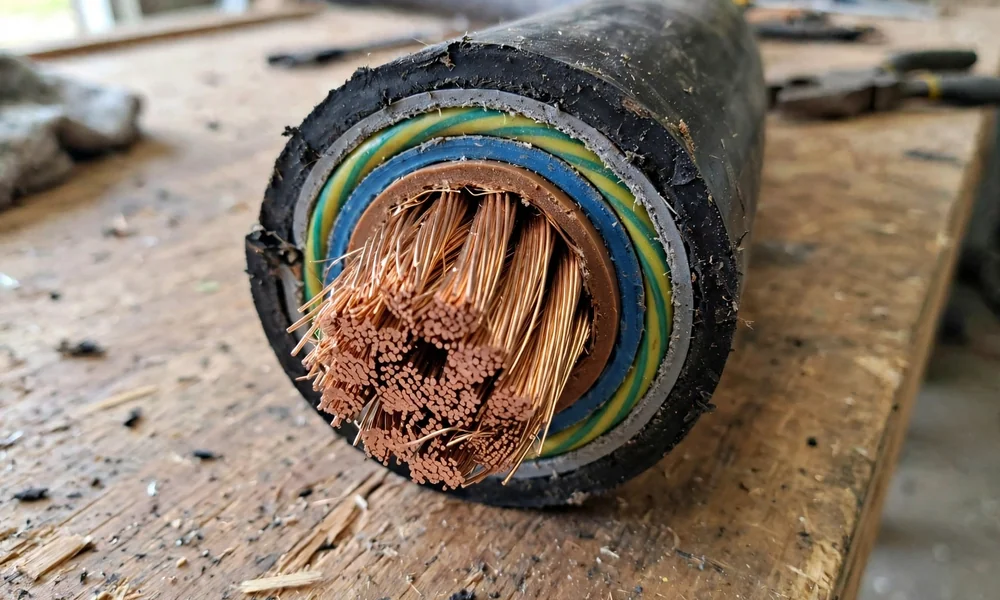

An EV fast charging cable looks like a thick black hose, but it is a stack of careful choices: copper for the current, coolant for the heat, cross-linked plastic for the voltage, and tough polyurethane for the world outside. The next time you plug in and the charge starts in seconds, remember that the quiet hero is not the charger on the wall. It is the cable in your hand.