Pick up a magnesium alloy part and your first reaction is disbelief. It looks like aluminium, it feels like aluminium, and then your hand tells you it is wrong — it is a third lighter than it should be. A laptop shell, a car steering wheel frame, a camera body: magnesium alloy is the metal engineers reach for when every gram counts and the part still has to be strong, stiff, and able to survive a drop, a crash, or a decade of vibration.
Magnesium is the lightest structural metal in common use, about 35 percent lighter than aluminium and 75 percent lighter than steel. Pure magnesium is soft, it corrodes eagerly, and it burns if it is handled carelessly. Turning it into a useful alloy — and then into a finished part — takes careful chemistry, protective atmospheres, and a factory that treats the metal with respect. The pay-off is lighter cars, aircraft, and electronics.

Inside the Factory: How Magnesium Alloy Is Made
The production line has two halves. The first makes the alloy itself, melting magnesium with small amounts of other metals to fix its weaknesses. The second turns that alloy into parts, usually by casting it under pressure. Both halves are run under strict controls, because magnesium’s eagerness to react with air is both its charm and its hazard. The alloying approach mirrors the precision used in other advanced materials, such as the glass engineering behind sapphire glass materials.
1. Melting the magnesium
It begins with magnesium ingots. The ingots are loaded into a steel crucible inside a melting furnace and heated to around 650 degrees Celsius, just past magnesium’s melting point. The moment the metal turns liquid, the danger begins: molten magnesium reacts with oxygen and can ignite. So the surface of the melt is blanketed with a protective gas, which forms a thin film on the surface.
2. Alloying the melt
Pure magnesium is too soft and too quick to corrode for most jobs, so alloying elements are stirred in. Aluminium is the most common addition, typically 3 to 9 percent, which strengthens the metal and improves its casting behaviour. Zinc adds strength, manganese improves corrosion resistance by tying up iron impurities, and small amounts of rare earths such as cerium or yttrium raise the temperature the alloy can survive. Each addition is weighed, added at a set temperature, and stirred until the melt is uniform. Samples are checked with a spectrometer before the batch is approved.
3. Refining and cleaning
A dirty melt makes a weak casting. Oxides, trapped gas, and inclusions are the enemies, so the liquid alloy is cleaned before it is used. Argon gas is bubbled through the melt to carry impurities to the surface, where they are skimmed off as dross. Some plants filter the metal through a ceramic foam filter as it is poured, catching particles too small to see. The dross is collected and its magnesium recovered.
4. Die casting the parts
Most magnesium alloy parts are made by high-pressure die casting. The molten alloy is injected into a steel mould at high speed and held under pressures of tens of megapascals until it freezes, a process that takes seconds. Magnesium freezes quickly, so the mould must fill before the metal solidifies. The reward is a part with thin walls — sometimes under a millimetre — fine surface detail, and a strength that surprises people who think of magnesium as fragile. When the mould opens, the runners and overflow are trimmed off and remelted.
5. Trimming and deburring
Fresh castings go to trimming presses, where the runners, flash, and overflows are cut away. The parts are then deburred — sharp edges are removed by hand tools, vibratory tumbling, or blasting with fine media — because a magnesium part with a sharp edge will cut a worker’s glove and can become a stress point that cracks under vibration. Every part is weighed at this stage: a casting that is too light may have a hidden void inside, and one that is too heavy may have a mould problem. The trimmed scrap goes straight back into the remelt pile.

6. Heat treatment and surface protection
Many alloys are heat treated after casting: heated to dissolve the alloying elements evenly, then aged at a lower temperature to let fine strengthening particles form. The cycle can take hours. Then comes the step magnesium needs more than any other structural metal: protection against corrosion. Castings are cleaned, conversion-coated, and often painted or powder-coated, because bare magnesium in salty air will pit and corrode. The coating is tested with salt spray, and a part that fails is stripped and recoated rather than shipped.
7. Machining and inspection
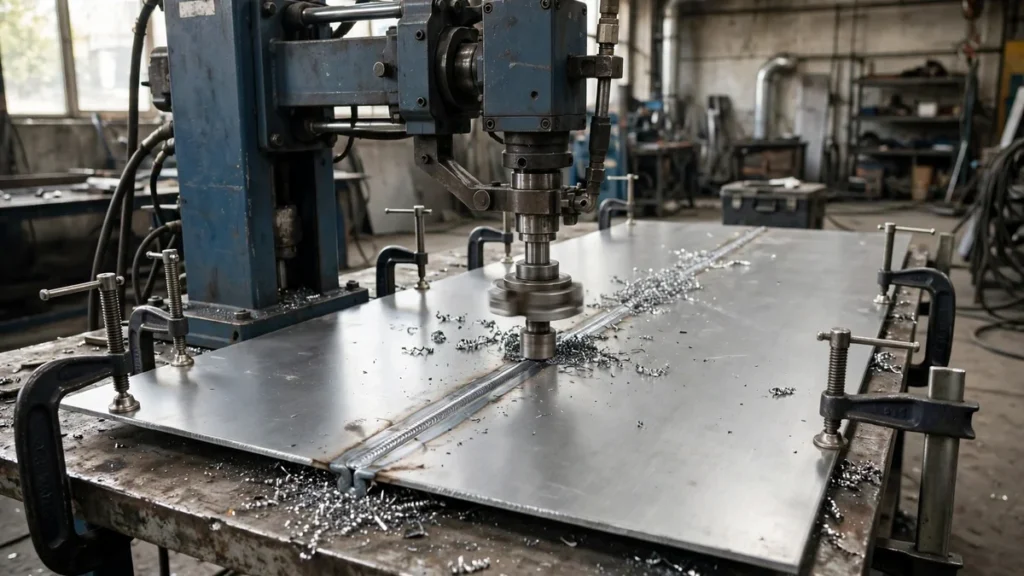
The last step is precision machining. Mounting faces are milled flat, holes are drilled and tapped, and mating surfaces are finished to tolerances of a few hundredths of a millimetre. Machining magnesium has its own rule: never let fine chips accumulate, because magnesium dust and fine swarf can ignite. Machines are fitted with extraction, chips are collected in sealed containers, and cutting is done with sharp tools and plenty of coolant. Finished parts are checked with coordinate measuring machines and X-rayed in sample batches. The same obsession with trapped gas and hidden voids drives the insulation work in aerogel insulation materials.

Magnesium Alloy Specifications
| Specification | Typical Value |
|---|---|
| Density | About 1.8 g/cm³ |
| Common alloy | AZ91D (9% aluminium, 1% zinc) |
| Tensile strength | About 230 MPa as cast |
| Melting point | About 650 °C |
| Weight vs. aluminium | About 35% lighter |
| Weight vs. steel | About 75% lighter |
| Main process | High-pressure die casting |
What Magnesium Alloy Costs
Prices move with the metal markets, so the figures here are estimates, not quotes. Magnesium alloy ingot typically trades at an estimated $3,000 to $5,000 per tonne, and a finished die-cast part costs an estimated $8 to $25 per kilogram depending on size, complexity, and finishing, with large automotive castings at the lower end and small precision electronics housings at the higher end. The metal itself is only part of the cost: the protective atmosphere, the corrosion coating, and the inspection regime all add to the price. Even so, carmakers keep buying it, because every kilogram saved is fuel saved for the life of the vehicle.
A Rare Fact About Magnesium Alloy
Here is the detail that catches every visitor to a magnesium foundry off guard: magnesium was once used to build aircraft that were deliberately designed to burn. During the Second World War, incendiary bombs used magnesium because it burns with an intense white light at over 3,000 degrees Celsius, and the same chemistry that made it a weapon is what makes foundries treat it with such caution today. Yet the metal itself is everywhere in nature — it is the eighth most abundant element in the Earth’s crust, it sits at the centre of every chlorophyll molecule in every green leaf, and the human body carries about 25 grams of it. The same trade between lightness and toughness shapes graphene composites.
A finished magnesium part is easy to miss. It is painted, assembled, and hidden inside a car door, a laptop, or a camera. But pick it up before it is installed and you will feel the factory’s achievement in your hand: the strength of metal at a weight that feels like a mistake.