Hold a sheet of paper between two fingers. Now imagine a sheet a million times thinner, made of a single layer of carbon atoms, yet so strong that a layer one atom thick could in theory hold up a cat. That sheet is graphene, and when it is mixed into plastics, resins and metals, it creates graphene composites — lighter than aluminium, stronger than steel by weight, and able to conduct electricity and heat.
Graphene composites are still young as an engineering material, but they are already turning up in places where weight and strength matter most: bicycle frames, aircraft parts, sports equipment, car body panels and even concrete. The promise is simple to state and hard to deliver. A tiny amount of graphene — often less than one percent by weight — can transform an ordinary plastic into something far stiffer, tougher and more conductive. The difficulty is spreading those atom-thin sheets evenly through the material, instead of letting them clump together like wet pages.
The numbers behind graphene composites are extreme, and they need explaining. Tensile strength is measured in gigapascals, thickness in nanometres, and loadings in fractions of a percent. This guide explains the specs in plain English: what they mean, how the material is made, and where it is genuinely useful today rather than just promising.
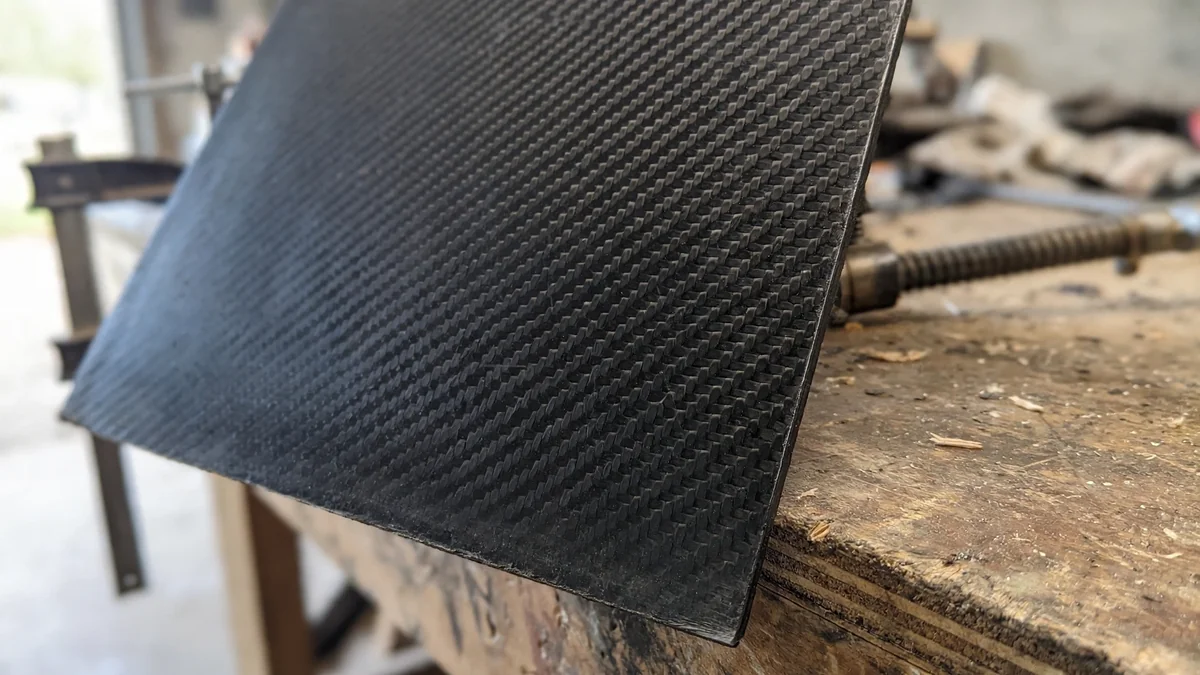
How a Graphene Composite Works
Step 1: The graphene sheet
Graphene is a single layer of carbon atoms arranged in a honeycomb pattern, one atom thick — about 0.34 nanometres. Each carbon atom bonds to three neighbours, and those bonds are among the strongest in chemistry, which is why graphene is so stiff and strong. A single sheet is almost transparent and incredibly light: a square metre of it weighs less than a milligram. On its own, though, a sheet this thin is hard to handle, so engineers use it as a reinforcement inside another material rather than as a standalone sheet. How the raw material is produced is covered in our guide to how a graphene composite is made.
Step 2: Mixing it into resin
The most common graphene composites start with graphene mixed into an epoxy or plastic resin. The graphene usually arrives as a powder of tiny flakes, and the hard part is dispersing those flakes evenly. If they clump, the composite gets weak spots and the benefits vanish. Makers use high-shear mixers, ultrasound and chemical treatments that help the flakes bond to the resin. Typical loadings are very small — 0.1 to 1 percent by weight — because more graphene makes the mixture thick, hard to process and prone to clumping. Getting the dispersion right is the difference between a remarkable material and an expensive ordinary one.
Step 3: Layup and moulding
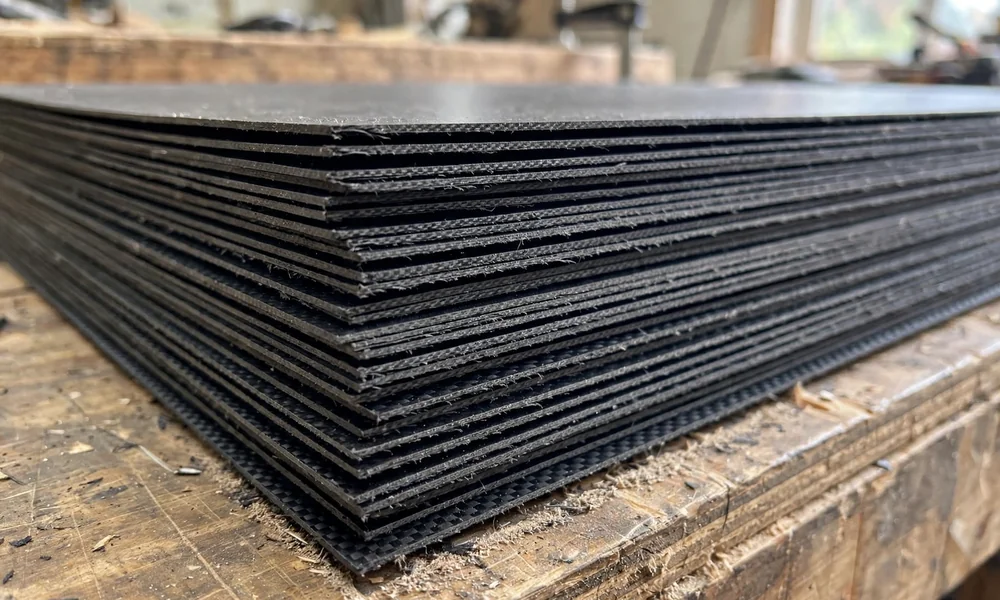
Once mixed, the graphene resin is combined with fibres — usually carbon fibre or glass fibre — to make a layered composite. The fibres carry most of the load, while the graphene improves the resin between them, making it stiffer and better at resisting cracks. Sheets of fibre soaked in resin are laid up in a mould, layer by layer, with the fibre direction chosen to suit the loads the part will face. The stack is then sealed in a vacuum bag to squeeze out air bubbles, which would otherwise become weak points.
Step 4: Curing
Curing is the heating cycle that hardens the resin into a solid. The moulded part is typically baked in an oven or autoclave at 120 to 180 degrees Celsius for several hours, under pressure, while the resin’s molecules link together into a rigid network. The graphene flakes help conduct heat evenly through the part, which can reduce curing time and improve consistency. If the temperature is wrong, the resin can cure unevenly, leaving soft spots or internal stresses that shorten the part’s life. Once cured, the part holds its shape permanently and cannot be remelted.
Step 5: Testing the strength
Before a graphene composite part is trusted, it is tested hard. Tensile tests pull samples apart to measure strength and stiffness. Impact tests drop weights on panels to check how they handle knocks. Fatigue tests bend samples millions of times to simulate years of use. A well-made graphene composite can be 30 to 50 percent stiffer than the same resin without graphene, and far more resistant to cracking. But results vary widely between makers, because the quality of the dispersion matters more than the amount of graphene used.
Step 6: Where it is used
Today graphene composites appear in bicycle frames, tennis rackets, helmets, aircraft interior panels and some car parts, where a small weight saving is worth a high price. In construction, graphene added to concrete can make it stronger and less permeable to water, allowing thinner structures. In electronics, graphene composites shield against interference and spread heat away from hot components. The uses are growing, but the material is still expensive and hard to make consistently at scale — which is why you will find it in a racing bike before you find it in a family car. A related material is covered in our guide to carbon nanotube composite specs.
Graphene Composite Specs
| Specification | Typical range |
|---|---|
| Graphene tensile strength | About 130 gigapascals for a perfect single sheet |
| Young’s modulus | About 1,000 gigapascals, or 1 terapascal |
| Sheet thickness | About 0.34 nanometres, one atom thick |
| Density | About 2.2 grams per cubic centimetre |
| Typical graphene loading | About 0.1 to 1 percent by weight in composites |
| Electrical conductivity | Very high in pure graphene; moderate in composites |
| Thermal conductivity | Up to about 5,000 watts per metre-kelvin in pure graphene |
| Curing temperature | About 120 to 180 degrees Celsius |
What Does a Graphene Composite Cost?
Graphene itself is estimated to cost roughly $50 to $200 per gram for high-quality research-grade powder, though industrial-grade material is far cheaper, and bulk prices fall every year. A finished graphene composite part — a bicycle frame, for example — is estimated to cost 20 to 50 percent more than the equivalent carbon-fibre part, with the premium paying for the graphene, the dispersion process and the testing. Prices are estimates only and vary widely by grade, supplier and volume. For most buyers today, graphene composites are a performance purchase, not a cost saving. Our guide to how a graphene composite works explains the process behind those costs.
A Rare Fact
Graphene was first isolated in 2004 by Andre Geim and Konstantin Novoselov at the University of Manchester, using ordinary sticky tape to peel layers from a lump of graphite — the same material in a pencil. They won the Nobel Prize in Physics in 2010, just six years later, one of the fastest Nobel awards ever. The rarer detail is the famous strength claim: a sheet of graphene one atom thick, stretched like a hammock, could in theory support the weight of a cat, because its strength per weight is so extreme. In practice, nobody builds hammocks from graphene. The material is far more useful as a pinch of reinforcement inside something else, quietly making ordinary materials behave extraordinarily.

Graphene composites are not magic, and the numbers in the table above show why. The pure material is astonishing; the composite is a compromise between that promise and the messy reality of mixing, moulding and curing. But the direction is clear: as production improves and prices fall, the same pinch of carbon that stiffens a racing bike today will end up in aircraft, cars and buildings. The strongest material ever measured is slowly becoming an everyday one.


