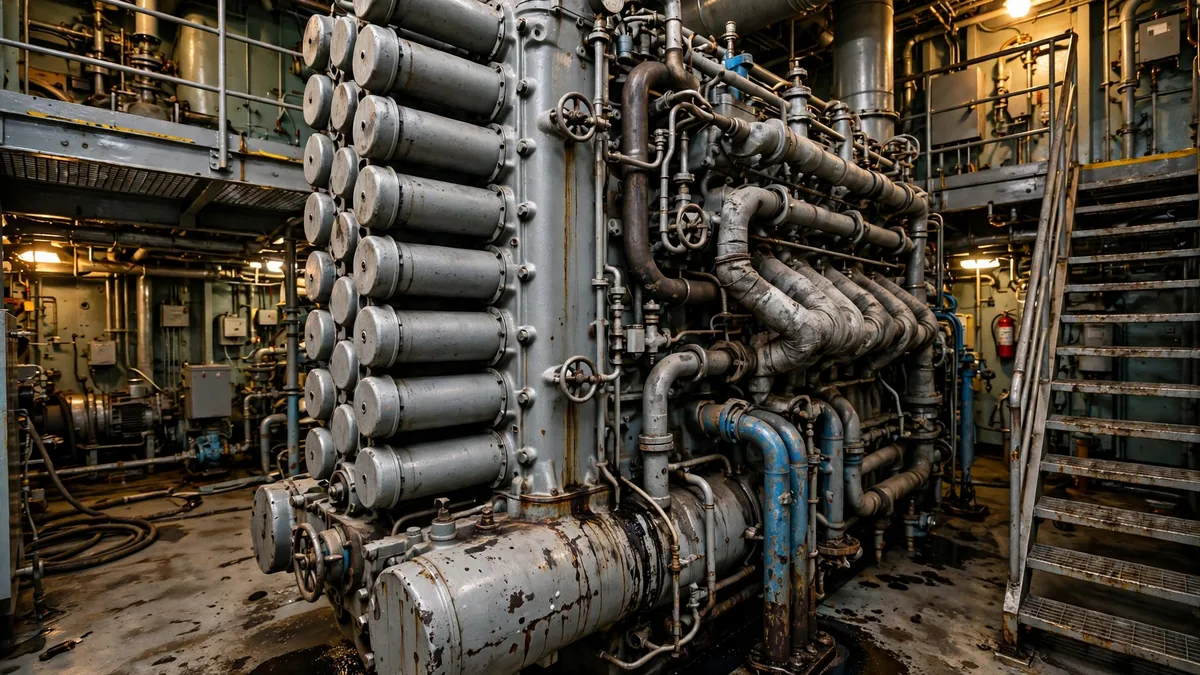
Deep below the swimming pools and the dining rooms, several decks down where no passenger ever goes, there is a room the size of a small theatre, and it never sleeps. It is hot, it is loud, and it smells of oil and warm metal. In the middle of it stand engines as tall as a house, their pistons rising and falling in a slow, deliberate rhythm. This is the engine room of a cruise ship, and it is the reason a floating city carrying five thousand people can cross an ocean at twenty knots.
A cruise ship engine does far more than turn a propeller. The same engines that push the ship through the water also generate the electricity for everything on board: the lights, the kitchens, the air conditioning, the stabilisers and the water makers. Most modern cruise ships use a diesel-electric system, where big diesel engines drive generators and electric motors drive the propellers. This is how that system works, from the first drop of fuel to the wake behind the stern.
How a Cruise Ship Engine Works
Step 1: Fuel is stored and prepared
It starts with fuel, and a cruise ship carries a great deal of it. The ship’s bunker tanks hold thousands of tonnes of marine fuel oil or liquefied natural gas, stored low in the hull where the weight helps stability. Before the fuel reaches the engines it is heated, filtered and cleaned, because grit or water can damage the precision injectors inside a cylinder. Fuel pumps move it through heated lines to the engines, and separators spin out water and sludge around the clock. The preparation is unglamorous, but it is the step that keeps the engines running for weeks at sea without stopping.
Step 2: Diesel engines burn fuel to make power
Most cruise ships carry four to six medium-speed diesel engines, each one the size of a small house and weighing hundreds of tonnes. Inside each cylinder, a piston compresses air until it is hot enough to ignite the fuel on its own, with no spark plug, and the explosion drives the piston down. That motion turns a crankshaft, and the crankshaft turns a generator. These engines run at a few hundred revolutions per minute, slow by car standards, because slow running means huge torque and long life. The engines are built to run for months at a time, and the materials they are made from have to survive that punishment, as the cruise ship engine materials guide explains.

Step 3: Generators turn motion into electricity
Each engine is bolted directly to a generator, a machine that converts the turning crankshaft into electrical power. Together the engines on a large cruise ship can produce sixty to eighty megawatts, enough electricity for a small town, and that power flows into a single electrical network that serves the whole vessel. The advantage of this arrangement is flexibility: the ship can run two engines at sea and four when it needs full speed, or shut one down for maintenance while the others carry the load. Propulsion is just one of many jobs on the network.
Step 4: Electric motors drive the propellers
The propellers are driven by electric motors, and on most modern cruise ships those motors sit in pods beneath the hull, called azipods, that can rotate through 360 degrees. Power from the generators flows down to the pod motors, which turn large, slow propellers directly, with no long shaft running through the ship. Because the pods can swivel, the ship can steer, turn in its own length and even move sideways into a berth without tugboats. The propeller itself is a precision piece of engineering in its own right, and its design decides how efficiently all that power becomes forward motion, as the ship propeller guide explains.
Step 5: Waste heat is recovered and reused
A diesel engine turns only about half of its fuel’s energy into useful power, and the rest leaves as heat. On a cruise ship, much of that heat is captured rather than wasted. Exhaust gases pass through boilers that make steam, and the steam heats water for the ship, drives evaporators that make fresh water from seawater, and warms the fuel for the engines. Cooling water from the engines is used the same way. This recovery is one reason a modern cruise ship can carry thousands of people in comfort: the energy that would otherwise go up the funnel is put back to work.
Step 6: The bridge controls it all
None of this is run by hand any more. The engine room is controlled from a quiet control room, where engineers watch screens showing every engine, generator and pump, and the bridge upstairs sets the speed the ship needs. Automation adjusts how many engines are running, balances the electrical load and raises an alarm the moment anything drifts out of range. The engineers still walk the engine room on regular rounds, listening for a bearing that sounds wrong or a pipe that feels too hot, because no sensor catches everything. The hull that carries all of this through the water has its own engineering story, and the way it is shaped decides how much power the engines need in the first place, as the ferry hull guide shows for smaller vessels.
Cruise Ship Engine at a Glance
| Specification | Detail |
|---|---|
| System type | Diesel-electric, engines drive generators, motors drive propellers |
| Number of engines | Typically four to six medium-speed diesel engines |
| Total power output | Approximately 60 to 80 megawatts on a large cruise ship |
| Engine speed | Several hundred revolutions per minute, slow and high-torque |
| Propulsion | Electric podded propellers, usually azipods, rotating 360 degrees |
| Fuel types | Marine fuel oil, with newer ships using liquefied natural gas |
| Fuel use | Approximately 150 to 250 tonnes per day at cruising speed |
| Main advantage | Flexible power, quiet operation, precise manoeuvring |
| Main drawback | Enormous fuel use, complex systems, huge maintenance needs |
What Does It Cost?
A cruise ship engine is priced as part of a ship that costs hundreds of millions of dollars, so there is no simple price tag. As rough estimates, a single large marine diesel engine of the kind used on a cruise ship costs several million dollars, while the fuel bill for one large ship can run to tens of thousands of dollars a day. Those figures are estimates, not quotes.
A Rare Fact
The largest cruise ship engines are so big that a person can stand inside a cylinder with room to spare, and each piston is heavier than a family car. Yet the electric drive separates the shaking of the engines from the turning of the propellers, so passengers several decks above feel almost nothing. The loudest thing in the engine room is often not the engines at all, but the ventilation fans keeping it cool.
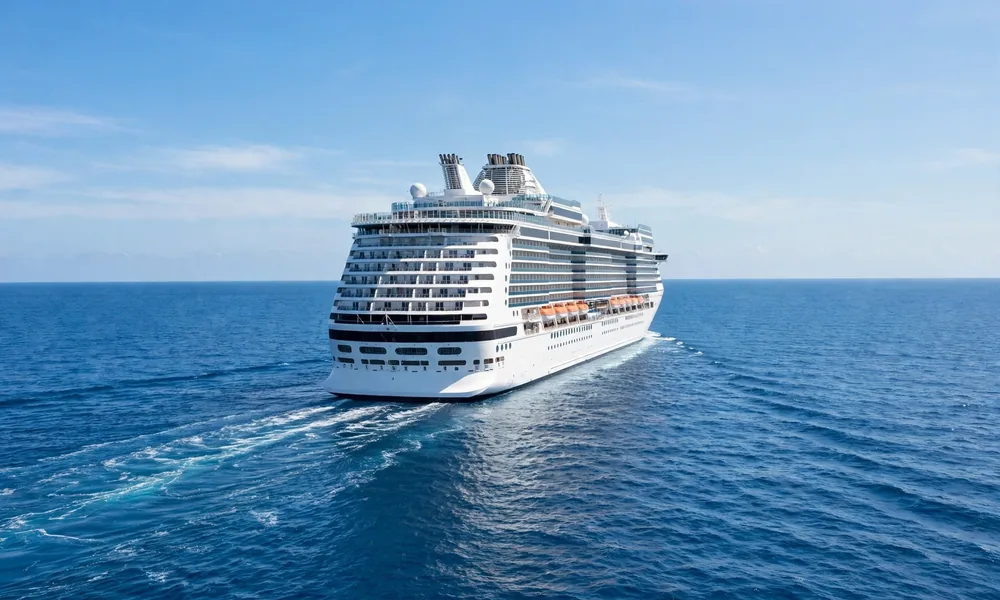
A cruise ship engine works because it stopped being just an engine. It is a power station that happens to float, feeding a network that pushes the ship, lights the cabins and makes the fresh water, all from the same set of machines. The next time a cruise ship glides into port without a tugboat in sight, that quiet arrival is the whole system doing its job.


