Floor the accelerator in a modern sports car and something feels wrong — in the best possible way. No pause, no lurch, no moment where the engine flares and the car waits for the next gear. The car simply keeps pulling, harder and harder, as if it had one endless gear. It does not: hidden underneath, a gearbox is changing gear every fraction of a second, so fast and smoothly you cannot feel it happen. That gearbox has two clutches, and that second clutch is the whole trick.
A dual-clutch transmission — a DCT — is one of those ideas that sounds like cheating. A normal manual gearbox has one clutch and one set of gears, and every gear change means disconnecting the engine, swapping gears, and reconnecting it — time during which the car is not accelerating. A DCT has two clutches and two shafts, so the next gear is already engaged before you need it. When the moment comes, one clutch opens, the other closes, and the car is in the next gear in the time it takes to blink.
The idea is older than most people think: sketched out before the Second World War, raced in the 1980s, then refined into something now found in everything from a family hatchback to a 200-mph hypercar. It is also one of the most mechanically demanding parts in a production car — two clutches, two input shafts, two sets of gears, and a computer that must predict which gear you will want next — all in a casing not much bigger than a suitcase.

How It Works
Step 1: Splitting the gears in two
Inside a DCT, the gears are divided into two groups: the odd gears — first, third, fifth, seventh — live on one shaft, and the even gears — second, fourth, sixth — live on another. Each shaft has its own clutch. One shaft sits inside the other, so the whole assembly stays compact. This split is the foundation of everything the gearbox does: the odd and even gears are independent, so one shaft can drive the car while the other quietly prepares the next gear.
Step 2: Pre-selecting the next gear
Imagine accelerating in third gear. The odd clutch is closed, sending engine power through the odd shaft to the wheels. Meanwhile the even clutch is open, so the even shaft is free — and the gearbox slides fourth gear into place on it, with no power flowing through it. You are still in third, still accelerating, and fourth is now sitting there, engaged, silent, and ready. This pre-selection is the heart of the DCT, and it is why the gearbox can change gear without the usual pause.
Step 3: The handover — one clutch out, one clutch in
When it is time to change gear, the gearbox performs a handover. The odd clutch opens, releasing the odd shaft, while the even clutch closes, connecting the even shaft, fourth gear already selected, to the engine. For a few milliseconds both clutches are partly engaged, so power never stops flowing to the wheels. That overlap is the difference between a DCT and every other gearbox: no dead moment, no interruption, just a continuous handover from one shaft to the other. In the fastest road cars, the whole shift takes around 8 milliseconds — faster than a blink, and far faster than any human with a clutch pedal.
Step 4: The computer that reads your mind
Pre-selecting the next gear only works if the gearbox guesses right. Accelerating hard, it pre-selects the next gear up; braking into a corner, the next gear down. A control unit watches your throttle, speed, revs, and braking, and decides which gear you will most likely want next. If it guesses wrong — you suddenly lift off instead of accelerating — it must deselect the gear it prepared, and that shift feels slower. Most of the time it guesses right — which is why a DCT feels almost telepathic. The gearbox sits at the heart of the chassis, and the same pursuit of stiffness and lightness that shapes carbon monocoque production decides how much of that seamless power reaches the road.
Step 5: Wet or dry — how the clutches stay alive
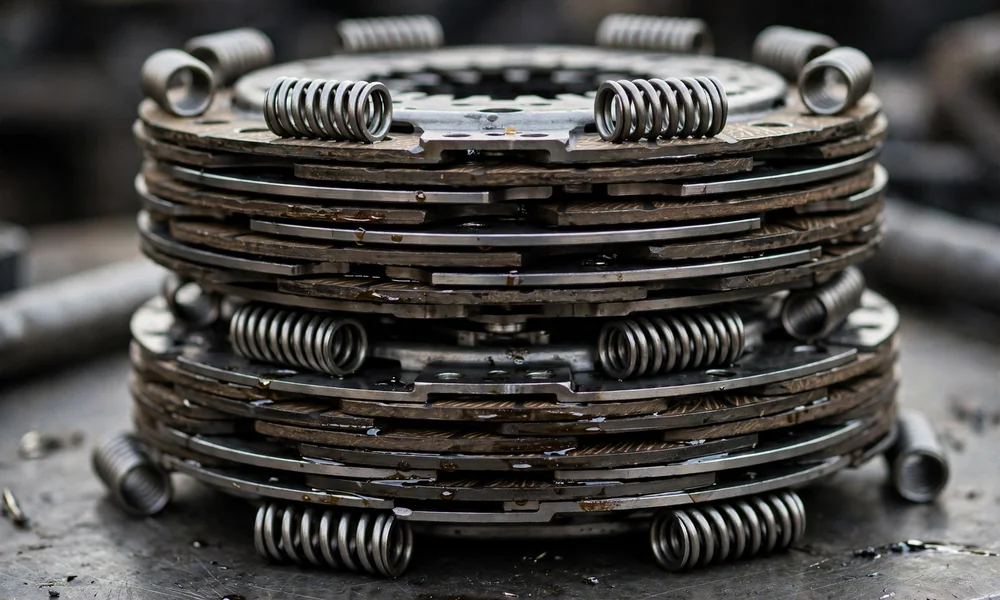
Two clutches doing this much slipping generate serious heat, and heat is what kills a clutch. DCTs handle it in two ways. A wet-clutch DCT bathes its clutch packs in oil, which carries the heat away and lets the clutches slip gently during parking and slow crawling — the choice for powerful, high-torque cars. A dry-clutch DCT runs its clutches in air, like a manual car: lighter and more efficient, but less tolerant of heat — the choice for smaller, lighter cars. Either way, the clutch packs are marvels: stacks of alternating steel and friction plates that lock together hard enough to handle hundreds of horsepower, then release cleanly thousands of times a day.
Step 6: Launch control and the standing start
The DCT’s party trick is the standing start. With launch control engaged, the driver holds the brake, floors the accelerator, and the engine holds at the perfect revs while the clutches slip just enough to hold the car still. Release the brake and both clutches manage the grip, feeding in exactly as much power as the tyres can take. It is the fastest way to launch a road car from rest, and why cars with a DCT regularly beat their own quoted acceleration times. The same obsession shows up everywhere on a fast car, and the engineers who perfect active aerodynamics chase the same goal: every bit of performance the machine can give, with nothing wasted.
Specs
| Specification | Typical value |
|---|---|
| Clutches | 2 (one per gear shaft) |
| Gear split | Odd gears on one shaft, even gears on the other |
| Typical gear count | 7 or 8 speeds |
| Fastest shift time | About 8 milliseconds |
| Clutch types | Wet (oil-bathed) or dry |
| Control | Electro-hydraulic |
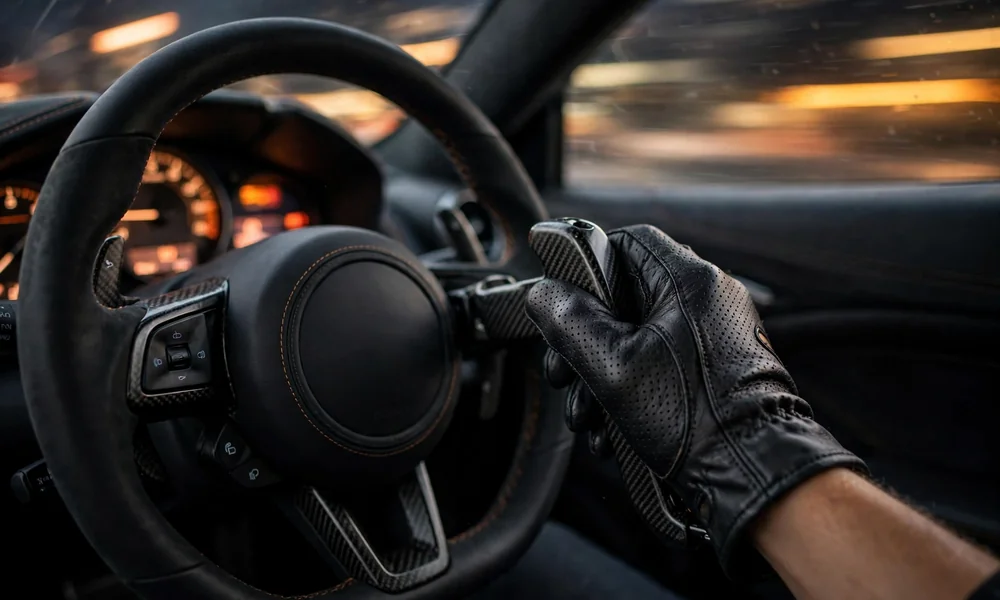
| Driver controls | Paddles, lever, or fully automatic |
| Torque capacity | Up to ~1,000 Nm |
What Does It Cost?
A DCT is not sold on its own — it arrives as part of the car, usually as an option or as standard equipment on a performance model. As an option, it typically adds an estimated $1,500–$3,000 over a manual gearbox — an estimate that varies by manufacturer and market. The real cost shows up later: if a DCT fails outside warranty, a repair or replacement can cost an estimated $5,000–$10,000, because the gearbox is a sealed, precision assembly few workshops will open — many simply swap in a replacement unit. That is why servicing matters: fresh transmission fluid and software updates are far cheaper than a new gearbox.
A Rare Fact
Here is the detail most people miss: the dual-clutch idea was first drawn up in the 1930s by French engineer Adolphe Kégresse, and raced by Porsche in the 1980s under the name PDK — but the first production road car only got one in 2003, more than sixty years later. The computers and hydraulics of the time could not control two clutches precisely enough. What finally made it work was not a better clutch, but a better brain: fast electronics that could slip two clutches against each other to within a fraction of a percent. It is the same story across modern performance cars: the mechanical masterpiece only became possible when the electronics caught up, just as the electric motors in how an electric motor works depend as much on their controllers as on their copper and magnets.


