Floor the accelerator in a modern performance car and the gearbox does something that feels like magic. It changes gear in a fraction of a second, without the pause of a manual clutch or the slush of an old automatic, and the car simply keeps pulling. Inside the gearbox, two clutches are working in relay: one holds the gear you are in, while the other has already engaged the next gear, waiting for its turn.
That gearbox, a dual-clutch transmission, is one of the most intricate mechanical assemblies in a car. It packs two gearboxes, two clutches, and a maze of oil channels into a case not much bigger than a suitcase, and every gear, shaft, and clutch plate inside it is machined to tolerances a human hair would fail. This is how a dual-clutch gearbox is produced.
How It’s Made
Step 1: Designing the gear sets
Production begins with the gear ratios, the numbers that decide how fast the car accelerates in each gear and how quietly it cruises on the motorway. Engineers choose the ratios for the car’s engine, its weight, and its top speed, then split the gears between two shafts: one shaft carries the odd gears, first, third, and fifth, while the other carries the even gears, second, fourth, and sixth. Each gear is designed in three dimensions, with its teeth shaped to mesh smoothly and quietly at high speed, and the whole gearbox is modelled in software to check that the gears, shafts, bearings, and clutches all fit inside the case without touching.
Step 2: Machining the gears and shafts
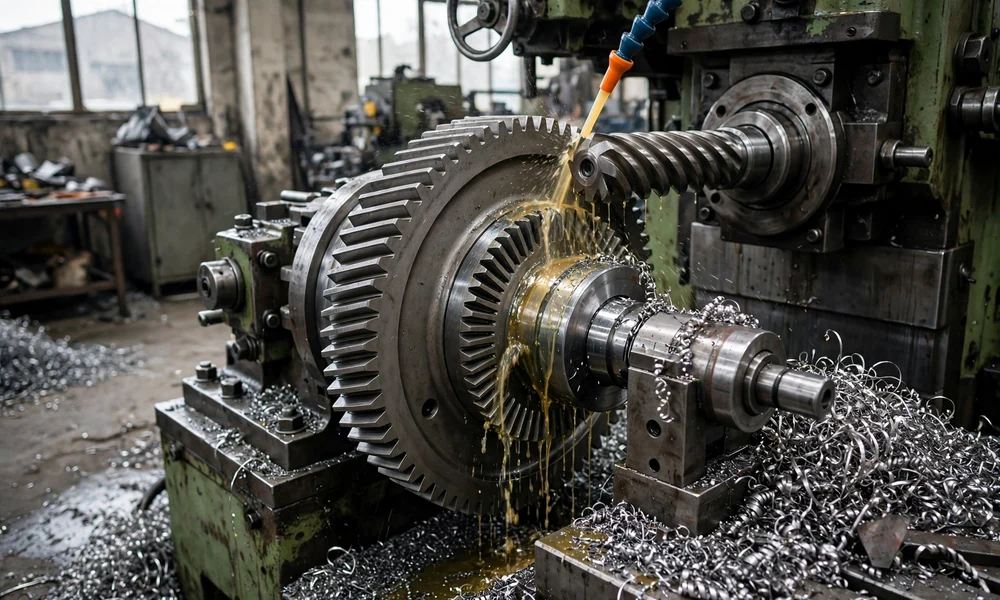
The gears begin as blanks of high-strength steel, forged and then cut on gear-hobbing machines that shape each tooth with a rotating cutter. The teeth are then ground to their final profile on machines that measure them to within a few microns, because a gear tooth that is even slightly out of shape will whine, wear quickly, or break under load. The shafts are turned on lathes and ground to a mirror finish where the bearings will sit, and the clutch hubs are broached, a process that cuts the fine splines that let the clutch plates slide back and forth.
Step 3: Building the clutch packs
The heart of the gearbox is its two clutch packs, each a stack of alternating steel plates and friction plates that can grip or slip on command. The friction plates are made by bonding a paper-like friction material to a steel core, then cutting the plates to size and checking their thickness, since a plate that is too thick or too thin changes the clutch’s bite point. The plates are stacked in a drum with springs and pistons, and the whole pack is measured for its clearance, the small gap that lets the plates separate cleanly when the clutch is open. The full story of how the gearbox is put together from gears to case is told in how a dual-clutch gearbox is made, and the clutch packs are the part the assemblers handle with the most care.
Step 4: Assembling the gear sets and shafts
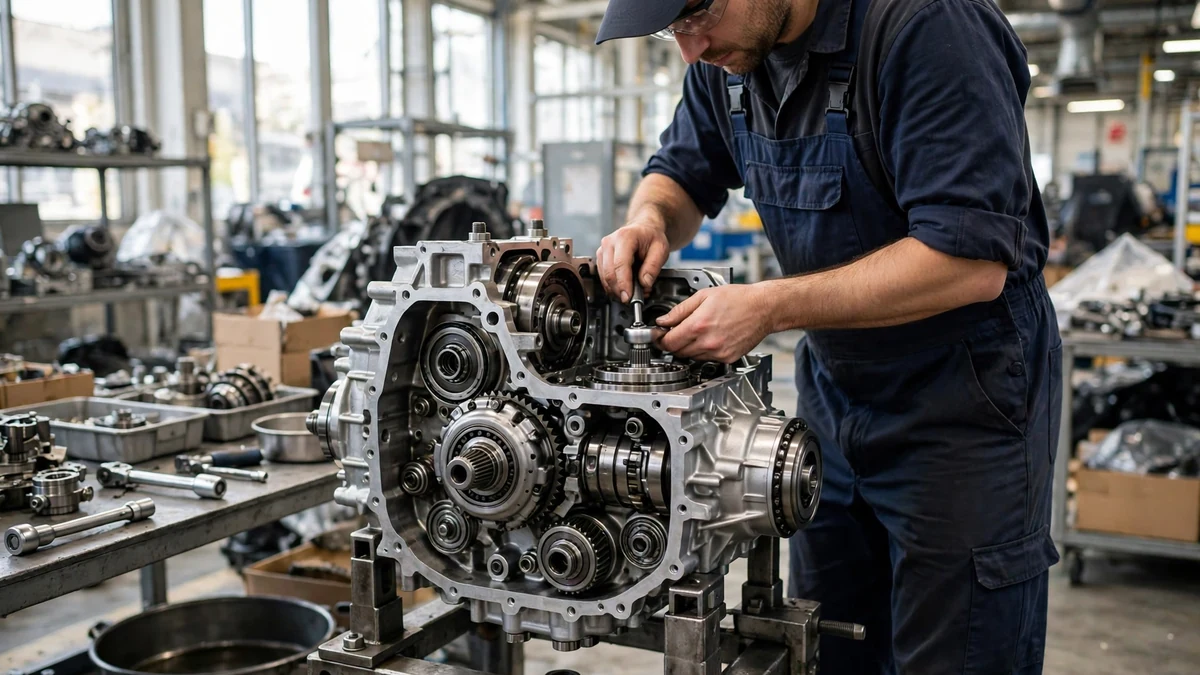
With the gears machined and the clutches built, the gearbox is assembled on a bench, layer by layer. The two input shafts, one hollow and one solid running inside it, are fitted with their gears and bearings, then lowered into the case together with the output shafts that carry the power to the wheels. The assemblers work from a strict sequence, torquing every bolt to a specified value and marking each one with paint when it is done, so that a missed bolt can be spotted at a glance.
Step 5: Fitting the mechatronics and oil system
A dual-clutch gearbox is controlled by its mechatronics, a unit that combines hydraulic valves, solenoids, and electronic sensors into a single module bolted to the side of the case. The mechatronics decides when to shift, how fast to engage each clutch, and how much pressure to apply, reading the engine speed, the road speed, and the driver’s throttle position hundreds of times a second. It is fitted with its own seals and wiring, and the oil system is completed with a pump, a filter, and a cooler, since the gearbox oil both lubricates the gears and cools the clutches. The oil channels inside the case are checked for blockages, and the gearbox is filled with its special dual-clutch fluid, a thin oil that must work as both a lubricant and a hydraulic fluid.
Step 6: Testing on the rig and the road
Every finished gearbox is tested before it leaves the factory. It is mounted on a test rig that spins its input shaft with an electric motor and loads its output shafts with brakes, running it through every gear, hundreds of shifts, while sensors record the shift time, the clutch slip, and the temperature of the oil. Engineers listen for whines, knocks, and rattles, and any unit that shifts slowly, slips, or runs hot is pulled off the rig and stripped down to find the fault. A dual-clutch gearbox that passes is one that can shift in under a tenth of a second, thousands of times a day, for the life of the car.

Specs
| Specification | Typical figure |
|---|---|
| Gear count | Six or seven forward gears, plus reverse |
| Clutch count | Two multi-plate wet clutches |
| Shift time | Under a tenth of a second |
| Gear tooth tolerance | Within a few microns |
| Gearbox weight | Roughly 70 to 90 kilograms |
| Oil type | Special dual-clutch transmission fluid |
| Control unit | Mechatronics with valves and sensors |
| Testing | Every unit run through hundreds of shifts |
Price
A dual-clutch gearbox is estimated to cost roughly $5,000 to $10,000 as a complete unit, depending on the car and the number of gears, and replacing one outside warranty is estimated at roughly $8,000 to $15,000 including labour. A mechatronics unit alone is estimated at roughly $1,500 to $3,000, and a clutch pack replacement is estimated at roughly $1,000 to $2,500.
A Rare Fact
The dual-clutch gearbox was invented for racing in the 1980s, and its first famous outing was in the Porsche 962, a car that dominated endurance racing. The idea was simple: pre-select the next gear so the shift would be instant, with no break in power. The racing gearboxes were fragile and needed constant rebuilding, and it took two more decades of development before the design was reliable enough for ordinary road cars, where it now appears in everything from hot hatchbacks to hypercars.
A dual-clutch gearbox is the part that makes a fast car feel instant, and the numbers behind it are set out in the dual-clutch gearbox specifications, while how a dual-clutch gearbox works explains how the two clutches hand over to each other in milliseconds. The next time a car changes gear before you have even felt the shift, remember the machined gears, the stacked clutch plates, and the test rig that ran the gearbox through hundreds of shifts before it ever met an engine.


