An anchor only works when it can be lowered, set, held and recovered without drama, and on an electric boat that job is done by a system rather than by muscle. The anchor itself is a shaped piece of steel, but the system is the windlass on the bow, the chain that connects it to the boat, the locker below deck where the chain lives, and the controls that let one person drop and retrieve it. When the pieces work together, anchoring becomes a quiet push of a button. When they do not, a boat can drift or drag.
The idea is simple. The anchor digs into the seabed and the chain holds the boat to it, with the weight of the chain doing much of the work. A pull along the seabed drives the flukes deeper, while a vertical pull lifts the anchor free. The electric system does not change that physics; it changes how the heavy chain is handled, because a full set of chain and anchor can weigh more than a person.

The parts of an electric boat anchor system
At the centre is the windlass, a motor-driven drum on the foredeck or just below it. The most common type is the vertical windlass, where the motor sits below deck and a gypsy, a notched wheel shaped to grip chain links, sits above it. As the gypsy turns, it pulls chain in link by link and drops it down the hawse pipe into the anchor locker. A horizontal windlass keeps motor and drum on one level.
Below the windlass is the anchor locker, which stores the chain in a neat pile so it runs out freely and falls back in without tangling. It drains overboard, because chain brings mud and seawater with it. Forward of the windlass is the bow roller, a grooved wheel at the tip of the bow that guides the chain over the stem and lets the anchor hang clear of the hull when stowed. The anchor itself is usually a plough, fluke or claw design, chosen for the seabeds the boat visits most.
The chain, or rode, connects the anchor to the boat. Most electric boats use all-chain rode, or chain joined to rope, because chain resists chafe, adds weight that keeps the pull on the anchor low and horizontal, and grips the gypsy reliably. The end of the chain is tied off inside the locker with a short rope, a weak point that can be cut in an emergency if the anchor jams. A chain stopper or snubber takes the load off the windlass once anchored, so the motor and gearbox are not holding the boat all night.
How the windlass lowers the anchor
Lowering an anchor is a controlled fall, not a drop. The operator releases the windlass clutch or runs the motor slowly in reverse, and the chain pays out through the gypsy while the anchor slides down the bow roller into the water. This is done from a foot switch on the foredeck or a remote at the helm, so one person can steer and anchor at the same time. The boat moves slowly astern as the chain runs out, laying it along the seabed instead of piling it on the anchor.
Scope matters more than almost anything else. Scope is the ratio of rode let out to water depth, and a common rule is five to seven times the depth, more when wind is expected. A long scope lets the chain lie flat, so the pull stays horizontal and the flukes stay buried. A short scope pulls upward, which is how anchors break out and drag. The superyacht anchor winch does the same job on a far larger scale, but the principle is identical on a small electric boat.
Setting the anchor and holding position
Once the planned scope is out, the operator stops the windlass and the boat drifts back until the chain takes the strain. The crew checks the anchor has set by watching a landmark or GPS position, and by feeling for a steady, firm pull rather than a jerky one. Some boats reverse gently against the anchor to dig it in, testing the hold before the crew relaxes. If the boat keeps moving, the anchor has not set and the process starts again, ideally in a different spot.
When the anchor is set, the chain is secured with a snubber, a rope or chain hook that takes the load off the windlass. This matters because a windlass is a hauling machine, not a mooring post, and a night of jerking in a swell can damage its gearbox. The snubber also stretches slightly, softening the shock of waves and gusts. The boat then swings around the anchor as wind and tide change, which is why anchored boats need space between them.

Retrieving the anchor with electric power
Retrieval is where the electric motor earns its keep. The operator motors slowly forward toward the anchor while the windlass hauls the chain in, keeping the chain as vertical as possible so the windlass lifts the chain instead of dragging the boat. The chain comes up muddy, so many boats have a washdown hose at the bow to rinse it as it rises. The anchor eventually reaches the bow roller, where it seats itself in its stowed position, flukes clear of the hull.
The last part of retrieval needs care. When the anchor breaks free it can swing, so the operator slows the windlass and watches it home. If it comes up fouled with weed or old rope, it is cleared before stowing. The motor draws a large current for a short time, which is why electric boats size their batteries and wiring for the job. The strongest yacht anchor windlasses are judged on exactly this duty: pulling power, speed and the ability to keep working when the chain is heavy with mud.
Controls, power and safety
Controls vary from simple to sophisticated. A basic system has up and down foot switches on the foredeck, a wired remote at the helm, and a circuit breaker near the batteries. More advanced installations add a wireless remote, a chain counter showing how much rode is out, and an automatic free-fall function for emergencies. The chain counter is genuinely useful, because counting chain by eye in the dark is unreliable, and knowing the scope keeps a boat safely anchored.
Safety starts with the fact that a windlass can pull hard enough to injure a hand caught in the chain. Fingers stay clear of the gypsy, loose clothing is kept away, and the windlass is never left running unattended. A manual override matters too: most windlasses can be worked with a handle if the motor or battery fails, which is the difference between being stuck at anchor and being able to leave. The anchor chain that holds a ship still works on the same principles at a much greater scale, and the same respect for a moving chain applies on a boat of any size.
Choosing and maintaining the system
Choosing an electric anchor system starts with the weight of the ground tackle it must lift, because a windlass is sized by pulling power, not boat length alone. Heavy chain and a large anchor in deep water need a stronger motor and a bigger gypsy than a light setup in shallow water. The battery bank must deliver the short, high current the motor draws, and the wiring must be thick enough to avoid voltage drop on the long run to the bow.
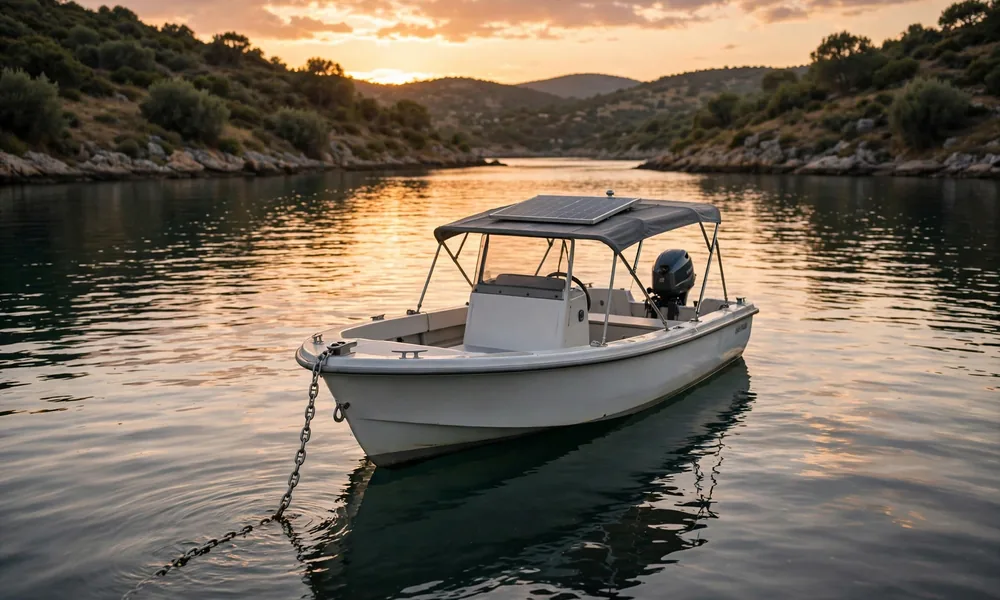
Done well, the whole system is almost invisible: press a button, and the boat stays put.