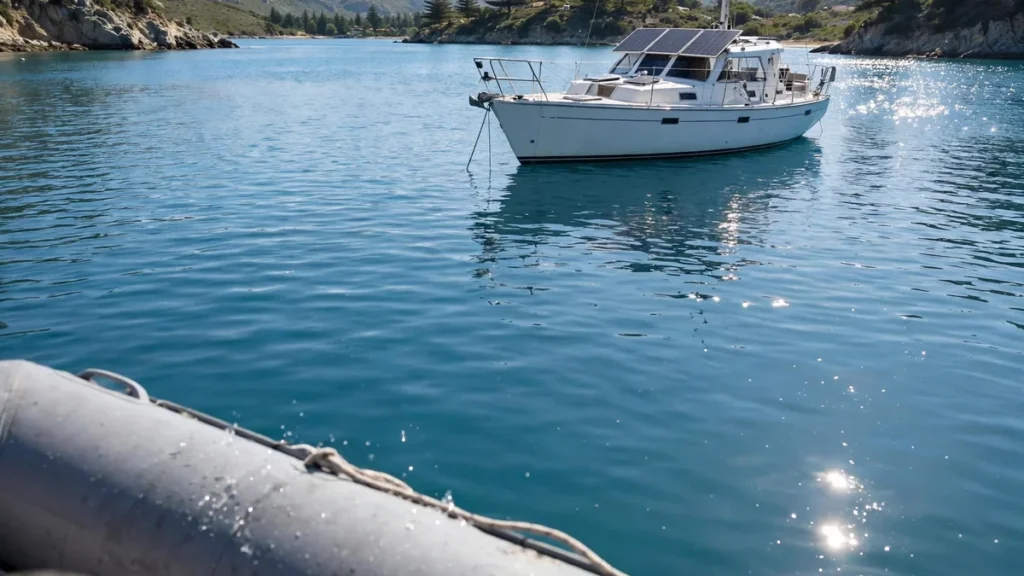
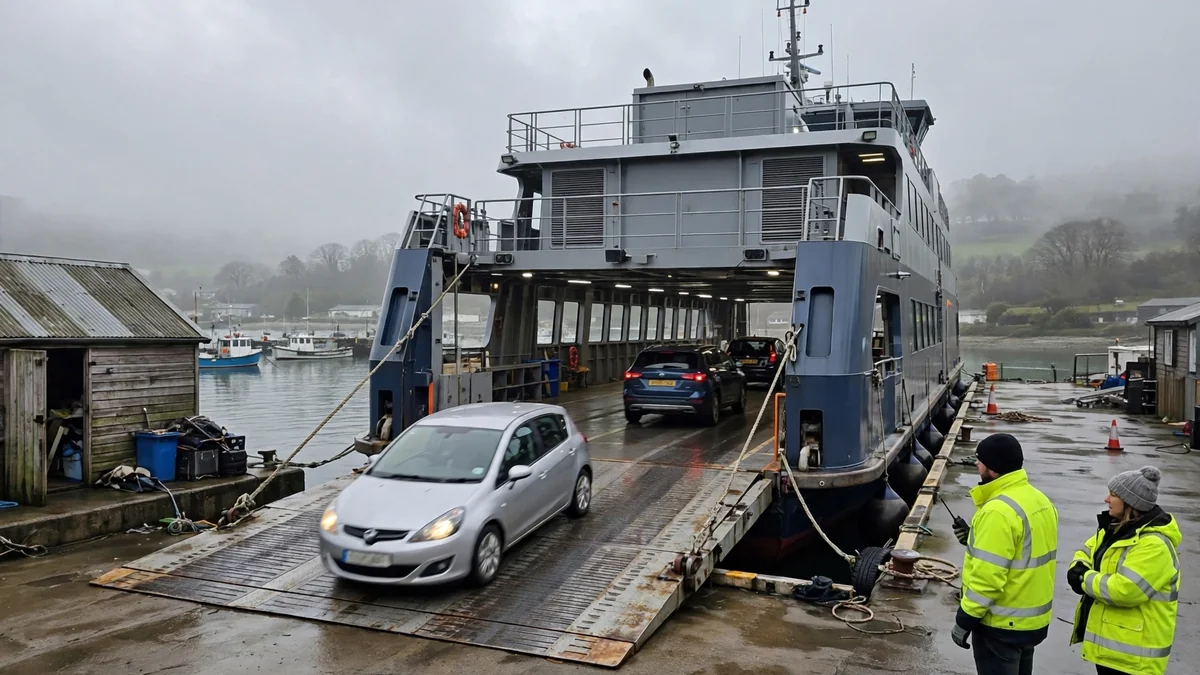
On a grey morning in a Norwegian fjord, the ferry that used to rumble across the water now leaves the quay in near silence. There is no diesel throb, no plume of exhaust curling over the car deck, just the soft whirr of a propeller and the low hum of a battery the size of a shipping container. Passengers barely notice the change, which is exactly the point. A battery-electric ferry has to feel like an ordinary ferry, only cleaner, quieter, and cheaper to run. Getting there takes a shipyard, a battery hall, and a build process that looks nothing like the way ferries were made twenty years ago.
This is a conventional battery-electric ferry, the kind that runs a fixed short route and charges at each end. It is not a hydrofoil ferry, which lifts its hull out of the water on foils; this hull stays in the water the whole time, and its efficiency comes from a clean hull shape, a big battery, and a route that never asks it to go far. Building one means joining two very different worlds: heavy steel shipbuilding and high-voltage battery engineering.
How an Electric Ferry Is Made
The build takes roughly eighteen to twenty-four months from first steel cut to delivery, and it happens in a strict order. Each stage has to be finished before the next can begin, because a battery that weighs as much as a dozen cars cannot be squeezed into a finished hull as an afterthought.
Step 1: Cutting and shaping the steel hull
Everything starts with flat steel plate, cut by plasma torch or laser into the curved shapes of the hull. Welders assemble the plates into blocks in a covered hall, then crane the blocks together on the slipway. An electric ferry hull is usually a double-ended design, so it never has to turn around; it simply drives on from one end and off from the other, saving minutes on every crossing. The hull is also shaped for low drag at modest speeds, since a ferry doing twelve knots burns far less energy than one pushed to twenty.
Step 2: Building the battery rooms
While the hull grows, a separate team builds the battery rooms deep inside it. These are fire-rated steel compartments with their own ventilation, cooling pipes, and gas detection. The battery itself arrives as sealed modules, each about the size of a large suitcase, which are bolted into racks and wired together. A typical coastal ferry carries between one and four megawatt-hours of storage, enough for several crossings before it needs a top-up. Every cable is run in armoured trunking, and every connection is torque-checked twice.
Step 3: Installing the electric propulsion
Instead of a diesel engine and a long shaft, the ferry gets one or two electric motors driving azimuth thrusters, pods that can rotate a full 360 degrees. The motors are lowered into place, aligned to a fraction of a millimetre, and connected to the battery through power converters that turn stored direct current into the alternating current the motors need. Because the pods steer as well as push, the ferry can dock sideways in a tight berth without tug help.

Step 4: Wiring the ship and fitting the charging connection
Electricians then run kilometres of cable through the hull: high-voltage lines from the battery to the motors, and low-voltage wiring for lights, navigation, heating, and the car deck. On the outside, the ferry gets its charging connection, usually a large plug or an automated pantograph on the roof that drops onto a shore-side arm as the vessel docks. The whole point is speed: the ferry must take on enough charge during a ten-minute turnaround to make the next crossing.
Step 5: Fitting out the passenger spaces
With the machinery in place, the shipyard turns to the parts passengers actually see: the lounge, the cafeteria, the car deck, and the bridge. Because there is no engine vibration or exhaust heat to work around, designers can put large windows low in the hull and keep the passenger deck remarkably quiet. The bridge gets a new kind of display too, showing battery charge, remaining range, and energy use per crossing in real time.
Step 6: Testing, trials, and handover
Before delivery, the ferry goes through harbour trials, running its motors while tied up, then sea trials at full load with cars and passengers aboard. Engineers measure range, charging speed, and noise, and the classification society inspects everything from the battery fire suppression to the emergency backup. Only when the vessel can run its route on battery alone, day after day, does the shipyard hand over the keys.
Electric Ferry Specs
| Specification | Typical figure |
|---|---|
| Length | 80–120 metres |
| Passenger capacity | 300–600 people |
| Car capacity | 80–120 vehicles |
| Battery capacity | 1–4 MWh |
| Service speed | 10–13 knots |
| Route length | 2–10 kilometres |
| Charging time | 10–20 minutes per stop |
| Propulsion | 2 × azimuth thruster pods |
The numbers vary a lot by route, because a ferry is built around its crossing. A short fjord hop needs a smaller battery than a longer open-water run, and the charging power at each terminal is sized to match the timetable. What they share is the basic deal: a big battery, a short route, and a charger waiting at the quay. Electric ferry batteries are the heart of that deal, and their chemistry and cooling decide how far the vessel can go between charges.
How Much Does an Electric Ferry Cost?
A new battery-electric ferry typically costs an estimated $15–40 million, depending on size, battery capacity, and the charging equipment on shore. That is more than a comparable diesel ferry, which might cost an estimated $10–25 million. The gap closes in service: electricity is cheaper than marine diesel, the electric drivetrain has far fewer moving parts to maintain, and many operators report energy costs falling by half or more. Shore charging stations add an estimated $2–5 million per terminal, but they serve every ferry on the route for decades.
The economics only work on the right route, which is why most early electric ferries run short, busy crossings with frequent stops. The case for electric ferries rests on exactly that pattern: many short trips, a predictable timetable, and a charger at each end. On a long open-water route with no charging, a diesel or hybrid ferry still makes more sense. The charging link itself matters as much as the ship; how ship shore power works explains the high-voltage connection that lets a ferry plug in the moment it docks.
A Rare Fact

The world’s first fully electric car ferry, the Ampere, entered service in Norway in 2015, crossing the Sognefjord on battery power alone. It was such a quiet success that Norway went on to order dozens more, and its operators found the electric ferry used only about a third of the energy of the diesel boat it replaced. A decade later, the same fjord crossings are almost boringly routine, which is the highest compliment a ferry can earn.
That is the real story of the electric ferry: not a flashy prototype, but a workhorse that was built like a ship, wired like a power station, and then sent out to do the same crossing hundreds of times a day. The steel hull, the battery racks, and the charging arm at the quay add up to something simple and hard to argue with: a ferry that leaves the harbour in silence and comes back ready to do it again.