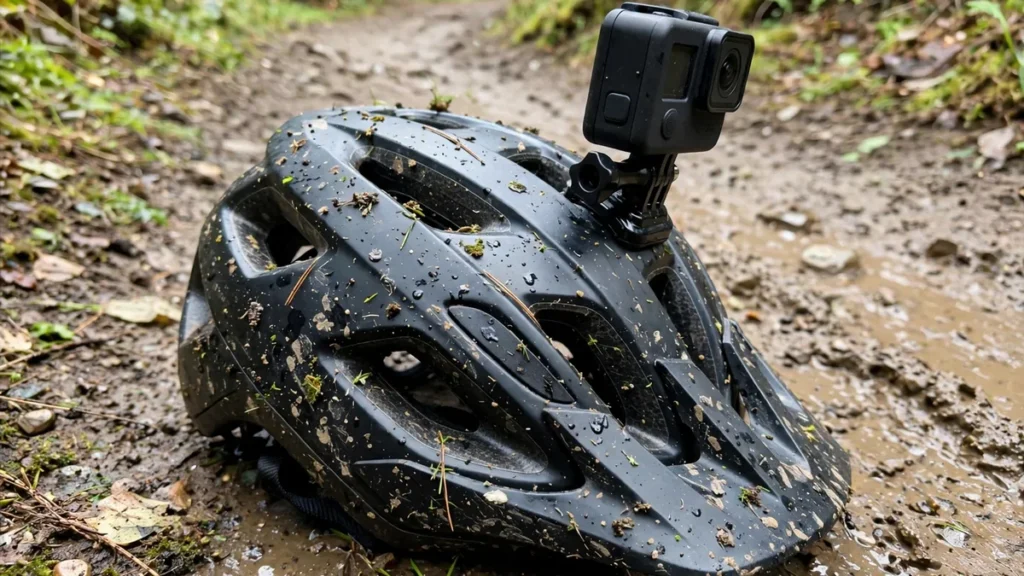
At the edge of a muddy trail, an ATV sits ticking as it cools, its tyres caked in earth and its headlights still on. It has just climbed a hill that would stop a car, crossed a stream, and carried its rider through a forest that has no roads at all.
A luxury ATV works as a small, tough off-road machine, with four-wheel drive, long-travel suspension and a low, strong engine that trades speed for grip. This is how a luxury ATV works, from the throttle in your hand to the tyres in the mud.

Step 1: The engine turns fuel into low, strong torque
Everything starts with the engine, usually a single or twin-cylinder four-stroke unit of 500 to 1,000 cubic centimetres, mounted low in the frame. The engine is tuned for torque rather than speed, so it pulls hard from low revs, and a liquid cooling system keeps it at the right temperature even when the ATV is crawling up a steep hill in the heat.
The engine drives a continuously variable transmission, a belt system that changes gear ratio smoothly without the rider ever shifting. The rider twists the throttle and the transmission finds the right ratio by itself, which is why an ATV is easy to ride even for a beginner. The same belt-drive principle that moves a smaller machine is described in the guide to how a luxury ATV is made, where the engine and transmission are fitted into the frame before the bodywork goes on.
Step 2: Four-wheel drive shares the power
From the transmission, power goes to a transfer case that splits it between the front and rear axles. In two-wheel drive, only the rear wheels are powered, which is fine on firm ground, but on mud, snow or steep slopes the rider switches to four-wheel drive, and all four wheels pull together. A locking differential can be engaged as well, forcing both wheels on an axle to turn at the same speed, so the ATV keeps moving even if one wheel is spinning in the air.
The drive shafts run to each wheel through constant-velocity joints, which let the wheels steer and bounce while still receiving power.
Step 3: Suspension and steering soak up the ground
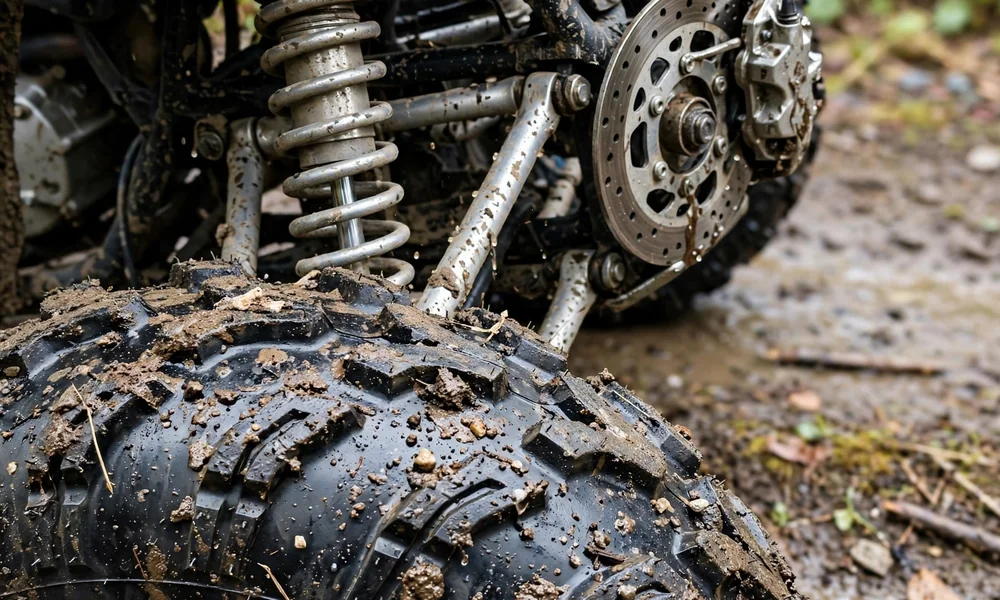
An ATV has no roads to smooth its ride, so it relies on long-travel suspension, with coil springs and shock absorbers at each wheel that can move up and down by 20 centimetres or more. The suspension soaks up rocks, roots and ruts, keeping the tyres on the ground and the rider in the seat, and on a luxury machine the shocks are adjustable, so the rider can stiffen them for carrying a load or soften them for a rough trail.
Steering is by handlebars, like a motorcycle, with a direct link to the front wheels, and power steering is fitted on luxury models, so the bars stay light even when the front wheels are buried in mud.
Step 4: Brakes, tyres and grip stop the machine
Stopping an ATV is as important as moving it, and the brakes are hydraulic discs at all four wheels, operated by a lever on the handlebar and a pedal under the right foot. The brakes are sealed against mud, and the discs are protected by guards, because a stone caught in a brake can end a ride in seconds.
The tyres are the real secret. They are wide, deeply treaded and run at low pressure, so they spread the weight and grip soft ground instead of sinking into it. The tread pattern is designed to clear mud as the wheel turns, and the tyres are tough enough to survive thorns and sharp rocks. The same focus on grip over speed shows in the guide to how a luxury off-roader works, where a bigger vehicle uses the same low-pressure, deep-tread thinking on a grander scale.
Step 5: The rider, the controls and the load
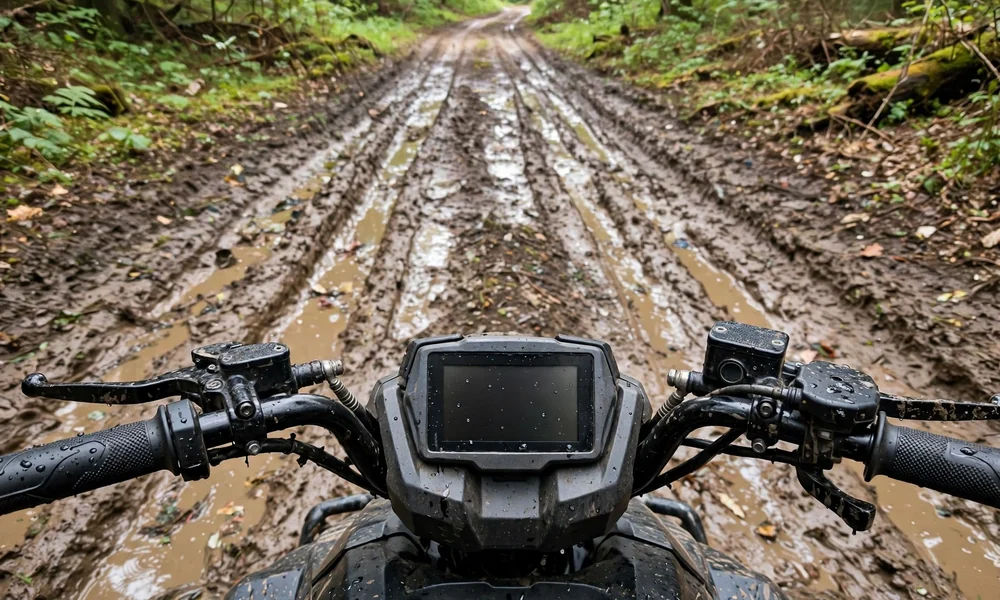
The rider sits on a long seat, with their feet on wide footboards and their hands on the bars, and every control is within reach: throttle under the right thumb, brakes on the bar and the foot, and a switch for four-wheel drive on the left. A small display shows speed, gear and fuel, and a winch on the front can pull the ATV out of a bog, or pull a fallen tree off a trail.
A luxury ATV is also a working machine, with racks front and rear for carrying tools, fuel or a day’s supplies, and a tow hitch at the back for a small trailer. The racks are rated for tens of kilograms, and the load is kept low and central, because a top-heavy ATV will tip on a side slope. The riding position and the way a rider shifts their weight are described in the guide to how a luxury motorcycle works, where the same balance of body and machine decides whether a ride is fun or frightening.
Step 6: Riding it well, and keeping it alive
Riding an ATV well is a skill, and it starts with reading the ground: choosing a line through the mud, keeping momentum up a hill, and never turning sharply on a slope. The rider stands on the footboards over rough ground, letting their legs take the bumps, and leans forward on climbs and back on descents, so the weight stays over the wheels that need grip.
Keeping an ATV alive is simple but regular work: washing the mud off after every ride, greasing the joints, checking the belt and changing the oil. The ATV that comes home caked in mud and ticking as it cools has done its job, and with a wash and a check it will be ready to do it again tomorrow.
The spec sheet at a glance
| Specification | Typical luxury figure |
|---|---|
| Engine | 500 to 1,000 cc four-stroke |
| Power | 40 to 90 horsepower |
| Transmission | Continuously variable, belt drive |
| Drive | Selectable two or four-wheel drive |
| Differential | Lockable front and rear |
| Suspension travel | 20 to 26 centimetres per wheel |
| Ground clearance | 25 to 30 centimetres |
| Tyres | Wide, deep-tread, low pressure |
| Brakes | Hydraulic discs, all four wheels |
| Towing capacity | 500 to 800 kilograms |
| Fuel tank | 15 to 20 litres |
| Weight | 300 to 400 kilograms dry |
What it costs, and a rare fact
A luxury ATV costs an estimated $10,000 to $20,000, depending on the size of the engine, whether it has power steering and a winch, and how much of the bodywork is premium trim rather than plain plastic. The engine and the four-wheel-drive system account for most of the price.
Here is the rare fact the brochure never mentions. A luxury ATV is tested by being driven through a pit of mud so deep that the wheels disappear, and the engineers watch to see whether the engine intake, the belt housing and the differentials stay dry. The ATV that passes is then stripped down and checked for water inside every sealed part, so the machine that reaches the showroom is the twin of one that was drowned on purpose and came out dry.