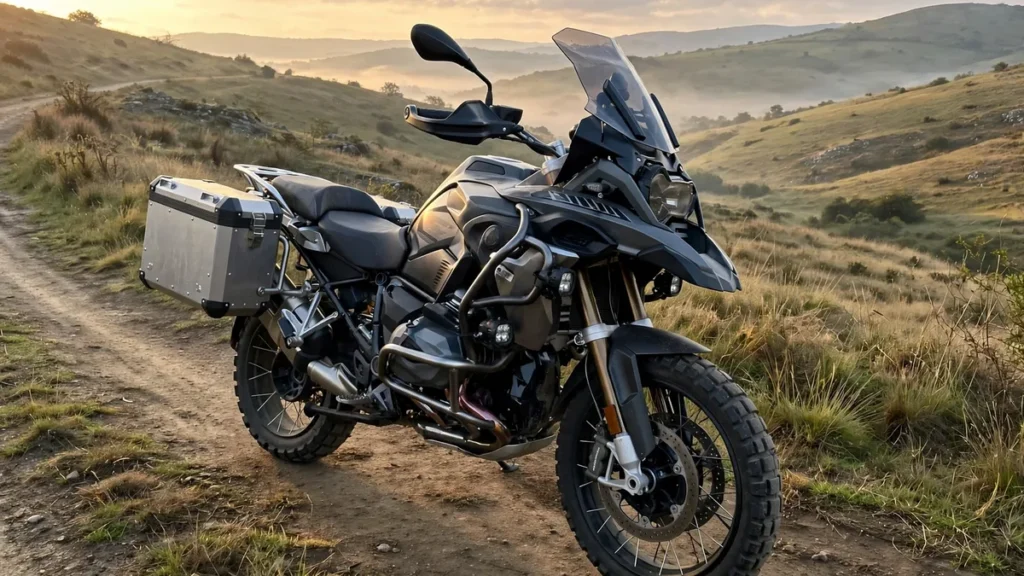
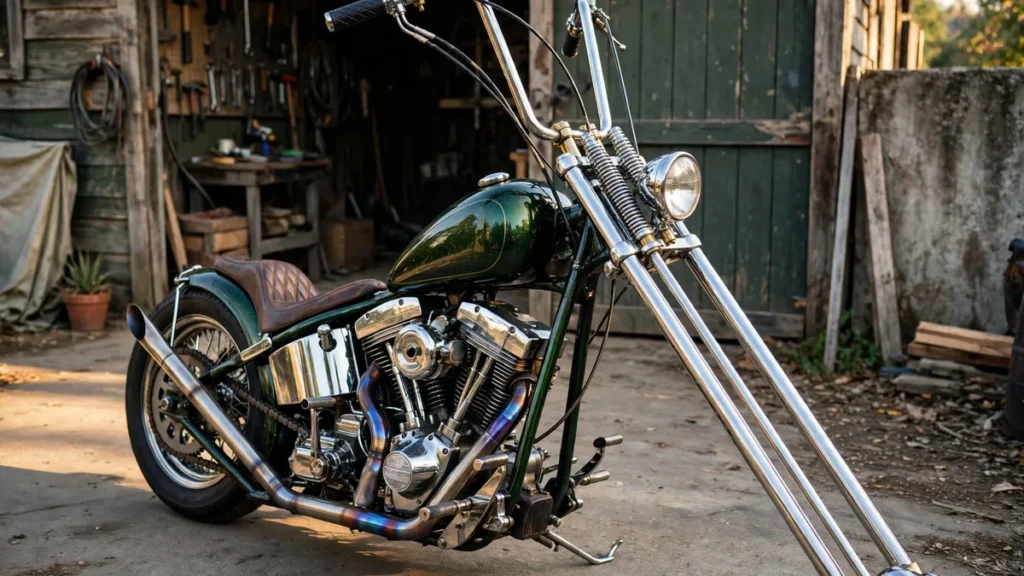
Twist the throttle on a luxury motorcycle and the world changes in a single second. The engine note deepens, the front wheel lightens, and the road ahead seems to rush towards you instead of the other way round. It is the most exposed way to travel at speed, and for the people who love it, nothing else comes close.
A luxury motorcycle is not simply a fast one. It is a machine where the engine, the frame, the suspension and the electronics all work together so smoothly that the rider barely has to think about them. This is how a luxury motorcycle works, from the first twist of the throttle to the lean into a corner.
Step 1: The engine turns fuel into motion
Everything starts in the engine, usually a large V-twin or four-cylinder unit sitting low in the frame. When the rider twists the throttle, the throttle bodies open and let more air into the cylinders, the injectors spray in more fuel, and the spark plugs fire more often. Each explosion pushes a piston down, the pistons turn the crankshaft, and the crankshaft sends its power towards the rear wheel.
On a luxury motorcycle the engine is tuned for smoothness as much as for power. The crankshaft is balanced, the fuel injection is mapped across thousands of engine speeds, and the exhaust is shaped to scavenge the burnt gases cleanly. The rider feels a single, continuous push instead of a series of surges.
Step 2: The gearbox and clutch deliver the power
Between the engine and the rear wheel sits the gearbox, usually six speeds, and a clutch that lets the rider disconnect the engine from the wheel. When the rider pulls the clutch lever and taps the gear lever, the gearbox swaps one set of gears for another, changing how fast the wheel turns for a given engine speed. First gear is short and strong for pulling away; sixth gear is long and relaxed for the motorway.
Luxury motorcycles add a quick-shifter, a sensor on the gear lever that cuts the ignition for a fraction of a second, so the rider can change gear without touching the clutch at all. It is a small piece of electronics that makes a fast ride feel effortless, and it works because the gearbox, the clutch and the engine are all talking to the same computer.
Step 3: The frame and steering keep the bike upright
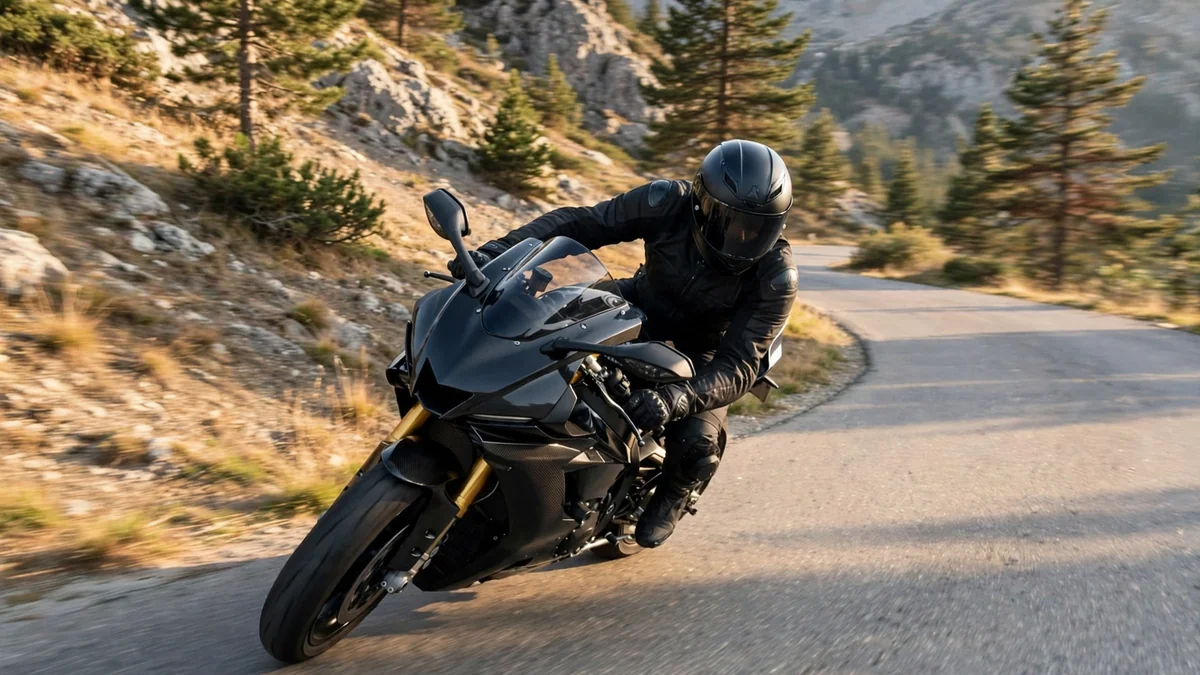
A motorcycle stays upright because it is always steering itself back under its own centre of gravity, a trick that happens so fast the rider never notices it. The frame holds the engine, the wheels and the rider in a precise geometry: the steering head angle, the trail of the front wheel and the length of the wheelbase all decide how the bike behaves when it leans.
On a luxury motorcycle the frame is stiff where it needs to be and flexible where it helps, usually a steel trellis or a cast aluminium spar, and the steering damper stops the handlebars from shaking at high speed. The bike feels planted because the geometry was designed that way, not because the rider is fighting it.
Step 4: The suspension reads the road
The suspension is the part of the bike that never stops working. The front forks and the rear shock absorb every bump, keeping the tyres pressed against the road so they can grip, steer and brake. On a luxury motorcycle the suspension is fully adjustable, with separate controls for how fast it compresses over a bump and how fast it extends afterwards, and many models adjust themselves electronically, reading the road and the rider’s speed hundreds of times a second.
The electronic suspension softens over a pothole and firms up in a corner, so the bike stays stable when the road changes under it. The rider feels the road through the handlebars and the seat, but the harshness is filtered out before it reaches them.
Step 5: The brakes stop the bike without drama
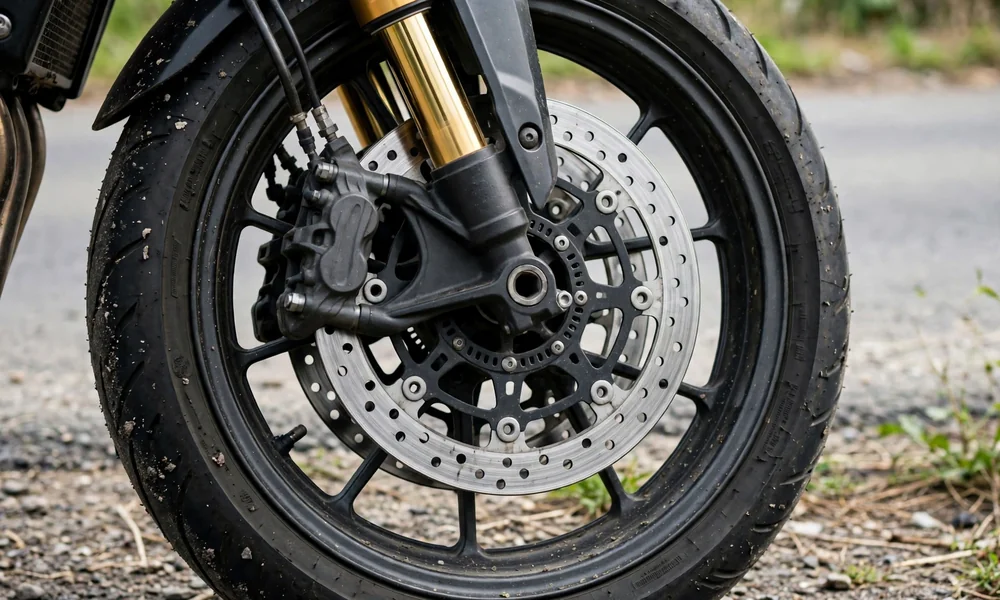
Stopping a motorcycle is a delicate job, because braking too hard on the front wheel can lock it, and locking a front wheel at speed is dangerous. A luxury motorcycle uses twin discs at the front, gripped by multi-piston calipers, with braided steel brake lines that keep the lever feeling exactly the same on the last stop as on the first.
The electronics do the rest. Cornering anti-lock brakes measure the lean angle and adjust the braking force, so the rider can brake in a bend without the bike standing up or sliding. The rider still decides when to brake, but the electronics make sure the decision does not end badly.
Step 6: The rider, the electronics and the road work together
Put it all together and a luxury motorcycle works like a conversation between the rider and the machine. The ride modes change the engine map, the traction control and the suspension at the touch of a button: a rain mode softens everything for wet roads, a sport mode sharpens the throttle and firms the suspension, and a touring mode relaxes the whole bike for a long day in the saddle.
Electric motorcycles borrow the same ideas, and the mid-drive motor layout places the motor low and central to keep the balance just right. The hand-built machine underneath is described in the guide to how a luxury motorcycle is made, and for a sense of which makers lead the field, the best electric motorcycle brands ranking compares the names setting the pace.
The spec sheet at a glance
| Specification | Typical luxury figure |
|---|---|
| Engine | 1,200 to 1,300 cc V-twin or four-cylinder |
| Power | 150 to 210 horsepower |
| Torque | 120 to 150 Nm |
| Gearbox | Six-speed with quick-shifter |
| Zero to 100 km/h | 3.0 to 3.5 seconds |
| Top speed | 240 to 300 kilometres an hour |
| Frame | Steel trellis or cast aluminium |
| Suspension | Electronically adjustable front and rear |
| Brakes | Twin front discs, cornering anti-lock brakes |
| Electronics | Ride modes, traction control, cruise control |
| Weight | 200 to 240 kilograms dry |
| Fuel tank | 16 to 18 litres |

What it costs, and a rare fact
A luxury motorcycle costs an estimated $25,000 to $70,000, depending on the engine, the electronics and the maker, with limited hand-built editions costing far more. That price buys a machine that can out-accelerate most sports cars while weighing a quarter as much, and it buys the electronics that make that speed manageable for an ordinary rider.
Here is the rare fact the spec sheet never mentions. A motorcycle tyre at full lean touches the road on a contact patch no bigger than a credit card, and at that angle the tyre is using the soft rubber on its edges, a compound so different from the centre that it is almost a second tyre moulded onto the first. The whole machine, engine, frame, suspension and electronics, exists to keep that tiny patch of rubber exactly where it needs to be.