The first time you ride in a luxury autonomous car, the strangest moment is not when it changes lanes on its own. It is the quiet minute before that, when you realise nobody is doing anything at all. The steering wheel turns by itself, the car slows for a cyclist you had not yet noticed, and the cabin stays calm, as if this were the most ordinary thing in the world. There is no drama in it, and that is the point. An autonomous car is not trying to impress you. It is trying to be boringly, reliably safe, thousands of times a day.
Behind that calm is a furious amount of work. The car is watching the road with a dozen different senses, building a picture of the world around it many times a second, and deciding what to do next before a human driver would have finished noticing the problem. This article explains how that happens, step by step, from the sensors on the roof to the software that decides when to brake.
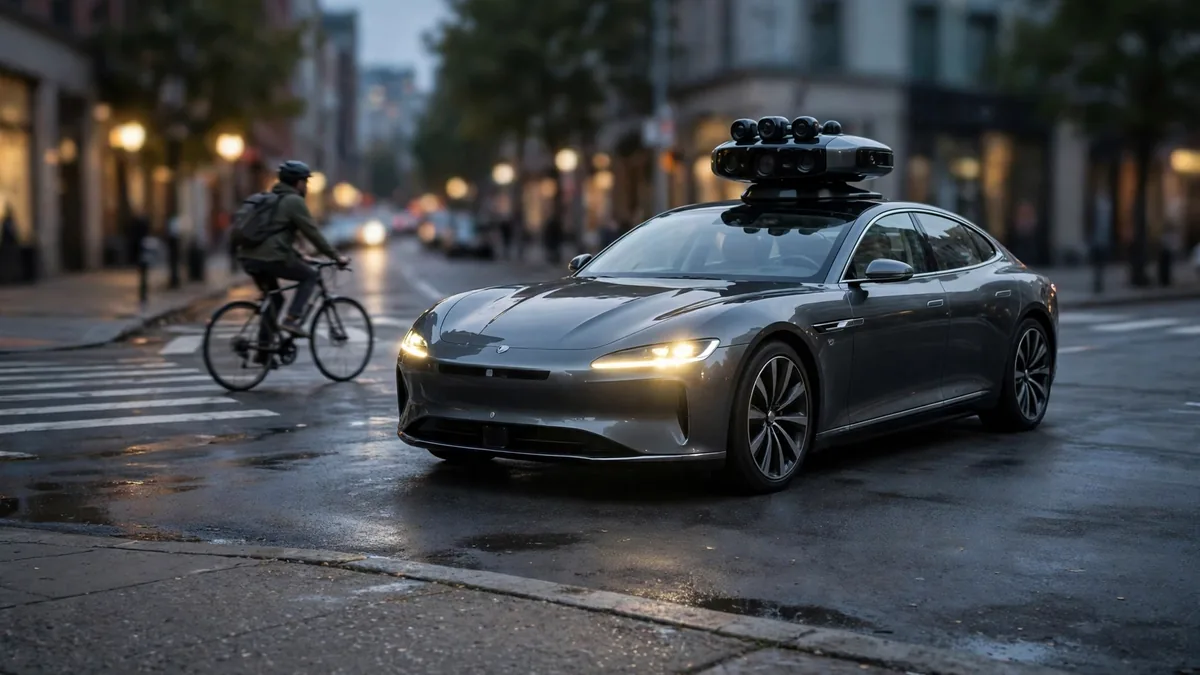
How a Luxury Autonomous Car Works
Step 1: Seeing the world with cameras
The car’s first sense is vision. A ring of cameras around the body watches the road in every direction, reading lane markings, traffic lights, road signs, and the brake lights of the car ahead. The cameras see in colour, which matters, because a red light and a green light are the same shape in different colours, and the software must tell them apart in rain, at dusk, and against a low sun. Each camera feeds its picture to a computer that looks for patterns it has been trained to recognise, from a pedestrian stepping off a kerb to a lorry signalling a turn.
Step 2: Radar and lidar measure distance
Cameras are good at recognising things, but they are poor at judging exactly how far away they are. That job belongs to radar and lidar. Radar sends out radio waves and listens for their echo, which gives it an accurate measure of the speed and distance of other vehicles, even in fog or heavy rain when cameras struggle. Lidar does the same thing with pulses of laser light, sweeping around the car many times a second and building a three-dimensional map of everything nearby, down to the kerb and the shape of a parked car. Together, the three senses agree on a single picture of the world, and if one of them disagrees, the car trusts the majority and drives more cautiously until the picture is clear again.
Step 3: Sensors agree on one picture
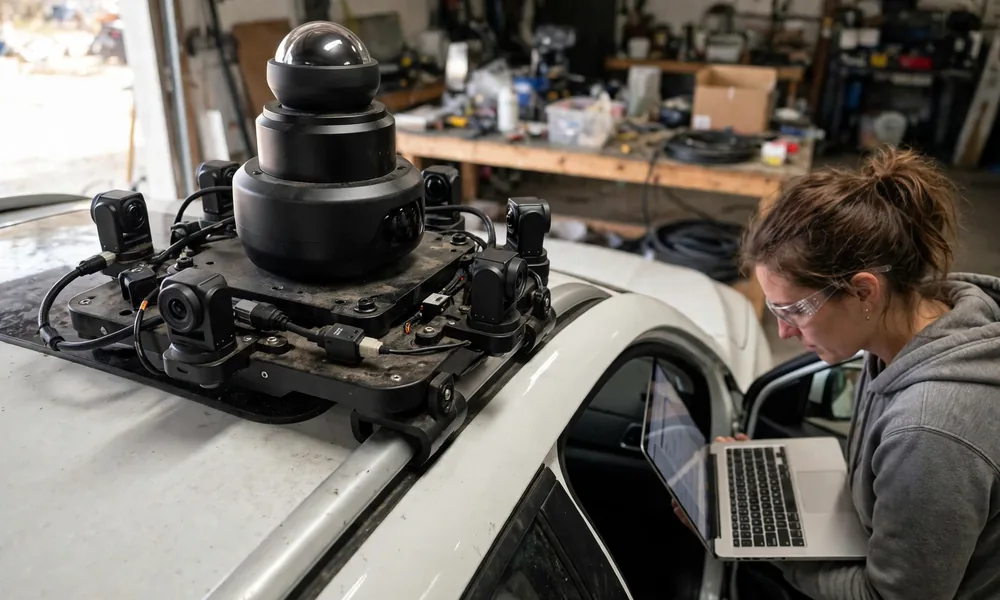
Turning a dozen streams of data into one picture is called sensor fusion, and it is the hardest part of the whole system. The car’s computer must combine what the cameras see, what the radar measures, and what the lidar maps into a single model of the road: where every other vehicle is, how fast it is moving, and where it is likely to go next. The autonomous cargo ship at sea solves a similar problem with fewer obstacles and far more time, and the car borrows the same idea of fusing sensors into one reliable picture, only much faster.
Step 4: The software decides what to do
Once the car knows what is around it, the software has to decide. It plans a path a few seconds ahead, choosing a speed, a lane, and a gap in the traffic, and it keeps a second plan ready in case something changes. If the car ahead brakes, the plan changes in milliseconds. If a pedestrian steps out, the car brakes first and works out the details later, because a false alarm that slows the car is far better than a missed hazard that does not. A luxury electric car already controls its motors with this kind of precision, and the autonomous system simply tells those same motors, brakes, and steering what to do, many times a second, without ever getting tired or distracted.
Step 5: Steering, braking, and staying in control
The car’s decisions are carried out by the same systems a human driver uses, only faster and more precisely. Electric motors turn the steering, the brakes are applied wheel by wheel to keep the car stable, and the electric motors add or remove power in fractions of a second. The systems are duplicated wherever it matters: two braking circuits, backup power supplies, and a second computer that can bring the car to a safe stop if the first one fails. The driver is always part of the system too. In most luxury autonomous cars today, the driver must stay ready to take over, and the car watches the driver with a small cabin camera, checking that their eyes are on the road.
Step 6: Learning, updates, and the safety net
An autonomous car does not stay the same after it leaves the factory. It receives software updates over the air, the way a phone does, and each update brings better recognition, smoother driving, and fixes for situations the fleet has encountered. There is also a safety net that never switches off: if the sensors disagree, if the software is unsure, or if the road is simply too difficult, the car does not guess. It slows down, turns on its hazard lights, and stops in the safest place it can find.
Specifications
| Feature | Typical luxury autonomous car |
|---|---|
| Sensors | 8 to 12 cameras, 5 to 8 radar units, 1 to 3 lidar units |
| Computing power | Several hundred trillion operations per second |
| Detection range | Up to 250 metres ahead with lidar and radar |
| Update rate | World model refreshed 10 to 30 times per second |
| Autonomy level | Level 2 to Level 3 in current production cars |
| Powertrain | Electric, with redundant braking and steering |
| Battery | 80 to 110 kilowatt-hours, depending on model |
What It Costs
Autonomy is still one of the most expensive options on a car. A luxury car with advanced driver assistance is estimated to cost roughly $90,000 to $160,000, and a model with a full sensor suite and Level 3 highway autonomy is estimated to cost roughly $150,000 to $250,000. Those are estimates, and the sensor hardware alone, including lidar, is estimated to cost roughly $5,000 to $15,000 of that figure. The solid-state EV battery may eventually cut the cost of the electric platform underneath, but for now the computing power and the sensors are what push the price up.
A Rare Fact
Here is a detail that shows how literally an autonomous car sees the world: early test cars were confused by a very ordinary thing, a lorry carrying a picture of a road on its side. The cameras saw the painted road, the lidar saw a flat lorry, and the software had to learn that a picture of a road is not a road. Engineers now train cars on thousands of these trick cases, from reflections in shop windows to shadows that look like obstacles, and each one makes the fleet a little less likely to be fooled by something a human would dismiss in a glance. Some test fleets now drive millions of miles a year in simulation before a single real mile, meeting virtual lorries, virtual rain, and virtual roadworks that would take decades to encounter on real roads. The virtual miles count, because the lessons transfer.


